
CT Bass Anglers Who Fish Candlewood, Bantam, and Lillinonah Don't Reach for Swimbaits When They Want Numbers. What the Community Reports About Matching Size, Style, and Season to Northeast Lakes
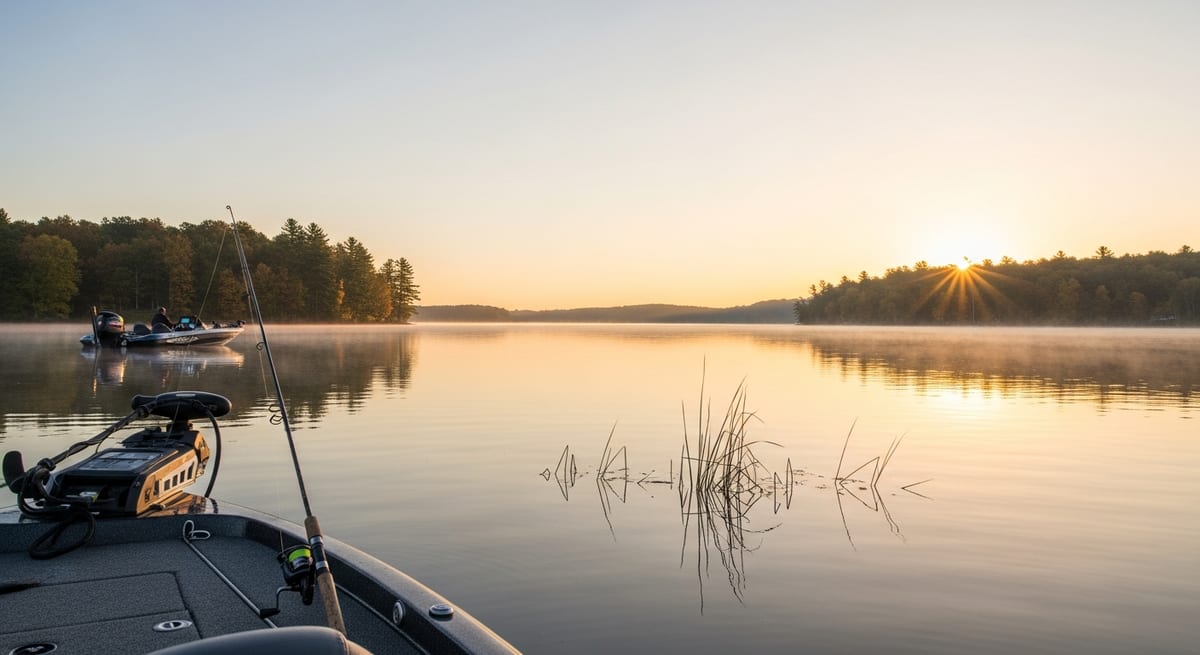
Anglers who fish Candlewood's main-lake humps and Bantam's deeper coves in late September report a consistent pattern: bass that ignore a jig at 8 feet will chase a 5-inch shad-colored paddle-tail at 12, matched to the baitfish size they're actively tracking. On clear-water CT lakes where largemouth grow selective and smallmouth see heavy pressure through summer, the swimbait's profile is often the difference. Swimbaits are not about numbers. The CT bass community is clear on that. They're about upgrading the size of what ends up in the net.
Soft Paddle-Tails, Hard Bodies, and Glide Baits: What CT Anglers Actually Use
Soft paddle-tail swimbaits (most widely used on CT lakes): A soft body with a paddle or boot tail that kicks on a steady retrieve. Keitech Fat Swing Impact, Berkley Havoc Sick Fish, and the Strike King Shadalicious are the most commonly referenced in CT bass communities. Rig on a wide-gap swimbait hook (4/0 to 6/0) or a weighted swimbait jighead. Anglers fishing Candlewood and Lillinonah in the 3.5 to 5 inch range report consistent results on largemouth. Those targeting smallmouth on the Housatonic backwaters tend to run 3 to 4 inch models matched to smaller forage.
Hard-body multi-section swimbaits: Jointed hard plastic lures with multiple connected body sections that produce a highly realistic swimming action. The Deps Slide Swimmer is the most referenced in CT trophy-bass circles. These lures carry a significant price premium, and anglers who run them on Bantam and Lillinonah tend to reserve them for specific early-season windows when large largemouth are shallow and visible.
Glide baits (distinct category): Hard-body lures that swing side to side on a slack-line twitch rather than swimming on a straight retrieve. The stop-and-glide cadence is different enough from paddle-tail fishing that anglers who use both treat them as separate tools. Candlewood regulars who run glide baits in fall note that the action appeals specifically to fish that are following but not committing to other presentations.
Boot tail on a jighead (simplest entry point): A 3 to 5 inch paddle tail on a 1/4 to 1/2 oz swimbait jighead. This setup accounts for a large share of CT swimbait fish reported in local communities. Cast, retrieve, adjust jighead weight to hit different depths. Works for both largemouth and smallmouth across most CT public water.
Matching Forage on CT Lakes: Size and Color
Size matching by forage: CT lakes have distinct forage profiles that affect which swimbait size produces:
- 3 to 4 inch: Matches shad, perch fry, and small baitfish that dominate Bantam, Lillinonah, and the CT River's backwater coves through summer. Produces numbers and quality.
- 5 to 6 inch: Matches larger shad and adult yellow perch. Common on Candlewood, which has a healthy perch population. Anglers targeting Candlewood's deeper largemouth typically step up to this range in fall when bass are keyed on larger forage.
- 8 to 10 inch+: A trophy-only presentation. CT bass communities report this mostly from Lillinonah and Housatonic backwaters in spring, where fish that eat other bass occasionally show up in shallow wood structure.
Color selection on CT water:
- Shad patterns (silver, blue/silver, white): The default on Candlewood, Lillinonah, and the lower CT River where threadfin shad are present. The consensus among CT bass anglers is to start here unless there is a specific reason not to.
- Perch patterns (gold/green/orange): Productive on Candlewood and Barkhamsted, where yellow perch are common. Often the better choice for smallmouth in clear-water scenarios.
- Bluegill/sunfish patterns (green/orange, pumpkin): Work well in shallower cove systems and smaller lakes with heavy sunfish populations.
- White or chartreuse: Reported as the better choice in stained water. The Housatonic above Derby can run turbid after significant rain, and anglers fishing that stretch lean toward higher-visibility colors.
Water clarity rule used by CT bass communities: Clear water calls for natural, realistic colors. Stained water calls for brighter, higher-contrast patterns. Murky water favors solid dark silhouettes or very bright reaction colors.
Retrieve Patterns CT Bass Communities Rely On
Straight retrieve: Cast, reel at a consistent pace. The paddle tail handles the action. Speed matters significantly. Candlewood regulars report that the right cadence varies by season and water temperature. In water below 60°F, a slow roll near bottom often outperforms a mid-column burn.
Lift and drop: Swim the lure forward 3 to 4 feet with a rod lift, then let it fall on a semi-slack line. The flutter on the drop is where many strikes occur. Anglers fishing Bantam's main-basin drop-offs in early fall describe this as one of the more consistent setups once bass push off the shallow flats.
Wake presentation on calm mornings: A large soft paddle-tail on a lightly weighted hook, reeled just fast enough to bulge the surface, works in protected coves before surface temps climb. CT kayak anglers who fish the Niantic River backwaters and Bantam's northern arm in early summer have reported this pattern during low-light mornings when bass are still shallow.
Glide bait cadence: Reel one or two cranks forward, stop, let the bait swing laterally, pause 1 to 3 seconds, repeat. Strikes often come during the glide and pause. Anglers who run glide baits on Candlewood note that building a consistent cadence takes several sessions. The timing varies by lure, and the action that triggers strikes in 8 feet of water may not translate the same way at 15.
The Two CT Windows Where Swimbaits Earn Their Keep
Fall shad migration (September through early November): The consensus among CT bass communities is that this is when swimbaits do their most consistent work on the major lakes. On Candlewood, Lillinonah, and the lower CT River, bass stage near shad schools and a swimbait matched to the prevalent bait size and color is difficult to beat. Anglers fishing Candlewood's main-lake humps in late September and October report that a 5-inch shad-pattern paddle-tail, slow-rolled at 12 to 18 feet, is among the most productive setups of the year for quality fish.
Post-spawn recovery window (late May through June): Recovering largemouth target slower-moving meals. On Bantam and Lillinonah, anglers report that large females that are unreachable during the spawn become catchable on a slow-rolled 5-inch paddle-tail in the first few weeks post-spawn. Water temps in the 65 to 70°F range are consistently cited as the trigger window for this pattern.
Clear-water trophy hunting (Candlewood, year-round): Candlewood is among the clearer major bass lakes in the state, and anglers who specifically target large largemouth there report that hard-body swimbaits fished slowly along main-lake structure are sometimes the only presentation that moves fish that have seen heavy pressure. The profile and slow action of a well-presented hard-body draws commitments that smaller or faster presentations do not.
Deep summer ledges (July through August): A 5-inch paddle-tail on a 1/2 oz swimbait head, slow-rolled along ledge structure at 15 to 20 feet, produces large bass on Candlewood and Lillinonah during the summer thermocline period when fish pull off shallow presentations. CT DEEP summer electrofishing and creel sampling on Candlewood has historically shown strong average size in deeper water when surface temps peak, consistent with what bass communities report about the timing of this pattern.
EVERY SATURDAY MORNING
Weekly fishing intelligence
Nationwide conditions, what's biting, and honest gear deals. One email, no noise.
No spam. Unsubscribe anytime.