
CT Striper Anglers Adjusted to the One-Fish Limit. Most Haven't Updated Their Rigs to Match the Treble Hook Restriction.
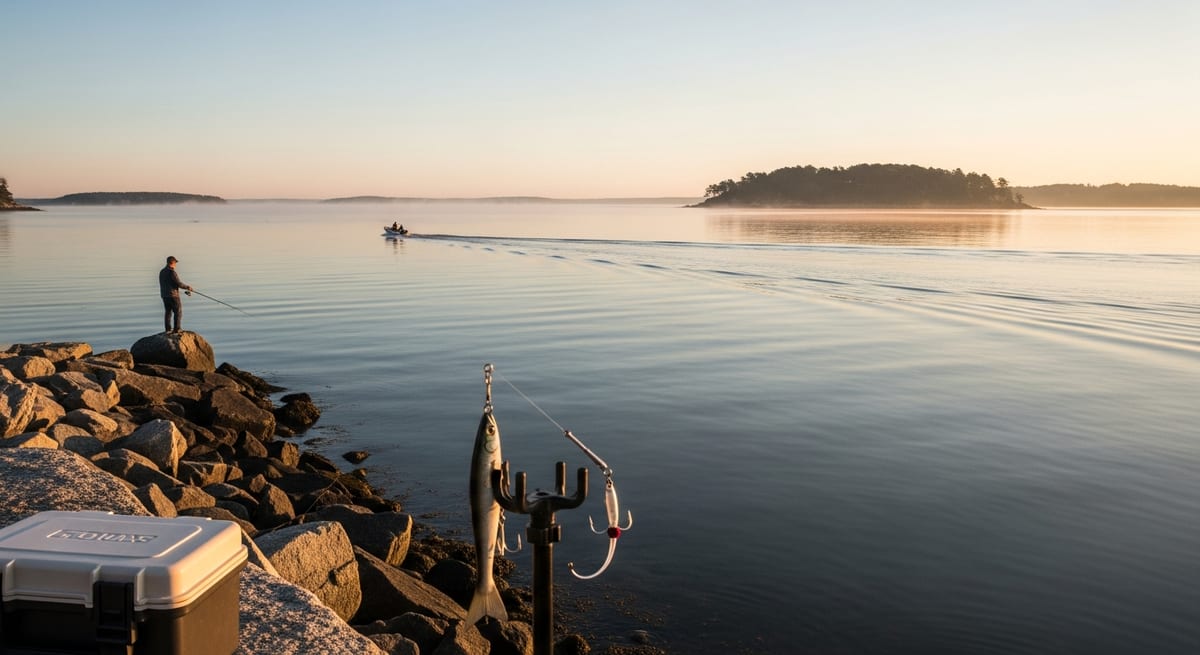
The treble hook restriction, not the one-fish bag limit, is the regulation CT surfcasting forums and local tackle shop staff flag most often as the compliance gap still showing up at the Housatonic mouth and the CT River rip on keeper-season mornings heading into 2026. Connecticut follows the ASMFC striped bass management plan, and the rules carry real enforcement weight from Old Saybrook to the Race. Anglers working these locations have had years to internalize the single-fish limit; the hardware rules are where the knowledge gap still shows, according to conversations across CT fishing communities and observations shared by guides who work the river mouths through June.
CT Striped Bass Regulations 2026. The Full Picture
Current regulations as of spring 2026 (verify against CT DEEP Marine Fisheries before fishing, mid-year amendments are possible):
- Minimum size: 28 inches (total length, tip of closed mouth to end of tail), confirm current posting on CT DEEP, as ASMFC slot-limit proposals have been in active circulation
- Daily bag limit: 1 fish per person per day
- Gear restriction: No striped bass retention when fishing with treble hooks (size 4 or larger in standard hook notation) on lures carrying more than one treble hook, verify the exact statutory language on the CT DEEP site before your trip
The single-fish limit and the 28-inch floor reflect ASMFC striped bass management decisions made in response to stock assessment findings the ASMFC technical committee has published and made publicly available. The full benchmark documentation is accessible on the ASMFC site for anglers who want the source material. The ASMFC has remained in an active management revision cycle through 2025 and into 2026, slot-limit proposals, including a 28-to-35-inch retention window, have circulated in technical documents. Pull up the CT DEEP Marine Fisheries page before you launch, especially at the opening and tail end of the season when amendment timing matters most.
The single-fish limit represents a meaningful reduction in harvest pressure for anglers who fished CT stripers under the earlier two-fish framework. CT striper fishing forums have noted the adjustment widely; the stock assessment data supporting the change is documented in the ASMFC's publicly available striped bass benchmark assessments, which are updated on a multi-year cycle.
The Treble Hook Restriction. The Rule Most CT Anglers Are Still Getting Wrong
This is the regulation CT enforcement officers and local tackle shop staff report seeing violated more than any other on the water. To be precise: if you intend to retain a striped bass, you cannot fish with treble hooks size 4 or larger on lures that carry more than one treble hook. Jointed swimmers, many stick baits, tandem-treble plugs, all off the table for a keeper trip. Confirm the exact statutory language on the CT DEEP site, as hook-size notation can vary between regulatory documents.
What this means in practice:
- Single-hook soft plastics: CT striper anglers who've shifted to compliant keeper-season setups report consistent success with Hogy Epoxy Jigs on single hooks, LIVETARGET Hatchling Bunker (3.5"), and Berkley Gulp! Saltwater Grubs, all legal and all effective on 28"+ fish working the rips.
- Bucktail jigs: A 1-2 oz white or chartreuse bucktail with a paddle tail trailer is one of the most underrated CT striper rigs, according to regulars fishing the river mouths and channel edges. Single hook, totally legal, and effective in current.
- Circle hooks on bait: Bunker chunks, mackerel heads, sand worms on a 6/0-8/0 circle hook under a fishfinder rig. Circle hooks also dramatically reduce gut-hooking for the fish you're releasing.
- Poppers with swapped hardware: Anglers fishing the CT shoreline have been pulling the rear trebles off Yo-Zuris, Striper Swipers, and Rapalas and replacing them with single siwash hooks. Legal, and the lure action is largely unchanged.
A common keeper-season setup among CT striper regulars: A 7.5-9 ft medium-heavy spinning rod (St. Croix Mojo Surf or Tsunami Trophy II) with a 5000-6000 series reel, 30 lb braid, and a 20-30 lb fluorocarbon leader. That combination handles everything from pencil poppers to a heavy bunker chunk rig without requiring a rig swap between sessions.
Where CT Stripers Actually Hold, and When to Show Up
The generic answer is "along the shoreline." The answer that actually helps you find fish is more specific, and it shifts by month.
Connecticut River mouth (Old Saybrook / Old Lyme): The most consistently cited striper location in the state, based on years of CT DEEP creel reports, local guide logs, and fishing forum posts. School fish flood in from late April; keeper-sized fish (28"+) typically start showing by late May as water temps push through 55-58°F. Anglers who fish the east bank rip and the sandbar at the river inlet report that outgoing tides consistently outperform incoming. A pattern repeated across multiple seasons of forum reports and tackle shop updates from this location.
Housatonic River mouth (Stratford / Milford): Underrated in wider CT fishing conversation but produces reliably for shore and kayak anglers through June. The shoals off Milford Point hold stripers on the moving tide. Anglers working this water report bucktails and single-hook soft plastics performing best in the shallower structure here.
Niantic Bay and Niantic River: A solid mid-June through July location for mid-size fish. The grass flats in the bay produce on early-morning surface plugging when the bait is pushed up. Where bait stacks at the river mouth, stripers stack too, worth a look with a bunker chunk rig.
The Race (between Fishers Island and the CT coast): The most significant tidal rip in Long Island Sound. Boats running live bunker or heavy soft plastics on jig heads over the rip in September and October produce large fish into November in most seasons, according to guides who run this water regularly. CT charter captain reports consistently rank the Race among the top locations for trophy-class stripers in the fall.
Thames River (New London area): Underused by anglers outside the immediate area. The Thames holds fish from May through fall, with good tide-dependent action near the river mouth and around the bridge pilings in June.
Water temperature trigger: Stripers feed actively in the 52-68°F range. Below 50°F they're sluggish. Above 72°F, inshore catch-and-release mortality climbs meaningfully, cT striper fishing communities consistently advise minimizing handling time in July and August.
Measuring Right, and Why Getting It Wrong Is Expensive
A 28-inch striper weighs roughly 8-9 lbs depending on condition. Measuring it wrong is how you end up with a citation at the ramp.
How to measure correctly:
- Lay the fish along a fixed bump board or a permanent measure on your gunwale
- Closed jaw to natural tail tip, pinch the tail, don't fan it for extra length
- Both the jaw tip and tail tip must contact the board simultaneously
- When it's borderline, let it go. A short fish isn't worth the fine or the reputation at the local ramp
The most common mistake reported among CT anglers: estimating by eye. A fish that looks like 28 inches from 10 feet away may be 26.5. CT striper regulars and guides universally recommend bump boards as a standard piece of gear, inexpensive, and they eliminate the guesswork that produces citations at the ramp.
Why 28 inches matters biologically: Atlantic stripers typically reach sexual maturity between ages 5-8, in the 20-25 inch range. A 28-inch fish has generally spawned at least once. The large females: 36 inches and up, can produce 4-5 million eggs per season compared to a fraction of that for smaller fish. Voluntary release of fish over 36 inches is a practice discussed regularly across CT striper fishing communities, regardless of regulations, for exactly that reason.
The CT Striper Calendar, when Each Window Actually Opens
Connecticut has no closed retention season for striped bass, but the productive windows are tighter than most published guides suggest.
Late April-early May: School fish (16-24") start showing along the coast. Nearly all of these are short; this is catch-and-release fishing, and it's solid practice for the season. The CT River mouth and Niantic Bay are both worth checking by the first week of May in most years.
Late May-June (prime keeper window): Once water temps hold consistently above 58°F, the larger migratory fish arrive. This is the highest-percentage window for a legal striper in CT. Keeper reports from the CT River mouth and Housatonic shoals historically concentrate in the third and fourth weeks of May. A pattern CT tackle shops and fishing forums have tracked consistently across multiple recent seasons. The Niantic Bay flats also produce during this stretch.
July-August: Fish are present but scattered and heat-stressed inshore. Night fishing from shore, black surface plugs, poppers, soft plastics, outproduces daytime by a wide margin in July, according to shore anglers who fish this window regularly. Water temps regularly reach 72°F+ inshore in August, and warm-water release mortality is real.
September-November (fall run): The fall migration compresses fish along the CT shoreline, and October is historically the strongest month for large fish based on charter captain logs and guide reports from this stretch. The Race, the CT River mouth on big outgoing tides, and exposed points along eastern CT all produce during the push. CT charter captains and experienced shore anglers consistently identify the last two weeks of October as the peak window for large migratory fish.
Catch-and-release in warm water: Use circle hooks, minimize air time, and keep the fish in the water while removing the hook. If the fish can't right itself on release, hold it upright facing into current until it swims off under its own power.
CT Freshwater Bass Regulations
For anglers targeting largemouth and smallmouth bass in Connecticut's freshwater:
- Minimum size: 12 inches (largemouth and smallmouth combined)
- Daily bag limit: 5 fish combined
- Season: Open year-round on most waters
Some CT lakes and rivers carry special regulations, slot limits, catch-and-release only stretches, or different size minimums than the statewide standard. The CT DEEP Freshwater Fishing Regulations booklet lists exceptions by water body; download it from the CT DEEP site before targeting a new lake or river section.
Specific waters to double-check: Candlewood Lake, East Twin Lake, Bantam Lake, and several river sections have regulations that differ from the statewide rule. The tidal CT River stretch also has seasonal nuances worth reviewing if you're targeting bass in the lower river.
Tournament anglers: CT catch-and-release tournament rules set livewell standards and require live release. If you're running a tournament on CT waters, the DEEP tournament permit requirements apply and are taken seriously at weigh-in.
A licensing fine is a nuisance. A violation for an undersized or over-limit fish is significantly more expensive, and lingers. When it's borderline, let it go.
EVERY SATURDAY MORNING
Weekly fishing intelligence
Nationwide conditions, what's biting, and honest gear deals. One email, no noise.
No spam. Unsubscribe anytime.