
On Bantam, Candlewood, and Lillinonah, the Crankbait Window Opens in Late April. What CT Bass Communities Have Mapped About Depth, Color, and the Right Retrieve Across Our Water
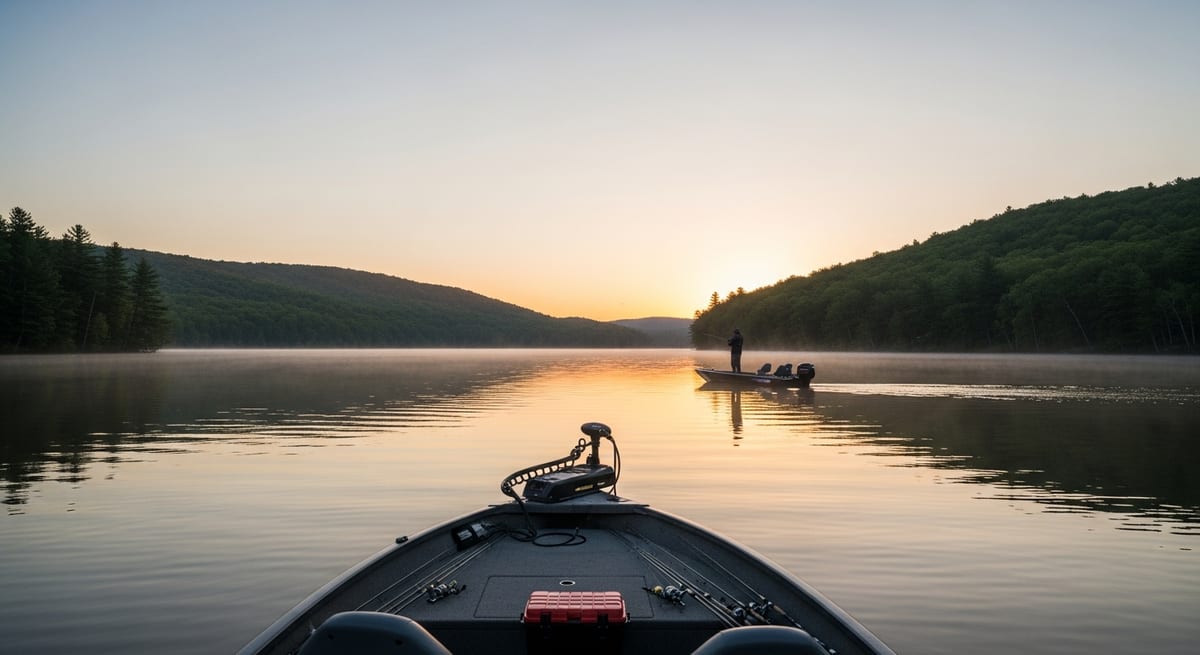
Anglers fishing Candlewood Lake's secondary points in late April consistently report bass tracking crankbaits without striking, and when they switch from a lure running at 6 feet to one running at 8 on the same cast, the same fish commits. Depth matters more than color or action on most CT bass water, and it's the variable regional bass fishing communities identify first when crankbait discussions come up in seasonal threads. But depth is only part of the picture. Color, retrieve speed, and, particularly for CT waters, recognizing that the pre-spawn crankbait window opens weeks later than national calendars suggest all determine whether the lure produces or just covers water.
The Depth Band Is Everything, and CT Lakes Make It Easy to Get Wrong
Crankbaits dive based on bill length and shape, and the depth rating on the package assumes a long cast with adequate line out. On a typical cast, a crankbait needs a significant portion of the retrieve to reach its rated depth, manufacturers' dive charts generally reference casts of 100 feet or more. Short casts produce shallower runs than the lure is rated for, and many missed fish on CT structure trace back to a lure running above, not at, the target zone.
Shallow cranks (0-5 feet): Square bill crankbaits, strike King 1.5, BOOYAH Flex Squarebill, are the choice for rocky shallows, dock lines, and laydowns in 2-5 feet of water. The square bill deflects off wood and rock rather than hanging up, which makes them the right tool for Bantam Lake's woody western shoreline, Lake Lillinonah's rocky arms below Route 34, and the protected backwater coves along the lower Farmington River corridor. Run these at a slow-to-moderate pace; they reach maximum depth quickly and do most of their work on the deflection.
Mid-depth cranks (6-12 feet): This is the range where CT bass hold for the longest stretch of the season, around points, weed edges, and channel transitions. Rapala Shad Rap, Strike King Series 3-5. Anglers on Candlewood's mid-lake humps and the submerged creek channels on Barkhamsted's southern arm consistently identify the 8-10 foot band as productive from late April through June, when bass are staging on the first substantial structure outside the spawning flats.
Deep cranks (15-25 feet): Long-billed lures like the Rapala DT16 and Norman DD22 are the tool for summer bass pushed to deep structure on Candlewood and Barkhamsted. Anglers who fish these regularly recommend a reel in the 5:1 to 6:1 gear ratio range. A moderate-speed retrieve keeps the lure diving rather than planing up out of its depth range. The real-time calibration signal is bottom contact: if the bill isn't ticking rock or the top of structure on most passes, the lure is running above the target zone.
Color Adjustments Across CT Water Types: Clear, Stained, and Tidal
CT bass waters split into two broad visibility categories. Bantam Lake, the Farmington River above Collinsville, and the upper Housatonic run notably clearer than Candlewood's open basin or the tidal backwaters of the Thames and Niantic, and CT bass fishing communities report distinct color approaches for each.
In clear water: Shad patterns (silver, blue/silver, ghost), crawfish patterns (orange/brown/red), and natural bream imitations. The approach is subtlety, colors that approximate the forage rather than calling attention to the hardware. Smallmouth communities on the Farmington and Salmon rivers favor this end of the spectrum year-round.
In stained water: Chartreuse earns its reputation on CT's stained reservoirs and tidal backwaters. Chartreuse/blue, chartreuse/black, and firetiger patterns remain visible through tinted water while still reading as something alive. Regional forum threads on Candlewood largemouth fishing reference chartreuse and firetiger as consistent performers after rain events when the basin carries color.
Under overcast skies: Brighter colors across all water types. Reduced light diminishes the contrast of natural patterns, and bolder colors compensate. This holds from the upper CT River to Shenipsit's rocky shorelines.
In high sun on clear water: Natural shad, chrome, and subtle shiner patterns. Anglers targeting clear-water smallmouth on the Farmington report that overly bright colors under full sun draw follows without commits more reliably than they draw strikes.
Two colors serve as the community-identified starting baseline on CT water: a natural shad pattern for clear conditions, and a chartreuse-based pattern for stained water and overcast skies. From there, adjustments are made at the water based on that day's light and clarity.
What CT Bass Communities Report About Retrieve Triggers
Standard retrieve: A straight, steady reel at moderate speed is the baseline. The lure's built-in wobble does most of the work without additional rod animation. That's the design.
Variable speed: Periodic slowdowns during the retrieve trigger strikes from bass tracking without committing. The deceleration mimics prey losing momentum. CT bass fishing communities describe a deliberate cadence, faster reeling for a stretch, then a conscious slowdown, as a reliable trigger, particularly on fish in the mid-depth range that follow without biting on a constant retrieve.
Stop-and-go: A complete pause of 1-2 seconds causes the lure to rise, then dive again on the resume. In cold-water conditions, which covers most CT bass water from late October through April, when bass are less willing to chase, this pause often draws the strike a constant retrieve wouldn't produce.
Deflection strikes: When a crankbait contacts a rock, submerged stump, or timber and kicks off at an angle, it triggers reflex strikes from bass holding on that structure. For square bills around shallow cover on waters like Lillinonah's rocky arms or Bantam's woody shoreline, CT anglers treat this contact as the purpose of the presentation, not an accident to avoid. The goal is to run the bill into every piece of structure in range.
Rod angle: Anglers who fish crankbaits regularly tend to hold the rod low, horizontal or angled toward the water rather than raised, during the retrieve. This posture keeps line tension consistent and provides a full rod sweep for the hookset when a deflection strike arrives without warning.
The CT Crankbait Calendar Starts Later Than National Charts Suggest, and Runs Through the Fall Drop
National bass fishing calendars often list March as part of the pre-spawn crankbait window. On most CT lakes, that's optimistic. Water temperature on CT reservoirs lags behind the Mid-Atlantic and Southeast. Anglers on Candlewood, Bantam, and the Farmington River arm of Barkhamsted consistently describe March as too cold for reliable crankbait feeding on largemouth, with late April the more realistic start of the productive window on most CT waters.
Late April through May: Bass staging on secondary points and transitions toward spawning flats are actively feeding. Crankbaits at 5-12 feet covering these areas are well-suited to the geometry of that move. Crawfish patterns in orange and brown align with the forage bass are keyed on as water warms. This is CT's primary crankbait window, and it's also when DEEP's 12-inch minimum size limit for largemouth and smallmouth applies. Current season dates and any slot rules are worth confirming in the CT Freshwater Fishing Guide before heading out.
Summer: Bass retreat to deeper structure on CT's larger lakes as surface temperatures climb. Anglers fishing Candlewood's offshore humps and Barkhamsted's deep creek channels in July and August report success with deep-diving crankbaits at 15-25 feet, though consistent results require long casts and an accurate read of where the structure actually sits.
Fall: Bass keyed on shad schools in CT reservoirs are in reaction mode through September and October. Anglers following bait concentrations on Barkhamsted and the deeper Candlewood coves report fast-retrieved shad-pattern crankbaits drawing aggressive strikes. Fall is generally regarded as the most forgiving crankbait season, faster retrieves, more water covered, less precision required on depth.
Cold water, post-front conditions, and heavy vegetation are the three situations CT bass communities consistently flag as poor fits for crankbaits. Water temperatures well below 50°F, typical on CT lakes from late November through early April, tend to make bass less willing to chase fast-moving lures, though the exact cutoff varies by water body and individual fish. Post-cold-front clear-sky conditions and matted vegetation both call for slower presentations or cover-penetrating rigs instead.
EVERY SATURDAY MORNING
Weekly fishing intelligence
Nationwide conditions, what's biting, and honest gear deals. One email, no noise.
No spam. Unsubscribe anytime.