
Jig Fishing for Bass: The Most Consistent Year-Round Technique
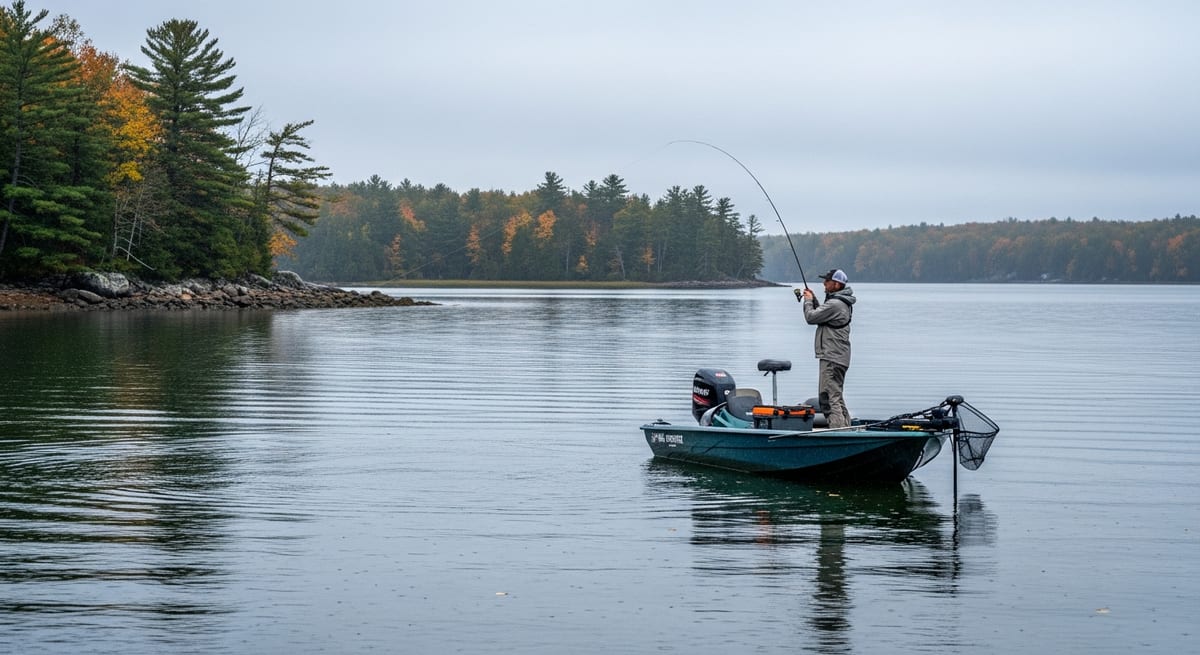
Tournament anglers consistently cite the jig as the lure most likely to catch a big bass. It's not the flashiest bait, and it's not the fastest way to cover water, but it imitates a crawfish or baitfish in a way that large, experienced bass find hard to refuse, even under high-pressure conditions. Here's how to fish it correctly.
Types of Bass Jigs
Flipping jig (football or arkie head): The standard, do-everything bass jig. A rubber-skirted jig on a 3/8-1/2 oz football or arkie head, fished by swimming, hopping, or dragging near structure and cover. Use with a chunk or craw trailer.
Football jig: A wide, flat head that rocks side to side as it's dragged. Designed for hard bottom, rock, gravel, shell. The rocking action kicks the trailer. Use on rocky points, ledges, and gravel transitions. Best for smallmouth and deep largemouth.
Swim jig: A lighter jig with a compact head designed to be swum at mid-depth, just above grass or through sparse vegetation. Pairs with a paddle tail swimbait trailer. Fish it like a fast-moving spinnerbait alternative.
Finesse jig: A compact, lighter (3/16-5/16 oz) jig on a spinning rod for clear water or finicky fish. Pairs with a finesse craw or Ned rig-style trailer. The finesse jig is a drop-shot alternative for anglers who prefer the jig's bottom feel.
Skipping jig: Flat-headed with a compact profile designed to skip across the surface under docks and overhangs. Once mastered, skipping casts under docks with a jig and craw produces significant numbers of big bass.
Trailer Selection
The trailer (a soft plastic attached to the jig's hook) changes the lure's profile, action, and fall rate. This is one of the most under-utilized adjustments in jig fishing.
Chunk-style trailers (Zoom Speed Craw, Strike King Rage Craw): The most common choice. The claws flutter on the fall and kick naturally on the bottom. Good for all seasons. Match craw color to jig skirt color.
Straight tube trailer: A compact, subtle trailer for finesse situations. Adds body without much action, lets the jig's head do the work on hard bottom.
Swimbait trailer (for swim jig): A paddle tail swimbait adds a swimming kicking action to a swim jig retrieve. Berkley Havoc Sick Fish, Keitech Swing Impact: 3-4 inch profiles.
Color matching: The conventional rule is to match trailer color to skirt color, or contrast slightly for visibility in stained water. In clear water, natural colors (green pumpkin, watermelon, brown/orange) mimic actual crawfish. In stained water, add some contrast, green pumpkin with chartreuse, black/blue with blue flake.
Technique and Presentation
Pitching and flipping to cover: The highest-percentage jig technique. Pitch or flip to visible cover, laydowns, dock pilings, brush piles, let the jig fall vertically, and pause. Most strikes come on the initial fall. If nothing after 5 seconds, hop the jig once and let it fall again. If nothing, move to the next piece of cover.
Bottom dragging: Cast past a point, rock pile, or ledge. Allow the jig to reach bottom, then slowly drag it with sweeping rod lifts and drops. The football jig excels here. The wide head rocks as it drags and the claw trailer kicks on every pause. This is how deep-structure summer bass get caught.
Swimming the jig: Swim jig technique: cast near or into sparse vegetation, reel at a moderate pace that keeps the lure just above the grass. Pause at openings. This is a search technique, covers water to locate fish, then slow down and flip to specific targets.
The strike: Jig strikes range from subtle (the line goes slightly heavy) to violent (the rod doubles over). On a Texas-rigged jig, bass usually swim away with the bait, wait for the line to move before setting. Sweep the rod to the side rather than straight up to drive the hook home through the weed guard.
Seasonal Adjustments
Spring (pre-spawn, spawn, post-spawn): Fish shallow with a flipping jig in brown/green crawfish colors. Target spawning banks, laydowns in 2-6 feet, and dock areas. Jigs in natural crawfish colors trigger spawning and pre-spawning bass reliably.
Summer: Transition to football jigs on deep structure (15-25 feet). Rock piles, points extending into deep water, ledges. Drag slowly. Bass are lethargic but will eat a jig that's sitting in their face.
Fall: Return to shallow, but add a swim jig to match the shad forage bass are chasing. Chartreuse/white swim jigs near grass edges and over points during the shad run produce big fall fish.
Winter: The jig is one of the best cold-water producers. Fish it extremely slowly near deep structure in 15-35 feet. Bass hold deep and eat slow-moving presentations that don't require fast reaction. Finesse jig on spinning tackle in cold clear water is the technique.
EVERY SATURDAY MORNING
Weekly fishing intelligence
Nationwide conditions, what's biting, and honest gear deals. One email, no noise.
No spam. Unsubscribe anytime.