
CT Bass Anglers Who Match Crankbait Depth to the Temperature Break Find Fish Year-Round. What Candlewood, Bantam, and Lillinonah Communities Report About Squarebills, Deep Divers, and Reading Structure Through All Four Seasons
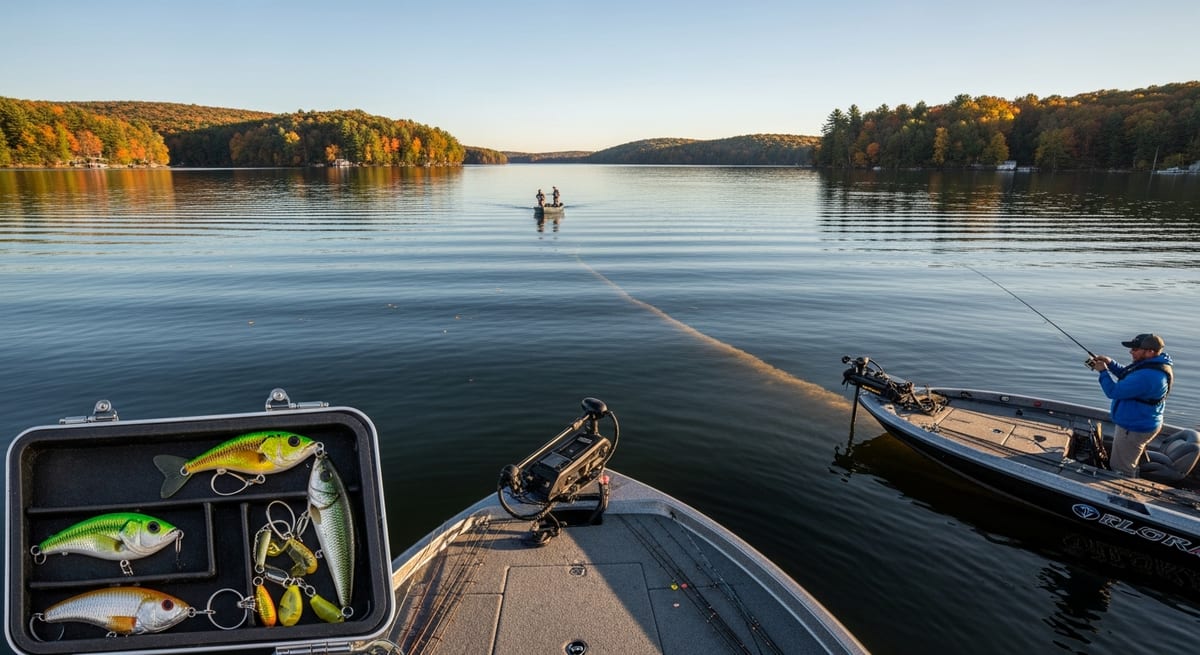
Bantam Lake's eastern laydowns hold bass in 2 to 4 feet of water from late April through early June, and CT anglers who fish that shoreline report that a squarebill deflected through the downed timber draws consistent reaction bites that slower presentations often don't match during the same window. The pattern holds across CT impoundments: bass relating to shallow wood and rock in spring and fall respond to a crankbait's sudden deflection and erratic direction change in ways that are difficult to replicate with presentations designed for a vertical or near-static retrieve. Candlewood's channel swings, Lillinonah's rocky mid-lake arms, and Bantam's grass-edged coves each call for a different crankbait family depending on depth and cover, and CT communities who fish these waters regularly have developed consistent patterns for matching the lure to the structure by season.
Which Crankbait Runs Which Depth on CT Impoundments
Squarebills (0 to 4 feet): The wide, square lip deflects off rocks, wood, and hard cover rather than snagging. CT bass anglers who fish the woody laydowns on Bantam's eastern shore and the rocky points along Lillinonah's mid-lake arms report squarebills producing most reliably in spring and fall, when bass are holding in 2 to 4 feet of water near cover. The Strike King KVD 1.5 and SPRO RkCrawler are frequently cited in CT bass communities. The erratic deflection when the lip contacts a submerged branch or rock often triggers strikes from fish that ignored a clean retrieve through the same zone.
Medium divers (4 to 10 feet): These cover the mid-depth zone where bass hold across much of the CT summer: channel edges, submerged points, and weed lines in the 6 to 10 foot range. The Rapala DT series targets specific depths by model, the DT-6 runs 6 feet and the DT-10 runs 10 feet, removing guesswork on CT lakes where the relevant structure sits at known depths. Anglers fishing Candlewood's main-lake structure note that longer casts add running depth, which matters on a lake where submerged points and channel edges frequently sit at 8 to 12 feet.
Deep divers (10 to 20 feet): Large-lipped crankbaits for offshore humps, channel edges, and submerged road beds. Candlewood holds significant submerged structure from its reservoir history, and deep divers are what CT anglers cite for reaching bass staged on that structure in midsummer. The Norman DD22 and Rapala DT-16 cover the 15 to 20 foot range. The setup is more demanding: longer casts, heavier gear, and a retrieve slow enough to keep the lure in contact with structure.
Lipless crankbaits: No diving lip; these sink on a vertical fall and vibrate on a straight retrieve or a ripping action. CT kayak bass anglers who fish Bantam's grass lines in April report that ripping a lipless crankbait free from early-season vegetation draws reaction strikes that other presentations do not. The Rat-L-Trap is the most established option in this category. These also produce over hard bottom on Candlewood's gravel flats in early spring before the grass fills in.
How CT Bass Communities Time the Crankbait Shift Through the Season
Spring: Squarebills in crawfish patterns, brown, orange, and red, through shallow cover near Bantam and Lillinonah's spawning flats. CT bass anglers report the bite typically turns on when water temperatures reach the low to mid 50s°F. Below that threshold, crankbaits generally produce less than slower-moving presentations on CT impoundments. The rocky, log-strewn banks on the north end of Bantam are consistently mentioned in CT community reports as reliable squarebill water through this window.
Summer: As surface temperatures push past 70°F, communities fishing Candlewood's main lake report bass pulling off the flats and onto main-lake humps, channel bends, and submerged structure in the 10 to 18 foot range. Medium divers and deep divers in shad-imitating colors, chrome, white, and blue back, match the predominant forage through this period. The relevant structure on Candlewood often sits in the 12 to 16 foot range, which is where deep divers earn consistent use among CT boat anglers.
Fall: CT impoundment anglers frequently describe this as the most productive crankbait window of the year. Bass follow shad into the shallows as baitfish school near the surface in October and early November. Shad-colored squarebills and medium divers in the 5 to 10 foot range draw active fish through this window. Lillinonah's back coves and Bantam's western grass edges are both cited in CT fall fishing communities as worth targeting before water temperatures drop below 50°F.
Winter: CT bass anglers who fish through the cold months report that crankbaits still produce, but only on a dramatically slower retrieve. A medium-diving crankbait worked at near stop-and-go pace in the 10 to 15 foot range on Candlewood can draw strikes from bass stacked on main-lake structure when other presentations draw nothing. Cold water demands patience with the retrieve speed.
Retrieve Adjustments CT Anglers Report Making on Pressured Impoundments
Steady retrieve: The baseline for most crankbaits. Find the speed that produces the lure's maximum wobble and keep it consistent through the cast. CT anglers note that baitcasting reels in the 5.1:1 to 6.1:1 gear ratio range make it easier to maintain that retrieve speed on long casts over open water, which comes up regularly on Candlewood's wide main-lake sections.
Deflection: Intentionally running the crankbait into rocks, stumps, or dock pilings. The direction change draws strikes from bass that ignored a clean retrieve through the same water. Squarebill anglers on Bantam and Lillinonah who fish around dock hardware and submerged wood describe deflection as the primary strike trigger, more so than overall retrieve speed or color choice.
Pause: After a deflection, or at intervals during a retrieve, a 1 to 2 second pause lets a buoyant crankbait float upward. CT community reports consistently mention that bass following a crankbait often commit on the pause rather than during the active retrieve, particularly in cooler water in October and November when the fish are less aggressive.
Ripping grass: For lipless crankbaits in vegetation, allow the lure to sink into the grass, then rip it free with a sharp rod snap. CT anglers fishing Bantam's early-season grass lines report this drawing reaction strikes when a steady retrieve would snag and kill the presentation entirely.
Gear Setup Preferences Among CT Crankbait Anglers
A medium or medium-heavy baitcasting rod with a moderate action is the setup CT bass communities consistently describe for crankbait fishing. Moderate action, where the rod bends further into the blank than a fast-action rod, helps absorb short strikes so hooks stay in the fish, and it also loads more smoothly during the cast for accurate throws to specific targets. Fast-action rods are reported to pull the bait away from fish before the hooks seat fully.
Gear ratio: A 5.1:1 to 6.1:1 baitcasting reel is the most commonly cited range among CT tournament anglers for crankbait work. The lower gear ratio maintains consistent retrieve pressure and helps anglers avoid burning through a crankbait faster than the action warrants.
Line: 12 to 17 lb monofilament is the traditional crankbait choice, and many CT anglers on Bantam and Lillinonah still prefer it. Mono's buoyancy and stretch absorb shock on a hard strike, which reduces pulled hooks on a long retrieve. A meaningful share of CT tournament anglers have moved to 10 to 15 lb fluorocarbon for clearer water. Fluorocarbon sinks and adds a few feet of running depth to the crankbait, and its lower visibility factors into decisions on pressured impoundments like Candlewood where bass see consistent weekend boat traffic through spring and fall.
What CT Impoundment Regulars Do Differently From First-Time Visitors
The habits CT anglers who regularly fish Candlewood, Bantam, and Lillinonah are consistent about:
Depth matching: A deep diver rated for 15 feet run over a 6-foot flat produces nothing worth the cast. CT bass communities are specific on this point: the crankbait's running depth needs to tick the bottom or the relevant structure to trigger the deflection bites that make the presentation work. Mismatching depth is the most commonly cited failure point by CT anglers when visitors report unproductive crankbait days on these lakes.
Hook condition: Factory hooks on crankbaits vary in sharpness, and CT tournament anglers report checking hooks before every trip. A hook that drags across a fingernail without catching is considered too dull. Many anglers swap factory trebles for Gamakatsu or Owner aftermarket hooks before fishing a new crankbait. On CT impoundments where bass have seen consistent pressure through the season, a missed hook set is often the only opportunity on a given fish.
Cold-water retrieve speed: CT anglers who fish through October and November note that water below 55°F requires a significantly slower crankbait retrieve than warm-season fishing. Communities on Bantam and Lillinonah in late fall report that anglers used to summer retrieve speeds frequently leave early on October mornings when slowing down considerably would have produced. The bass are holding on the structure. The retrieve speed is the variable.
EVERY SATURDAY MORNING
Weekly fishing intelligence
Nationwide conditions, what's biting, and honest gear deals. One email, no noise.
No spam. Unsubscribe anytime.