
CT Bass Anglers Fishing Candlewood's Timber and Bantam's Grass Lines Report the Texas Rig Outproduces More Complex Setups When Cover Gets Thick. What Impoundment and River Communities Say About Weight Selection, Plastic Choice, and Working Structure That Eats Other Rigs
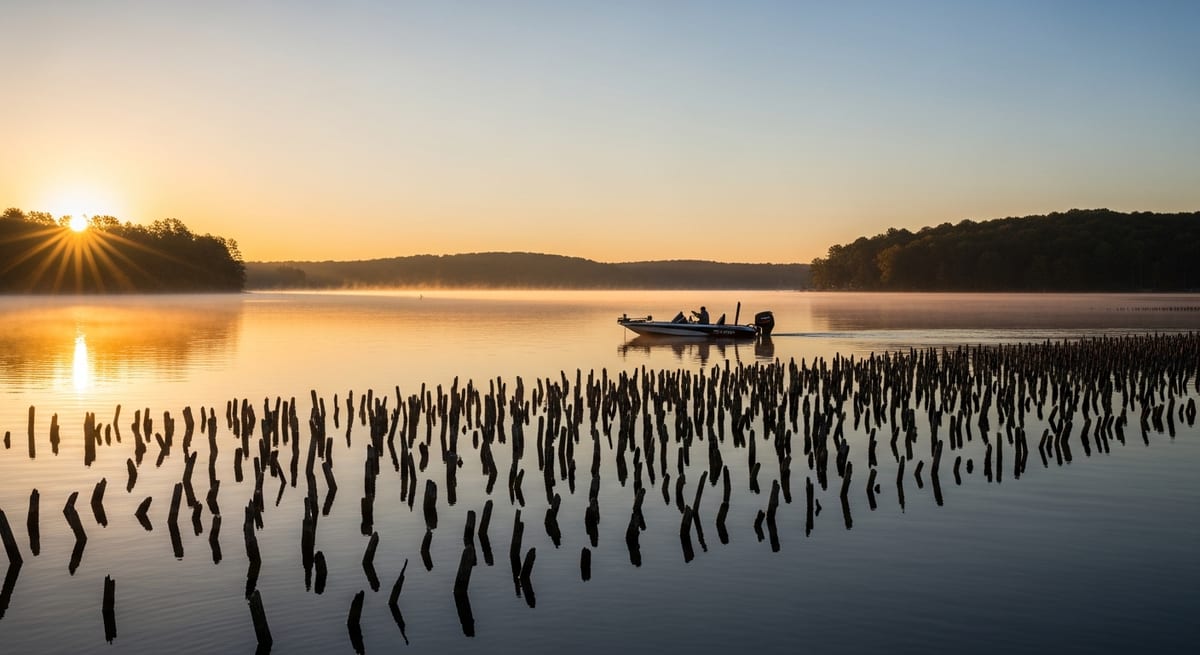
Bass communities on Candlewood and Bantam consistently report that the Texas rig produces in conditions where other presentations get hung up or go ignored: submerged timber, matted vegetation, and rocky structure where a treble-hook setup fouls after a few casts. The setup is weedless by design. A bullet sinker threads on the main line, an offset hook ties on below it, and the soft plastic rigs with the hook point buried inside the bait. The plastic compresses on the strike and the hook drives through cleanly. What keeps CT anglers returning to it across seasons is how many variables can be adjusted without rebuilding the rig: weight, plastic profile, and presentation speed all change how it fishes. It's not a solution to every scenario, but in the heavy-cover impoundments and boulder-strewn river runs that define CT bass fishing, the community reaches for it more than any other presentation.
How the Setup Works and Why CT Cover Rewards It
A Texas rig consists of three components: a bullet-shaped sliding sinker, a hook, and a soft plastic bait rigged with the hook point buried inside the bait. The buried hook point is what makes it weedless. On Candlewood's submerged timber and the grass lines along Bantam's shoreline points, anglers report dragging the rig through structure that would foul a jig head on the first cast. When a bass takes the bait and the angler drives the hook, the soft plastic compresses and the point clears cleanly.
CT impoundment communities describe the Texas rig as their primary setup for water with significant hard cover: laydowns, dock pilings, and submerged rock. Housatonic and Farmington river anglers report it as a reliable option for rocky bottom structure and current seams that hold smallmouth, particularly when water drops below 60°F and fish tighten to the bottom.
Weight, Hook, and Plastic Selection: What CT Communities Use
Weights: CT bass communities tend to favor tungsten bullet weights over lead. Tungsten is denser at the same size, harder against the bottom (transmitting more vibration through rock and gravel), and legal in waters where lead restrictions apply. Weight choices reported by Candlewood and Housatonic regulars: 3/16 oz for finesse work in clear, shallow water; 1/4 oz as the standard all-depth option; 3/8 oz for deeper structure and heavier vegetation; 1/2 oz and heavier for punching through floating mats. Anglers who peg their weight tight to the hook report more direct contact with cover. Leaving it sliding produces a more natural fall that tends to draw strikes on the initial drop in open water.
Hooks: Offset EWG (Extra Wide Gap) hooks handle most soft plastic profiles. Anglers fishing 4-5" worms on spinning gear typically run 3/0; those working 6-7" worms or small creature baits run 4/0; 5/0-6/0 for larger profiles and 10"+ ribbon tails used in high-stain or post-frontal conditions, when visibility drops on the lower Housatonic or Lillinonah's back coves.
Plastics: Straight-tail and ribbon-tail worms (4"-12"), creature baits (Strike King Rage Craw, Zoom Super Chunk), and stick baits (Senko-style) all work Texas-rigged. The impoundment community's general pattern: smaller profiles (4-5") in clear water like Bantam when visibility exceeds 4 feet; larger profiles (7-10") in the stained water common in Lillinonah and the lower Housatonic after rain events.
Rigging It Clean: The Details That Change Results
- Thread the bullet sinker onto your main line, point forward, and tie on your EWG hook. 2. Insert the hook point into the nose of the soft plastic, going in about 1/4" and then turning the hook out the side. 3. Rotate the hook so the eye is aligned with the bait's nose. 4. Lay the hook flat against the bait's back to find where the hook point needs to exit. 5. Push the hook point through the bait at that point, burying the point just slightly inside the plastic. It should indent the bait but not protrude. 6. The bait should hang straight with no bunching or twisting.
CT anglers fishing Bantam, where summer visibility can reach 6-8 feet in the clearer basins, report that a misaligned rig draws noticeably fewer strikes than in stained water. A crooked plastic spirals on the fall rather than dropping straight, and bass in clear water will follow it without committing. In stained water on Lillinonah or the lower Housatonic, the penalty for a slightly off rig is smaller. Impoundment communities generally describe straight presentation as the baseline standard regardless of conditions.
How Candlewood, Bantam, and Housatonic Anglers Work the Rig
Dragging along Bantam's grass lines: Cast beyond the target, let the rig sink to the bottom, and pull it slowly with the rod tip. Every 4-5 seconds, stop and let the rig sit. Bantam anglers fishing the grass-and-clay points report that pauses produce strikes more consistently than continuous movement, particularly when water is below 62°F in spring and fall.
Hopping on the Housatonic: Lift the rod tip sharply to hop the bait off the bottom, then let it fall on a semi-slack line. The fall is when most strikes occur. Watch the line for any twitch or jump. Housatonic wade anglers fishing the gravel runs above Derby report that a hop-and-fall retrieve through deeper current seams produces smallmouth that ignore a dragged presentation. Shorter hops (6-12 inches) in cold water; more aggressive movement in summer.
Flipping Candlewood's timber: Short, precise casts to laydowns and dock structure within 15-30 feet. Drop the rig straight into the target zone with minimal splash, let it sink, and work it with subtle shakes in place. Candlewood communities report that flipping during the May-June window, when bass move into shallower timber to stage before and during the spawn, produces some of the larger fish reported each season. CT DEEP maintains water-specific size limits for largemouth bass; verify current regulations at ct.gov/deep before fishing Candlewood, as impoundment rules differ from statewide defaults.
Punching mats on Lillinonah: When bass push under floating vegetation in Lillinonah's protected coves through summer, heavier weights (3/4 oz to 1 oz) with a punch skirt let the rig break through the mat surface and reach fish underneath. This requires heavier gear: 50-65 lb braid and a stout rod. Anglers report that trying to punch mats on standard largemouth tackle produces more lost fish than successful ones.
Gear That CT Anglers Run for Impoundment and River Bass
Spinning setup (finesse, clear water): Medium-light 6'10"-7' rod, 2500-size spinning reel, 10 lb braid main line with 8 lb fluorocarbon leader. Standard for 3/16 oz presentations on Bantam and Lillinonah in late summer when water clarity peaks and bass respond better to smaller, lighter rigs.
Baitcasting setup (standard impoundment work): Medium-heavy 7' rod, 6.3:1-7.1:1 baitcaster, 15-17 lb fluorocarbon. The setup CT impoundment communities most commonly describe for general-purpose Texas rig work on Candlewood and Bantam. Handles most depths, cover types, and weight ranges (1/4-1/2 oz).
Flipping setup (heavy timber and mat work): Heavy 7'3"-7'6" rod, 7.1:1 or faster baitcaster, 50-65 lb braid. Anglers report that losing fish to timber wrap is the primary failure mode on Candlewood when running lighter tackle. The heavier setup allows immediate pressure to turn fish before they reach structure. As of spring 2026, Candlewood and Bantam launch areas remain accessible via DEEP-maintained public boat ramps; check ct.gov/deep for current hours and seasonal closures.
EVERY SATURDAY MORNING
Weekly fishing intelligence
Nationwide conditions, what's biting, and honest gear deals. One email, no noise.
No spam. Unsubscribe anytime.