
Kayak Bass Fishing: How to Catch More Bass from a Kayak
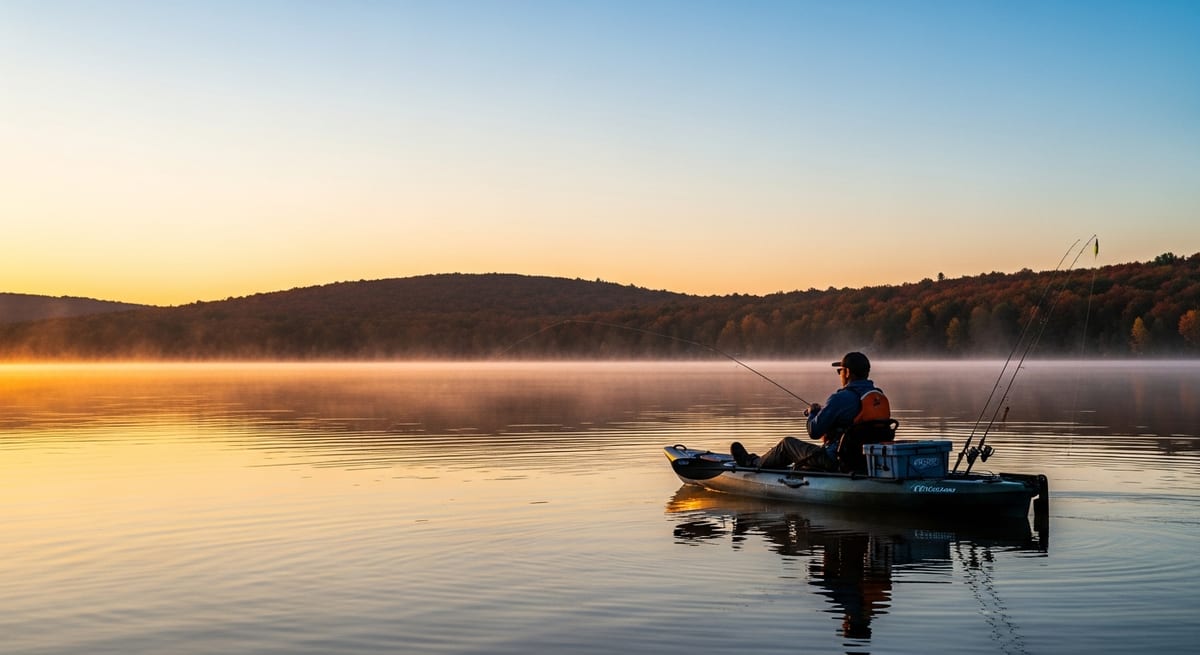
The kayak has advantages over every other fishing platform that anglers routinely underestimate. You're silent, no trolling motor hum, no bilge pump cycling, no hull slap. You're low to the water. You can slide under overhanging willows and dock boards that turn back every boat. You're accessible everywhere, shallow flats, tiny ponds, brush-choked creek channels that haven't felt a fishing pressure since last year. Learning to fish a kayak specifically, not just applying boat tactics from a smaller platform, is what separates kayak anglers who consistently catch from those who just float.
The Kayak's Unfair Advantages
Silent approach: A kayak approaching on a paddle can get within 20 feet of a feeding bass without spooking it. Use this ruthlessly. Position within short cast distance of structure before making your first cast, don't stand off at 50 feet because that's what you'd do from a boat. The kayak earns the close approach. Shallow water access: Most largemouth bass in Connecticut spend significant time in water under 4 feet. Boats can't follow. A kayak can slide into 18 inches of water over a flat without disturbing the bottom. Approach angle: Paddling quietly, you can set up perpendicular to a dock, parallel to a weedline, or directly upwind of a feeding school, angles that powerboats can't achieve without spooking everything.
Positioning and Anchor Strategy for Kayak Bass
Boat anglers drift with the trolling motor; kayak anglers need a deliberate positioning strategy. An anchor trolley system (a pulley line along the kayak's side) lets you slide the anchor point fore or aft. This controls which direction you face while anchored. Anchor off the stern when you want to face into current or wind. Anchor off the bow when you want your anchor to hold while you swing parallel to a structure edge. For open-water fishing, a stake-out pole in shallow water is faster to deploy than an anchor and completely silent.
Best Techniques for Kayak Bass Fishing
Pitching and flipping: The kayak's close-quarters position makes pitching and flipping into tight cover more effective than from a boat. You can position 15 feet from a dock, cypress tree, or grass clump and make accurate short casts with a Texas-rigged worm or beaver bait. Less room for a backswing actually helps. You learn a cleaner, quieter pitch that drops the bait exactly where you aimed it. Finesse techniques: Drop shot, ned rig, and shaky head rigs are ideally suited to kayak fishing. The kayak naturally moves slowly; these techniques work best fished slowly over precise bottom structure. Topwater at dawn: Paddle silently to a shallow flat before first light and work a walking bait or popper without making a sound. You'll intercept bass before they see you coming. Surface explosions before sunrise from a silent kayak are one of the great bass fishing experiences.
Tackle Storage and Rod Management on a Kayak
Space is the constraint on a kayak. Rigging out with six rod setups like a tournament boat just means six rods tangling with each other. Pick three setups and commit: a flipping/pitching combo, a spinning rod for finesse work, and a medium-action setup for versatile presentations. Store them in rod holders behind you or in front, not laid across the deck. A small tackle tray mounted in the center hatch keeps your most-used terminal tackle accessible without digging through bags. Magnetic accessories (for pliers, line clippers) reduce dropped items in the water.
Connecticut Lakes and Ponds for Kayak Bass Fishing
Connecticut's shallow, structure-rich ponds are ideal kayak bass water. Lake Candlewood: Connecticut's largest lake has enormous shallow grass flats that hold largemouth in summer, completely unreachable by conventional boat anglers who stay in the main basin. Bantam Lake in Litchfield County offers large areas of shallow lily pad flats productive all summer. Glastonbury's small ponds: The town of Glastonbury has several Class 3 (small watercraft only) ponds that are essentially private kayak bass fisheries. Moodus Reservoir: A 3-mph speed limit keeps boats slow, but the kayak angler can still paddle to the quiet end coves.
Safety Basics for Kayak Fishing
Wear your PFD. Every kayak fishing fatality in CT in recent years involved an angler not wearing a life jacket. A leash on your paddle prevents it from floating away if you go over. Bring a waterproof phone case, your phone is your GPS, your emergency call, and your tide chart. File a float plan with someone on shore: where you're launching, where you plan to fish, when you plan to return. If you don't check in by that time, they call for help. These precautions take five minutes and make the difference between a recovery and a rescue.
EVERY SATURDAY MORNING
Weekly fishing intelligence
Nationwide conditions, what's biting, and honest gear deals. One email, no noise.
No spam. Unsubscribe anytime.