
How to Catch Crappie: Techniques, Gear, and Finding Their Seasonal Locations
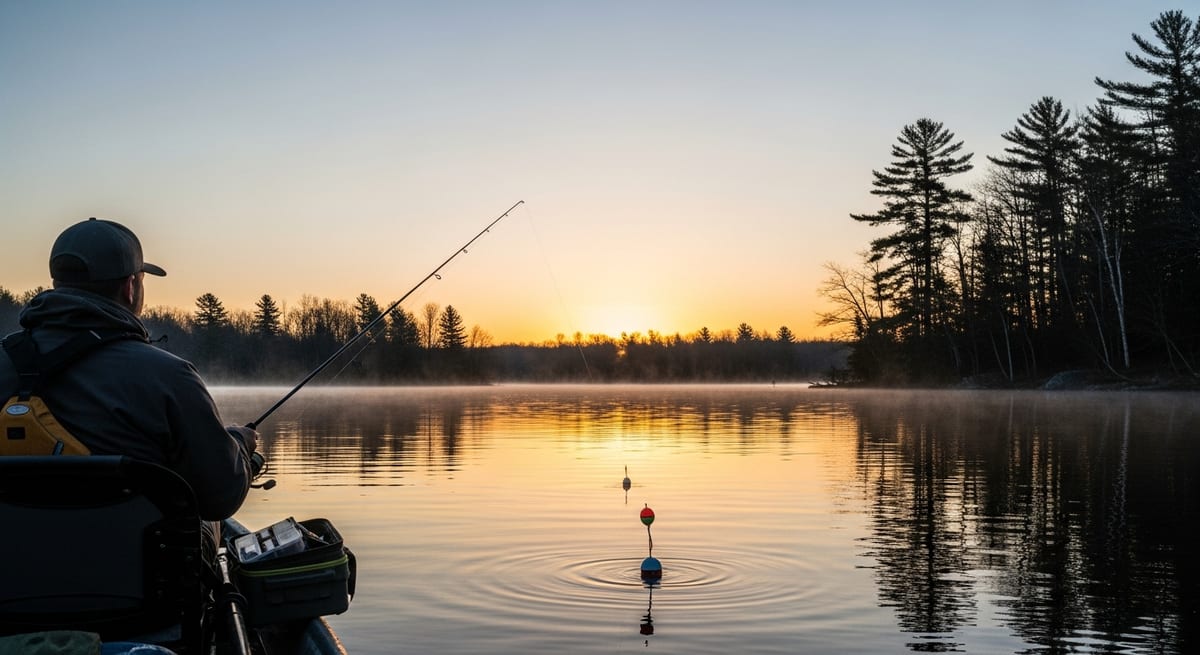
Crappie don't get the press that bass and trout do, but experienced freshwater anglers seek them out deliberately. They school tightly, feed aggressively when active, and are arguably the best-eating freshwater fish in the Northeast. A school of crappie biting well is about as much fun as light-tackle fishing gets. Here's how to find them and catch them.
Where Crappie Live
Crappie are structure-oriented schooling fish. They hold in groups near cover, often suspending at a specific depth rather than rooting on the bottom like bass.
Key habitats:
- Submerged brush and timber: The #1 crappie location in any body of water. Old standing timber in reservoirs, brush piles (natural or placed by anglers), and submerged stumps concentrate crappie year-round.
- Dock pilings and boat houses: Crappie use vertical structure to suspend at their preferred depth. Multi-piling docks with shade are magnets.
- Lily pad stems and weed edges: In late spring and early summer, crappie use emergent vegetation edges. They suspend in the stem zone.
- Bridge and dam structure: Riprap around dams and bridge abutments holds crappie year-round, especially where current creates an eddy.
- Deep water in summer: Crappie push to 15-25 feet in midsummer heat. They still relate to structure but it may be a brush pile or ledge in deeper water than you'd expect.
Finding schools: Crappie school vertically, once you find one, there are typically many at the same depth within a small area. When you catch one at 8 feet, immediately drop back to 8 feet.
Seasonal Patterns
Spring (March-May): Pre-spawn crappie move from deep winter haunts to shallower staging areas. As water warms into the 55-65°F range, they spawn in 2-6 feet around brush, stakes, and shallow dock areas. Spring is the most accessible crappie season. They're shallow and aggressive.
Summer: Post-spawn crappie push deeper with warming water. They hold at 10-20 feet near deep structure. Fish deep brush piles and ledges with vertical presentations. Dawn and dusk they may push shallower; midday they're in their deepest location.
Fall: Crappie return to more active feeding as water cools. They follow shad schools (their primary forage) and can be found at mid-depth near points and weed edges. This produces excellent fishing.
Winter (ice fishing): Ice fishing for crappie over known brush piles or deep structure in 15-25 feet of water produces excellent results. They school tightly in winter and a school of feeding winter crappie is one of the best ice fishing experiences in Connecticut. Use small jigs (1/32-1/16 oz) with spikes, waxworms, or tiny tubes.
Gear Setup
Crappie gear is specifically light-action:
Rod: A 5.5-6.5 foot ultra-light or light spinning rod. The soft tip maximizes sensitivity and prevents tearing hooks from crappie's paper-thin mouths on the hookset.
Reel: 1000-2000 size spinning reel. You're fishing 4-8 lb line.
Line: 4-6 lb monofilament or fluorocarbon for clear water. 6-8 lb braid with a 4-6 lb fluorocarbon leader for stained water or brush fishing where line abrasion is a concern.
Hooks: Size 1-4 Aberdeen-style light-wire hooks. Light wire penetrates easily and bends rather than breaking if snagged. You can often straighten bent hooks to recover them from snags.
Jig heads: 1/32-1/16 oz for shallow water; 1/8-3/16 oz for deeper presentations. Color-coordinated heads (chartreuse, pink, white, black) add flash without requiring a trailer.
Techniques That Work
Tube jig vertical presentation: A 1.5-2 inch tube jig (crappie tubes) in chartreuse, white, or pink on a 1/16 oz head lowered vertically next to structure. Raise and lower 6-12 inches repeatedly. This is the most reliable crappie technique for dock and timber fishing.
Small inline spinners (Mepps, Rooster Tail): Cast and slow-retrieved, these produce active crappie when they're feeding along weed edges and in open water. The flash and vibration works even in stained conditions.
Live minnows under a bobber: Thread a small minnow (1-2 inch) on a size 2-4 hook under a small float set at the crappie's holding depth. Classic crappie technique. Effective but requires keeping live bait alive and handling minnows.
Spider rigging (from a boat): Multiple rods held in rod holders extending off the bow, each with a jig or minnow at different depths. Slowly motor forward to "spider" a wide area. When you find the school at a specific depth, set all rods to that depth.
The most important adjustment: Find the crappie's depth. In summer, this might require trying 8, 12, 15, 18, and 22 feet before you find where they're holding. Once you get a bite, note exactly how much line was out and stay at that depth until it stops producing.
EVERY SATURDAY MORNING
Weekly fishing intelligence
Nationwide conditions, what's biting, and honest gear deals. One email, no noise.
No spam. Unsubscribe anytime.