
Crappie Fishing in Connecticut: The Best Spring Panfishing Guide
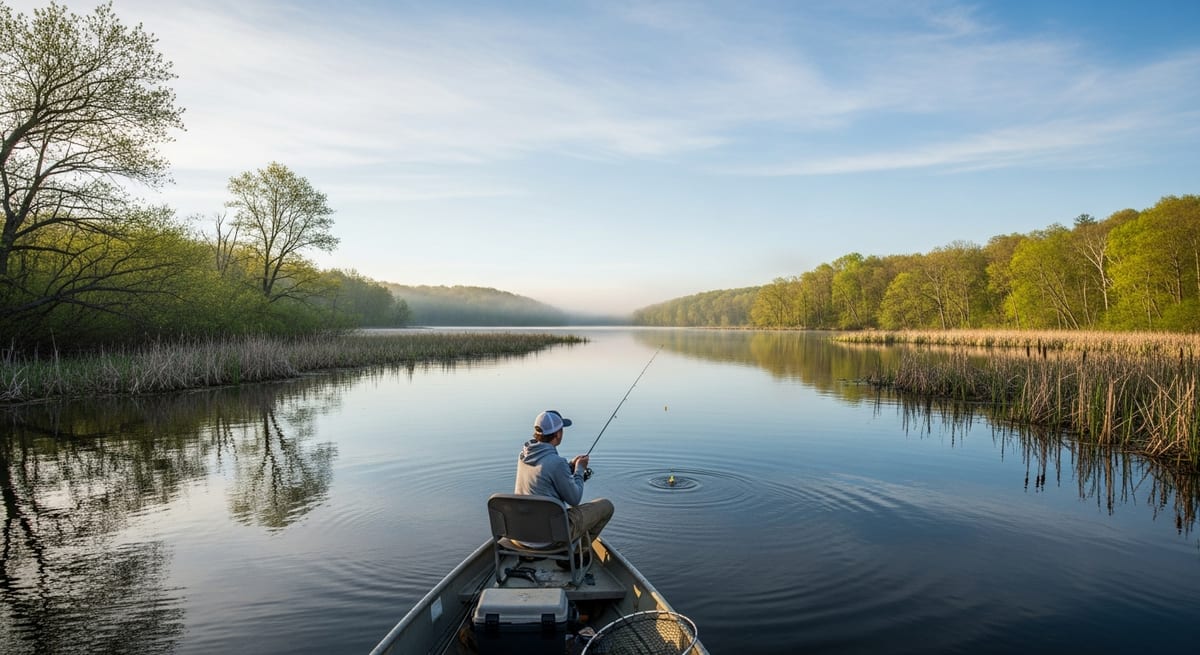
Bantam Lake's shallow western cove is loaded with crappie from mid-April onward. Fish that most bass anglers drive right past on their way to deeper water. From late March through May, crappie move into the shallows to spawn, feed hard throughout the day, and are genuinely excellent on the table. If you've never targeted them specifically, you've been leaving easy, great-eating fish behind every spring.
The Spring Crappie Window
Crappie typically spawn when water temperatures reach the upper 50s to mid-60s°F, somewhere in that 58-65°F range, though the actual timing shifts year to year. In Connecticut, that usually means late March through May, with southern CT lakes warming earlier than the higher-elevation water in Litchfield County.
The pre-spawn period, water temps roughly in the low-to-mid 50s, is often the most productive fishing of the year. Fish are pushing shallow, feeding hard to build energy before the spawn, and not yet wary. This window typically lasts two to four weeks, and the biggest crappie of the season tend to be most catchable right now.
During the spawn itself, fish hold over hard bottom, sand, gravel, or submerged wood, and will hit nearly anything you put in front of them. Post-spawn fish pull back a bit deeper and get pickier, but they're still catchable.
The ice fishing and deep-summer patterns are a different game entirely. If you're reading this in March or April, focus on the pre-spawn and spawn windows. That's the prize.
Best Connecticut Lakes for Crappie
Crappie populations vary significantly by lake in Connecticut. The species was introduced to many water bodies over the years and has established reproducing populations in select lakes across the state. A few that consistently show up in reports:
Bantam Lake (Litchfield): A consistent producer in western CT. The shallow western end near the outlet warms quickly in spring and concentrates fish. Shore access is limited, but a kayak or canoe gets you to the good areas without issue.
Lake Lillinonah (Bridgewater/Newtown): A sizable Housatonic River impoundment with solid crappie populations, especially near submerged wood and channel edges. Boat access at the launch in Bridgewater. The coves off the main channel fish particularly well in the pre-spawn.
Candlewood Lake (various towns): CT's largest lake has scattered crappie throughout. Fish the coves with wood structure and dock pilings in spring. Shore access is limited due to private development, but the boat launches are well-maintained and give you access to the productive areas.
Ball Pond (New Fairfield): A smaller, less-pressured lake with crappie holding in the shallower wood-covered sections.
East Twin Lake / West Twin Lake (Salisbury): Remote feel, good panfishing. Worth the drive from western CT if you want to avoid crowds.
Check the CT DEEP freshwater fishing guide and any lake-specific reports for current year conditions and stocking updates.
Gear Setup for CT Crappie
Crappie are a light tackle species. Heavy gear will catch them, but you'll miss half the bites and lose the feel that makes the fishing fun.
Rod: 5.5-7 foot ultralight spinning rod, rated for 1-6 lb line. The St. Croix Triumph and Ugly Stik Elite in ultralight are both affordable and well-suited for this. A medium-light works in a pinch, but a true ultralight is the right tool.
Reel: Any small spinning reel in the 1000-2000 size range. The Shimano Sienna and Penn Battle III 2000 are both reliable options in the $30-60 range.
Line: 4-6 lb monofilament or fluorocarbon is the standard. You can run 8 lb braid with a 6 lb fluoro leader if you're fishing heavy wood cover. Most CT panfishers run 6 lb mono, solid compromise between sensitivity and snag resistance.
Terminal tackle: Small jig heads in the 1/32-1/8 oz range tipped with 1.5-2 inch soft plastic grubs. Chartreuse, white, pink, and orange are the reliable crappie colors. The Bobby Garland Baby Shad tube jig is a go-to. It just produces consistently. For live bait, a small fathead minnow on a 1/32 oz jig head under a small float is one of the highest-percentage setups there is, especially during the pre-spawn.
Presentations and Techniques
Dock and wood structure: In early spring, fish tight to dock pilings, fallen trees, and submerged brush. Crappie tuck into structure for warmth and ambush. Lower your jig vertically alongside the cover rather than casting past it, slow lift-and-fall, let the jig hang a moment before the next lift.
Shallow flat casting: As temps climb, fish spread onto flats over soft bottom and sparse grass. A slow, steady retrieve with a small paddle-tail swimbait or grub covers water well. Vary your retrieve depth until you dial in where they're holding.
Under the float: Don't dismiss the bobber setup. A small weighted float with a jig 18-36 inches below it, worked near wood cover, catches fish at every skill level. Adjust depth until you find where the fish are suspended, crappie often hold at a consistent depth rather than sitting on the bottom.
Color selection: Start with white or chartreuse in stained water; switch to more natural shad colors (silver, grey, or smoke) in clearer water. When one isn't producing, changing color is often more effective than changing location.
Eating Crappie (They're Worth It)
Crappie are genuinely excellent table fare, among the best-eating freshwater fish in the Northeast. The white, flaky, mild flesh is similar to yellow perch but with larger fillets. Fish in the 9-12 inch range yield two solid fillets with minimal bones.
Simple pan-fry: Dredge fillets in seasoned flour or cornmeal and cook in butter over medium-high heat, about 2-3 minutes per side. Finish with a squeeze of lemon. You don't need anything elaborate when the ingredient is this good.
For CT regulations on crappie, check the current CT DEEP freshwater fishing guide. As of recent seasons there's generally no size limit and a 25-fish daily bag limit, but verify current regs before you head out, since these can change year to year.
Spring Timing Summary
A quick reference for CT crappie in spring:
Best period: Late March through mid-May (pre-spawn through spawn) Water temp target: Upper 50s to mid-60s°F. A stream thermometer is worth carrying Depth to target: 2-8 feet in the pre-spawn, shallower during the spawn Best time of day: All day is productive during pre-spawn; early in spring, midday sun moves fish into the shallows fastest What to bring: Ultralight rod, 1/32-1/16 oz jig heads, small grubs and tube jigs in chartreuse/white, small floats, a net
The crappie bite in CT is one of the most consistent spring fisheries on any lake in the state, and it's running wide open while most anglers are still waiting on bass season. If you want action before that window heats up, this is where to be.
EVERY SATURDAY MORNING
Weekly fishing intelligence
Nationwide conditions, what's biting, and honest gear deals. One email, no noise.
No spam. Unsubscribe anytime.