
CT Bluegill, Yellow Perch, and Crappie Are in Every Lake You Already Fish. On Ultralight Gear, They Bite Better Than Anything You're There For.
The Most Reliable Bite Nobody Brags About
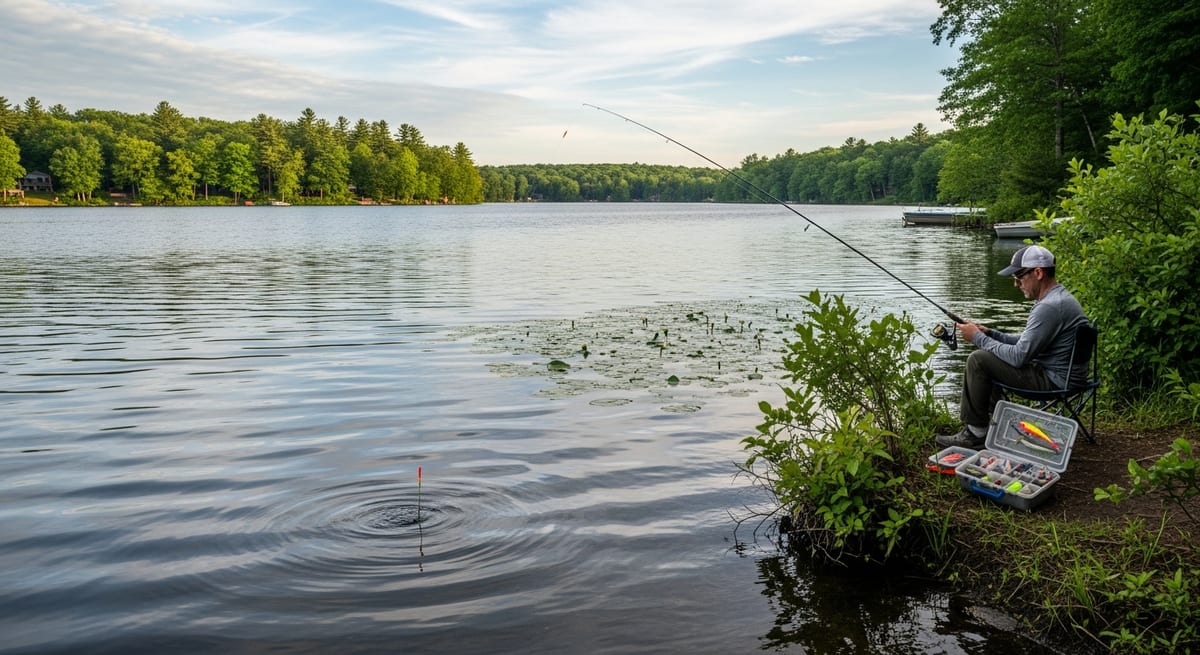
Anglers who fish Coventry Lake's town dock through July and August routinely report landing 20-plus bluegill in a single afternoon. Most of them on half a red worm under a slip float, most of them on rods that bass anglers wouldn't bother pulling out of the truck.
That gap, between the species CT anglers target and the species that are actually biting, defines the panfish situation in this state.
Bluegill, pumpkinseed, yellow perch, white perch, black crappie, and white crappie are in virtually every warm-water lake and pond in Connecticut. They bite when bass have gone deep. They bite through cold fronts. They're active in May and again in August. On ultralight gear, a 10-inch yellow perch pulls harder than most anglers expect, and the CT kayak and canoe community has long rated bluegill on a 3-weight fly rod as some of the most entertaining warm-water fishing the state offers.
The consensus among CT panfish regulars: first-time anglers who show up at the right dock almost always leave with fish in hand. That's a harder claim to make for bass or trout.
Six Species, and What Makes Each One Worth Knowing
Bluegill is what most anglers will catch first and most often. Round, compressed body, blue chin marking. They hit jigs, worms, and poppers without much persuasion. Unlike most CT warm-water species, the bluegill bite isn't particularly sensitive to seasonal conditions. Anglers who fish Lake Waramaug's shallows in April ice-out temperatures report solid bluegill action, and the same holds through August afternoon heat. Jigs, worms, and small poppers all produce.
Pumpkinseed gets consistently mistaken for bluegill, brighter coloring, orange and blue, with a red-orange spot on the ear flap. Same dock-and-weed-edge habitat, same light-tackle behavior. On a fly rod, a pumpkinseed hitting a small surface popper produces one of the cleaner visual takes in CT freshwater. The surface bite peaks from late May through August.
Yellow perch are a school fish. Find one and you've likely found a dozen. They hold well in larger lakes, waramaug, Mansfield Hollow, and the Connecticut River backwaters all draw anglers who target perch specifically. Cleaned and pan-fried, yellow perch are widely considered among the best table fish CT freshwater has to offer: mild, firm white flesh that holds well in cast iron. They also rank among CT's most productive ice-fishing targets, staying active through conditions that shut down most other species.
White perch carry striped bass lineage, and the fight reflects it. Silver-white, schooling, and they hit jigs and small swimmers hard for their size. Common in tidal rivers. The Niantic, Thames, and Connecticut River tidal section all hold them, and in many freshwater lakes as well. Anglers who have fished both species describe white perch as noticeably faster and more aggressive than bluegill, with a run on the hookset that catches new anglers off guard.
Black crappie is the species anglers will specifically plan trips around once they've caught a few. Large mouth, light mottled patterning, and almost always holding tight to woody structure, submerged trees, brush piles, dock pilings. They take more location work than bluegill, but CT crappie anglers who've found a school against a fallen tree describe it as some of the most satisfying light-tackle fishing the state offers. They hold up well on the table too: sweet, firm, and cleaner in flavor than most CT bass.
White crappie appear in some CT lakes but show up less frequently in angler reports than black crappie. Similar structure habits, somewhat more tolerant of murky water. CT DEEP species distribution surveys are the most current source for which specific lakes hold them.
CT Waters the Panfish Regulars Return To
Panfish are present in nearly every warm-water lake and pond in the state. This isn't a species that requires a destination trip. But certain waters come up repeatedly in reports from anglers who fish panfish across multiple seasons.
Coventry Lake (Coventry): Accessible public launch, good shoreline coverage, and bluegill holding under virtually every dock from May through September. CT panfish regulars cite it as one of the most reliable spots for first-time anglers. The dock bite is consistent enough that it's the first recommendation that comes up when experienced CT panfish anglers get asked where to take someone new.
Lake Waramaug (spanning Warren, Washington, and Kent): One of CT's larger and cleaner lakes, crossing three township lines. Yellow perch school in open water; bluegill and pumpkinseed stack near weed edges in the shallows. Anglers from central CT regularly make the drive specifically for the variety of species available on a single outing.
Mashapaug Lake (Union): Remote, lightly pressured, and consistently productive in seasonal reports. The panfishing here draws less traffic than more accessible CT lakes, and that shows in the quality of the bite.
Mansfield Hollow Lake (Mansfield): Managed state access, consistent through the season, and yellow perch showing in good numbers along weed edges based on angler reports across recent spring seasons. Solid shoreline access for wade fishing when perch move shallow in April and May.
Tidal rivers for white perch: The Niantic, Mystic, Thames, and Connecticut River tidal sections hold white perch in numbers that tidal regulars consistently describe as underutilized by most freshwater anglers. The strongest windows are May-June during staging and again in September-October as water temperatures drop back through the low 60s. A 1/8 oz jig bounced along the bottom or a small inline spinner on light spinning gear is the approach anglers who target these rivers specifically tend to default to.
What experienced CT panfish anglers consistently key on: Docks create shade and insect drop zones where bluegill and pumpkinseed concentrate. Weed edges mark the transition from open water to cover and hold fish on both sides of that line. Fallen trees and brush piles are where crappie set up. A spot with all three features within casting range is worth working thoroughly before moving.
Light Gear, Specific Rigs
Panfish on heavy tackle isn't panfish fishing. Drop down in gear weight and the whole experience changes.
Rod and line: Ultralight spinning rod, 5.5-6.5 feet. Four to 6 lb monofilament, or light braid with a short mono or fluorocarbon leader. The sensitivity on light line is what tells you a bluegill is picking up the worm versus just bumping it. That distinction matters when the bite is subtle.
Float-and-worm rig: The setup CT panfish regulars most often hand to anglers new to the species, slip float set to depth, split shot 6 inches above a size 6-8 hook, half a red worm. It catches every panfish species in the state. The most common mistake reported by anglers who bring new fishers to the dock: setting the hook too hard and pulling the worm clean off. The experienced approach is to wait a half-beat after the float dips, then a light wrist flick. Cast near structure, let the rig settle, watch the float.
Small jigs: 1/64 to 1/16 oz tube jigs, small marabou jigs, or a Beetle Spin in 1/32 oz. The Beetle Spin. A safety-pin spinner arm paired with a small curly-tail grub body, has stayed in CT tackle boxes for decades because it catches fish on virtually every species in the lake. CT anglers who fish through the summer report cycling through several colors before Labor Day, and rarely because they were lost.
Fly fishing: A 3-4 weight rod with small poppers (size 10-12) and an elk hair caddis in size 12-16 is what the CT fly fishing community points to when recommending a summer warm-water outing on panfish. The surface take on a 3-weight feels disproportionately explosive for fish this size. It's also a setup the CT fly community commonly recommends for anglers getting comfortable on lighter rods before moving to trout.
Bait: Red worms (smaller and easier to thread than nightcrawlers), waxworms, and small crickets. The classics remain reliable across all six species.
Regulations, simpler Than Most CT Freshwater Species
As of the 2025-2026 season, most CT panfish, bluegill, pumpkinseed, and crappie, carry no minimum size or bag limit under CT DEEP regulations. That's intentional: these species reproduce quickly enough that harvest is part of the management approach on heavily pressured lakes. Keeping a good haul of bluegill from a crowded CT water is generally consistent with DEEP management goals rather than counter to them.
Yellow perch can differ depending on the specific water body. Some CT lakes carry size restrictions that don't apply statewide. Before any trip, verify the current rules for the exact water you're fishing at ct.gov/deep. Regulations change from year to year and statewide open regulations don't automatically apply to every lake.
The practical picture: these species are abundant, legal to keep in nearly all CT waters, and the regulations are about as straightforward as the fishing itself. Confirm the current year's rules at ct.gov/deep before you go.
EVERY SATURDAY MORNING
Weekly fishing intelligence
Nationwide conditions, what's biting, and honest gear deals. One email, no noise.
No spam. Unsubscribe anytime.