
Your First CT Bass Tournament Will Humble You. Sign Up Anyway.
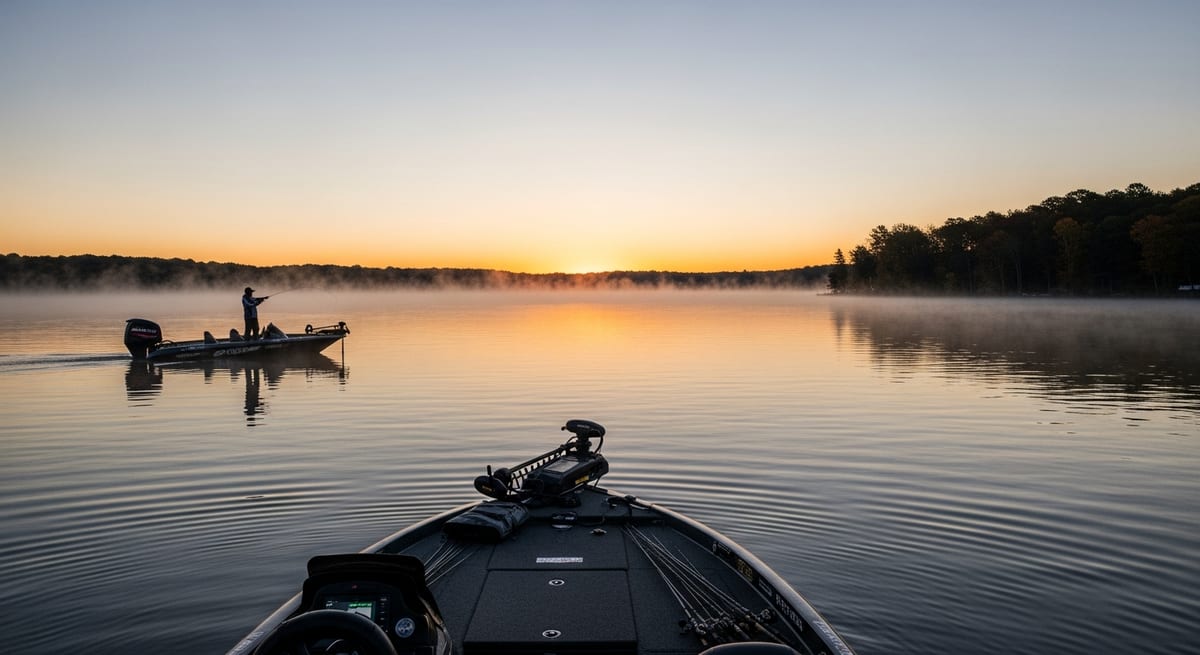
Why CT's Bass Tournament Scene Is Bigger Than First-Timers Expect
Anglers who fish Candlewood Lake club events consistently report the same pattern: the winning bag comes from two or three committed spots, not from the widest pre-fish coverage. That gap, between how far first-timers scout and how tightly veterans execute, is what the CT bass tournament circuit teaches faster than any solo season.
Connecticut's competitive bass season runs from roughly spring through early fall, with the main activity window falling between May and September depending on lake temperatures in a given year. Candlewood Lake, Lake Zoar, and Moodus Reservoir host the heaviest club and open event schedules, between the three, organized competition runs nearly every weekend during that span.
Two formats define the CT circuit:
- Club tournaments: Organized through bass clubs anchored to specific lakes. Entry costs vary, but club events are the established entry point, competitive but social, and most are open to non-members or guests at least occasionally. This is where first-timers belong.
- Open tournaments / regional circuits: Larger fields, higher stakes, and results that feed into season standings or B.A.S.S. Federation Nation CT chapter qualifying rounds tied to regional competition. Club experience first.
From Takeoff to Weigh-In: How a CT Tournament Day Runs
Understanding the rhythm of a tournament day before you show up removes most first-timer stress, and the part that surprises most people comes before registration.
Dead fish penalties: Arriving at weigh-in with a dead fish triggers a per-fish weight deduction. The exact amount varies by event and rulebook, so check the specific tournament rules before you launch. It differs between club events and open circuits. Tournament directors across CT club events consistently note that livewell neglect is among the most avoidable first-timer mistakes, especially on warm-weather afternoons.
Registration and takeoff: Register online or at the ramp morning-of. Non-boaters (co-anglers) can often pair with registered boater entries, clubs fill those spots early, so ask when you sign up. Boats launch in numbered order, staggered to prevent stacking at the first point out of the basin.
On the water: Most CT events run six to eight hours. The standard format involves keeping the five best fish by weight, verify current CT DEEP regulations at ct.gov/deep and your specific tournament rulebook before launch, as limits and rules can change season to season. Fish go live into the livewell immediately and stay there until weigh-in.
Weigh-in: Return to the launch at the specified time. Bags get weighed, recorded, and fish go immediately back in the water. Most events run a separate big-bass side pot for the heaviest single fish, know this before releasing a four-pounder to make room.
Tournament Gear: What the CT Circuit Runs and Why
Boat: Any boat with a functioning livewell and an approved kill switch meets the baseline for most CT tournaments. Sixteen to twenty-one feet of aluminum or fiberglass handles CT lake conditions without drama. Club anglers who fish Candlewood and Zoar regularly compete against larger performance rigs and hold their own on days when water reading matters more than horsepower.
Rods: Tournament anglers on the CT circuit typically run eight to twelve rods rigged before takeoff. That sounds excessive until you're working a crankbait down a point and need to flip a jig into the next pocket without re-rigging mid-move. A functional starting spread for CT conditions: medium-heavy baitcaster with a 3/8 oz jig, medium baitcaster with a shallow crankbait (Strike King 5XD or similar), medium spinning rod with a dropshot, medium-heavy with a Texas rig, and a medium with a Rapala or Whopper Plopper for early morning topwater. Pre-rigged means no fumbling at moments that count.
Electronics: A fishfinder/GPS chart plotter is standard across competitive fields. Humminbird and Lowrance are the most common units in the CT tournament scene. Side-imaging reveals structure that sonar alone misses and changes how anglers read Candlewood's main basin and the coves on Zoar. If you're borrowing a boat for a first event, spend real time learning the unit before tournament morning, not during it.
Livewell management: This is where competitive days fall apart. Keep water temperatures stable, run the aerator continuously, and use a livewell treatment like Rejuvenade to reduce fish stress. In the summer heat typical of July and August on Candlewood and Zoar, monitor water temperature throughout the day and recirculate fresh lake water as conditions warrant. Check the tournament's livewell standards when you register. Some circuits have specific requirements. The CT bass club community consistently flags afternoon livewell neglect as a correctable mistake that costs anglers weight they already caught.
How to Find CT Bass Tournament Schedules
CT Bass Federation Nation: The state chapter of B.A.S.S. runs qualifying events tied to regional and national circuits. The CT chapter typically posts its calendar ahead of each season, search for the Connecticut chapter through the B.A.S.S. Federation Nation website, as calendar distribution practices can shift year to year.
Candlewood Lake and Lake Zoar clubs: Both lakes have active club circuits with regular open tournament dates. The most direct route in is showing up at a boat launch during a club weigh-in and talking to the tournament director. Bass anglers on both lakes will tell you what's coming up and how to register. The ramp conversation is usually more current than any website.
Moodus Reservoir: Smaller-field events run out of Moodus throughout the season. Less competitive than a 40-boat Candlewood open, and a well-regarded starting point for getting first tournament reps without immediately facing the deepest field in the state.
Facebook groups: Search "Connecticut bass fishing tournament", active groups post upcoming events, results, and club schedules with regularity. Tournament scheduling has solid signal here, more so than general fishing forums.
Local tackle shops: Shops near tournament lakes typically track the regional calendar. Walk in and ask what's coming up, staff often have more current and specific information than any website, plus an honest read on which events are worth entering first.
What the CT Bass Circuit Exposes in First-Timers
Not asking questions at the ramp: The CT bass tournament community is welcoming to first-timers, more so at club events than at big opens, but generally across the board. Tournament regulars and club veterans consistently describe ramp and parking lot conversations as where the most current, actionable information changes hands. What you learn from a tournament director or a veteran club angler is more specific and current than anything published online. The mistake most first-timers make isn't a tackle mistake or a water-reading mistake. It's keeping their head down.
Pre-fishing like scouting instead of game-planning: Most first-timers cover the whole lake looking for fish. Experienced CT club anglers build a game plan, four or five specific spots they can execute efficiently on tournament morning. Pre-fish with the same baits you'll throw in competition. Two to three days on the water before the event is the standard club-circuit approach. More than that and anglers typically report second-guessing themselves into confusion by takeoff day.
Abandoning the pre-fish pattern: The moment a new area looks better on tournament morning, first-timers bail on everything they found in practice. Experienced CT club anglers report that the urge to roam on tournament day is almost always wrong, and almost always expensive.
Letting livewell management slide after noon: Club tournament weigh-ins across Connecticut surface the same pattern year after year. Anglers who stop actively checking their livewells after midday lose fish weight they already caught. In summer, water temps climb fast. A livewell running fine at 8 AM can be dangerous by noon. Treat it as a competitive discipline, not a boat maintenance task.
Underestimating the time rules: Tournament disqualifications for late weigh-in happen every season at every level. Set two alarms for departure time. Know the drive back to the launch. Leave your last spot early enough that a mechanical issue or a slow boat ahead of you doesn't cost you the whole day. Showing up four minutes late with a solid bag is among the worst experiences the CT club circuit can produce, and it's entirely preventable.
EVERY SATURDAY MORNING
Weekly fishing intelligence
Nationwide conditions, what's biting, and honest gear deals. One email, no noise.
No spam. Unsubscribe anytime.