
Connecticut Dam and Tailwater Fishing: The Overlooked Spots That Hold Big Fish
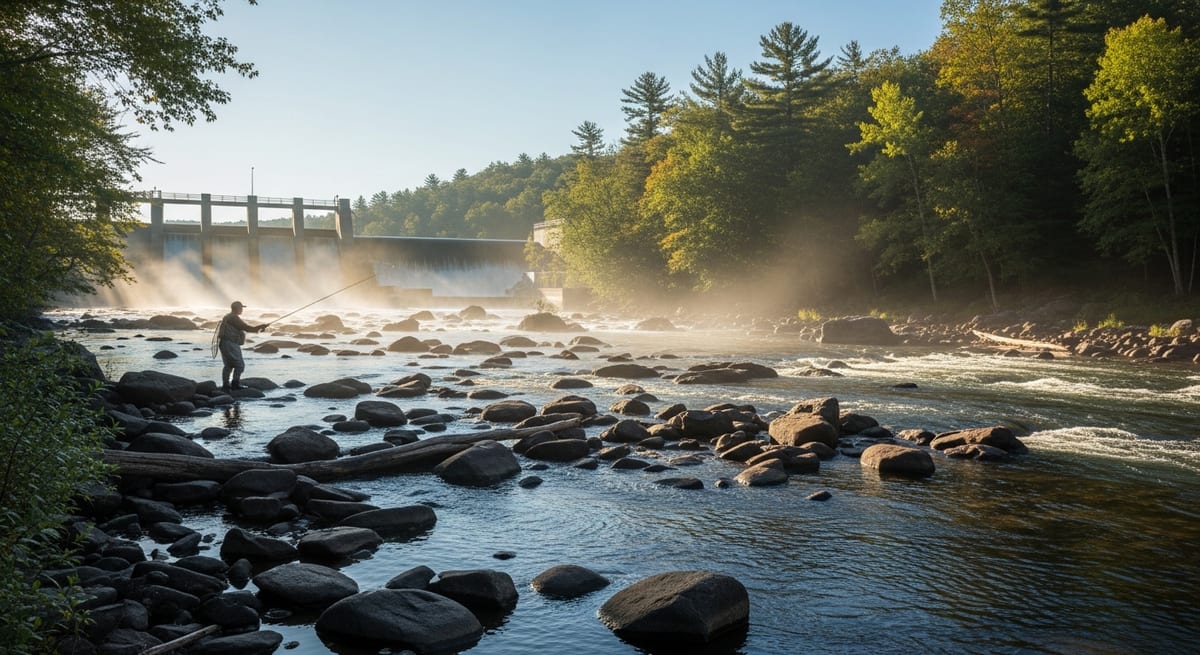
Dams create two productive fishing environments: the pool above them (usually regulated as impoundment fishing) and the tailwater below them. The stretch of river immediately downstream where current, structure, oxygenated water, and concentrated baitfish come together. Connecticut's dam tailwaters are among the most productive freshwater fishing spots in the state, and many are dramatically underutilized.
Why Tailwaters Fish Well
Several factors make tailwater fishing reliably productive:
Oxygenation: Water passing through a dam gate or over a spillway is aerated. More oxygen means more active, more concentrated fish, especially in warm weather when oxygen in standing water decreases.
Current and structure: The turbulence below a dam creates current breaks, eddies, and foam lines that concentrate food. Predatory fish hold in the slack water behind rocks and along current seams, waiting for food to wash into them.
Temperature moderation: Dams on deep reservoirs often release cold, deep water in summer, keeping tailwater temperatures lower than the river would naturally be. This makes tailwaters refuges for cold-water species (trout, shad, stripers) during warm months when the rest of the river is too warm.
Baitfish concentration: Baitfish pile up on both sides of dams, unable to pass upstream (or concentrating below the dam where food falls). Predators follow.
Migration barrier: For migratory species like American shad and striped bass, dams create the top of the migration run. Every fish moving upriver stacks up below the dam, sometimes in extraordinary concentrations during peak migration.
Best CT Dam Tailwaters to Fish
Enfield Dam (Connecticut River, Enfield/Windsor Locks): The farthest upstream dam on the lower Connecticut River. The premier shad fishing location in the state during the spring migration (April-June). Shad stack up below the dam in huge numbers and can be caught on shad darts and weighted flies. Striped bass follow the shad migration and arrive in numbers by early May. Shore access on both banks. This is probably the highest-volume fishing spot in Connecticut on a good shad day.
Leesville Dam (Salmon River, East Haddam/Colchester): A fish ladder at Leesville allows some passage, but the pool below the dam concentrates fish. Brown and rainbow trout are regularly stocked in the Salmon River corridor; the tailwater below Leesville is cold and well-oxygenated. Landlocked salmon are present. Spring shad fishing is excellent here when conditions are right.
Rainbow Dam (Farmington River, Barkhamsted): The Farmington River below Rainbow Reservoir is one of CT's premier trout rivers and designated as a Wild Trout Management Area. The cold-water release from the reservoir keeps water temperature fishable for wild brown and brook trout year-round. This is a fly fishing destination as much as a standard fishing location, access via the Peoples State Forest trails.
Stevenson Dam (Housatonic River, Monroe): The tailwater below Stevenson Dam holds excellent smallmouth bass, large trout, and during migration periods, shad and stripers. The dam creates the upper boundary of tidal influence on the Housatonic. Shore access from the Monroe side of the river.
Scotland Dam (Shetucket River, Scotland/Windham): A less-known tailwater with good bass and pickerel fishing below the dam in the Shetucket River section.
Seasonal Calendar for Tailwater Fishing
Spring (April-June): Peak season for dam tailwater fishing in Connecticut.
- American shad run April through June, stacking below every dam on the Connecticut River system. Enfield Dam is ground zero.
- Striped bass follow shad, present below Enfield Dam by late April, peak in May
- Brown trout on tailwater rivers are actively feeding, pre-spawn behavior
- Catch-and-release only for stripers below certain dams, check current DEEP regulations
Summer (July-August):
- Hot-water refuges: cold tailwaters hold trout when lowland rivers warm. Farmington River below Rainbow Dam remains productive when other rivers are too warm
- Smallmouth bass below dams like Stevenson become primary targets
- Shad run has ended; striper numbers thin but trophy fish remain in deepest cold pools
Fall (September-November):
- Brown trout spawn prep. Some catch-and-release considerations apply
- Stripers move through again on the fall migration, but less predictably than spring
- Bass fishing remains strong through October below most dams
Winter:
- Limited activity; tailwaters below deep-release dams stay warmer than ambient air/surface temps, which can keep fish feeding longer into the season
- Check ice conditions carefully, moving water near dam outlets creates unpredictable ice
Techniques and Access Notes
For shad: Shad darts (small, weighted jig heads with chartreuse or pink soft bodies), weighted flies on a fly rod, or small spinners worked in the current below the dam. Cast across current, let it swing through the holding lies. Shad often hit on the swing.
For stripers in tailwaters: Large bucktails, swimbaits, and live eels if you can get them. Bigger fish hold in deeper slots with less current. Fish after dark for trophy stripers.
For trout in tailwaters: Nymphs and emergers on the fly. Small spinners and spoons on spinning tackle. The Farmington River below Rainbow Reservoir is catch-and-release only in certain sections, check posted signs.
Access considerations: Many dam tailwaters have utility company or state ownership of the immediate dam area. Public access varies. Always verify:
- Whether the bank is public land or posted private
- If fishing below the dam itself is permitted (some have restricted zones for safety)
- DEEP regulations specific to the waterbody (special regulations, catch limits, gear restrictions)
Most major dam tailwaters have established public access points with parking. The DEEP Fishing Guide lists access points for major rivers.
EVERY SATURDAY MORNING
Weekly fishing intelligence
Nationwide conditions, what's biting, and honest gear deals. One email, no noise.
No spam. Unsubscribe anytime.