
Farmington River Fishing Guide: Connecticut's Best Trout Stream
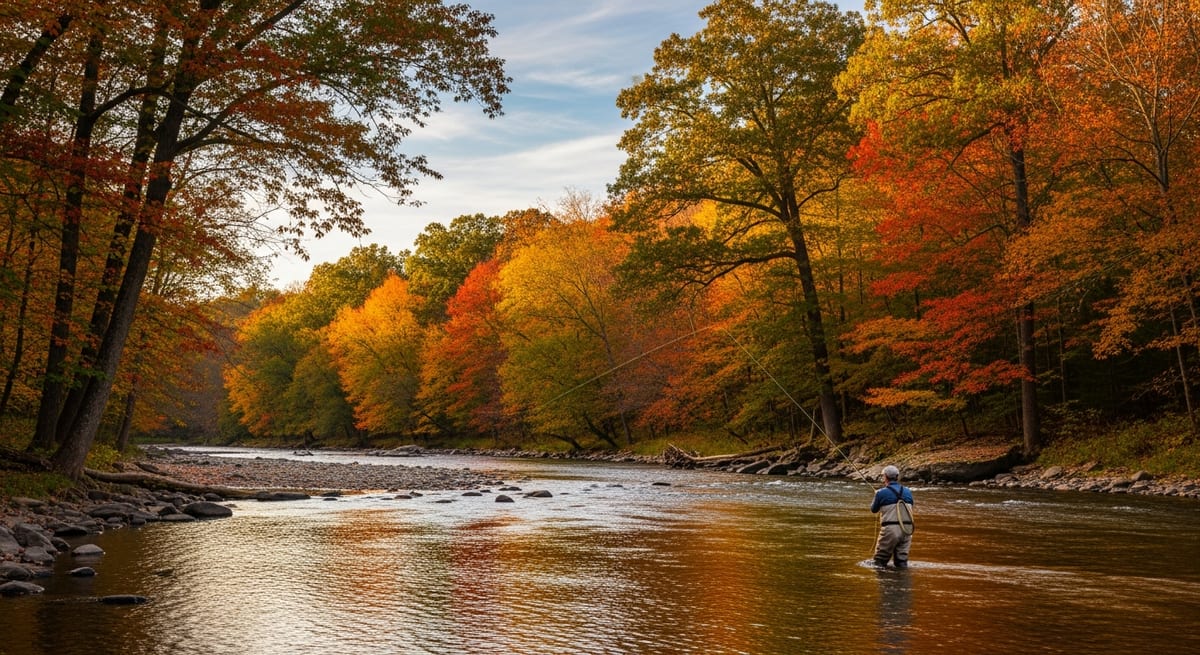
The Farmington River is the trout fishery in Connecticut. It's the first place serious CT trout anglers point new anglers and the place they keep coming back to year after year. Wild brown trout in the TMA (Trophy Management Area), excellent stocked sections from New Hartford down to Avon, and the kind of cold clear water that makes you forget you're 90 minutes from New York City.
Understanding the Farmington River Sections
The Farmington River runs from Barkhamsted Reservoir south through New Hartford, Canton, Simsbury, Avon, and Farmington before joining the Connecticut River near Windsor. Different sections have very different character and regulations, know which section you're fishing.
The TMA (Trophy Management Area), new Hartford: The crown jewel. This roughly 2-mile catch-and-release-only, artificial-lures-only section runs from the Route 44 bridge in Riverton downstream through New Hartford. No bait, no trebles, no harvest. The TMA holds a self-sustaining population of wild brown trout. Fish that have survived multiple seasons and grown large in the river. Browns of 16-20+ inches are caught here regularly, and genuinely large fish (over 24 inches) exist in this water. The TMA gets heavy pressure but the wild fish are more sophisticated than hatchery fish. They require careful presentations and matching the hatch.
Farmington River, stocked Sections (New Hartford downstream): Below the TMA, the Farmington receives regular CT DEEP stocking of brown and rainbow trout from early spring through fall. The river from New Hartford through Canton, Simsbury, and into Avon holds good populations of stocked fish. Access is excellent, route 44 parallels much of the river and multiple CT DEEP access areas provide entry.
Upper Farmington and Tributaries: Above Barkhamsted Reservoir, the West Branch Farmington holds wild brook trout in its headwaters. This is exceptional brook trout habitat, cold, shaded, small stream fishing for fish that rarely exceed 10 inches but are among the most beautiful fish in Connecticut. The upper branches require bushwhacking but reward effort.
Seasonal Patterns and Best Times
Spring (March-May), peak Season: Spring trout stocking begins in March in Connecticut. The Farmington's stocked sections receive multiple stockings from March through May. Opening weekend (second Saturday in April) draws crowds, expect company. The weeks after opening day are often better fishing: stocked fish have spread out and pressure has decreased. Water temperatures in April-May are ideal for trout (50-60°F), and fish feed actively.
In the TMA, spring brings reliable hatches: early-season Quill Gordon and Blue Quill hatches begin in late March to early April when water temperatures hit the mid-40s. By late April, Hendricksons are the main event. A prolific hatch that brings large wild fish to the surface on afternoon hatches.
Summer (June-August), morning and Evening Focus: Summer low water concentrates fish and makes the river fishable for wading but midday heat (water temps above 68°F) stresses trout. Fish early morning (first light to 9 AM) and evening (6 PM to dark). Summer evenings on the TMA produce some of the best fishing of the year, look for rising fish and match the spinner fall.
The Farmington has good summer flows from the regulated release from Barkhamsted Reservoir. It rarely gets as low as unregulated CT rivers. Check USGS stream gauge data (gauge #01186000 at Tariffville) before trips: ideal wading levels are between 200-600 cfs.
Fall (September-November), excellent and Uncrowded: Fall is an underrated Farmington season. Stocked fish arrive in September-October. Foliage is stunning along the river. Hatches (especially October caddis) continue. The TMA's wild browns go into spawning mode in October-November and can be aggressive on streamers. Nymphing in deep pools on cold November days with few other anglers around is one of the best experiences the Farmington offers.
Fly Fishing the Farmington
The Farmington is primarily known as a fly fishing destination, and the TMA requires artificial lures (fly or spinning gear) with single barbless hooks.
Essential Hatches and Matching Flies:
- Quill Gordon / Blue Quill (late March-April): Size 14-16 dry flies, gray/tan body, gray hackle. Often the first significant dry fly hatch of the season.
- Hendrickson (late April-May): The Farmington's signature hatch. Size 12-14 Hendrickson dry, PMD, or A.K. Best's Quill Gordon. Hatches typically occur between noon and 3 PM on warm April days.
- Sulphur / Pale Morning Dun (May-July): Size 16-18, yellow-tan body. Evening hatches from May through summer. One of the most important summer hatches on CT rivers.
- Caddis (throughout season): Elk Hair Caddis size 14-16 in tan and olive cover most Farmington caddis situations. Caddis are the dominant evening hatch in summer.
- Trico (July-September): Size 20-24, black and white. Morning hatches on flat sections. Requires fine tippet (6X or 7X) and patience.
- October Caddis (September-October): Large orange/amber caddis, size 10-12. One of the most visible fall hatches.
When hatches aren't happening: Nymphing is the primary technique for consistent Farmington success. A two-nymph rig with a heavy point fly (Hare's Ear, Pheasant Tail, size 12-16 bead-head) and a smaller dropper works year-round. Czech nymphing or Euro nymphing techniques work particularly well in the faster, deeper pocket water sections.
Leader setup: 9-foot leaders tapering to 4X-6X tippet for dry fly fishing in the TMA. 5X fluorocarbon for nymphing in the clearer sections.
Spin Fishing the Farmington
Spin fishing is fully legal throughout the Farmington outside the TMA, and light spinning gear works well for both stocked and wild fish.
Best spin lures for Farmington trout:
- Mepps Aglia spinner (size 0-2): Gold blade in darker water, silver in clear conditions. The standard CT trout spinner. Cast upstream and retrieve at the speed of the current.
- Rapala Original Floater (size 5-7): Natural perch, rainbow trout, or silver colors. Worked across pools and through runs.
- Marabou jig (1/32-1/16 oz): White or chartreuse, fished under a small float through deeper holes. Particularly effective for stocked fish.
- Small spoons (Kastmaster 1/8 oz): Effective on sunny days in open stretches. Cast into current and let the wobble do the work.
- In-line spinners: Rooster Tails in yellow, white, and black/yellow patterns consistently produce. Work them through faster water and pool tailouts.
Light tackle: 5-6'6 ultralight or light spinning rod with 4-6 lb monofilament. The Farmington's clear water demands lighter line than most CT waters.
Access Points and Parking
The Farmington River has excellent public access through a combination of CT DEEP access areas, state parks, and the Farmington River Anglers Association (FRAA) easements.
Main access points (north to south):
- Riverton / Route 44 bridge: Northern end of the TMA. Small pull-off on the north side of the bridge.
- Peoples State Forest (New Hartford): Extensive river access through the state forest. Multiple pull-offs along River Road (off Route 318).
- Satan's Kingdom State Recreation Area: Beautiful gorge section. Day use fee applies in season. Multiple put-in points. Mix of stocked and TMA water.
- West Branch State Park: Parking area near the confluence of the West Branch. Good access to productive stocked water.
- Canton / Collinsville: Route 44 parallels the river with multiple roadside pull-offs. Easy access for wading in town sections.
- Simsbury / Salmon Creek confluence: Decent access off Route 167. The section around the Salmon Creek confluence holds fish in spring.
- Weatogue / Avon: Lower river access points before the river becomes more suburban.
The FRAA maintains several members-only access points. Membership is affordable and funds conservation work on the river, worth joining if you fish the Farmington regularly.
Regulations and Ethics
TMA (Trophy Management Area) Regulations:
- Catch-and-release only, no harvest
- Artificial lures only with single barbless hooks
- These are strictly enforced. CT DEEP enforcement officers regularly patrol the TMA, especially opening weekends and Hendrickson hatch season.
Stocked sections: Standard CT trout regulations apply, check the current CT DEEP Inland Fisheries guide for the season, size (12" minimum), and bag limit (5 trout/day in season). The stocked sections open the second Saturday in April; some sections may have an extended season.
Wading ethics: The Farmington gets crowded. Give other anglers space: 50+ yards is considered respectful. Don't wade through water another angler is actively fishing. Work upstream and don't push fish out of a pool another angler is covering.
Gear ethics in the TMA: Even legal spinning lures should use single barbless hooks when fishing the TMA. The spirit of the TMA is quality fishing for wild trout; treble hooks cause unnecessary damage even when you're releasing fish.
EVERY SATURDAY MORNING
Weekly fishing intelligence
Nationwide conditions, what's biting, and honest gear deals. One email, no noise.
No spam. Unsubscribe anytime.