
Six Species in One CT Afternoon. A Field Guide to Everything Swimming in This State's Freshwater.
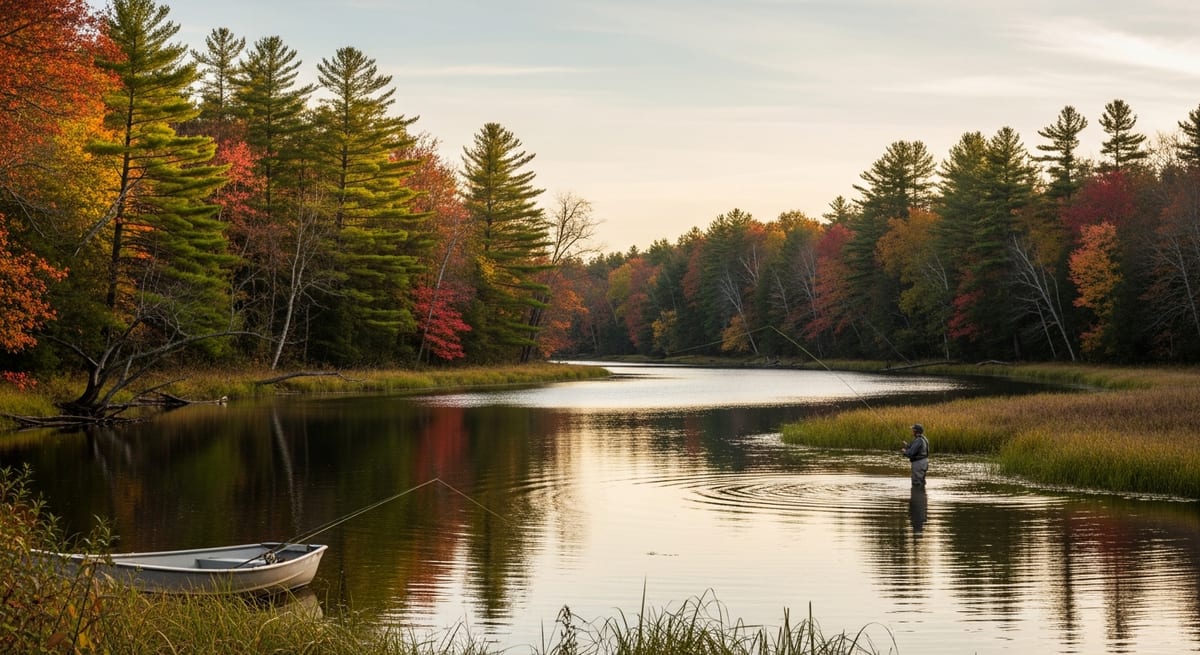
The northern arm of Candlewood Lake shows how many species can share a single stretch of CT shoreline: largemouth bass, chain pickerel, yellow perch, and even the occasional brown trout wandering from the inlet. Most CT anglers are targeting a fraction of what's actually in front of them, not because the other species are hard to find, but because they've never stopped to learn the full roster. This is a working reference covering CT from Litchfield County down to the shoreline, lakes, cold rivers, tidal backwaters, and the small headwater streams most people walk right past. It covers identification, habitat, timing, and gear basics. Regulations are cited as general guidance only; always verify current size limits, bag limits, and any special rules in CT DEEP's annual fishing guide at ct.gov/deep before you keep fish, numbers change annually, and the ones most likely to catch anglers off guard are flagged throughout.
The Two Bass Species (and the Waters That Define Each One)
Largemouth Bass (Micropterus salmoides) The fish most CT anglers spend their season chasing, and the full picture is more nuanced than "fish near the weeds." The large mouth extends behind the eye, which is the quickest visual separator from smallmouth. Green-black body, distinct lateral stripe running mid-flank.
Largemouth are genuinely widespread in CT, but not all locations fish equally. Consistently productive waters: the cove flats on Lake Zoar near the Route 34 crossing, the weedy northwest corner of Bantam Lake in late May, and the backwater bays along the lower Housatonic below Derby. Target submerged vegetation, dock pilings, and fallen timber. Water temperature tells you more than the calendar does, consistent topwater action doesn't materialize until surface temps hit the mid-60s, which typically falls late May in most CT seasons. Peak activity runs through September.
Summer mid-day, bass go deep and sulk. Early morning and evening are the productive windows. Per CT DEEP regulations, check the current annual fishing digest for size limits and any designated slot-limit waters before keeping fish. These vary by specific body of water.
Smallmouth Bass (Micropterus dolomieu) Cylindrical body, bronzy-brown coloration, vertical bars on the flanks, and a mouth that stops well short of the eye. That's your ID checklist. Smallmouth need cleaner, cooler water than largemouth. The Housatonic above Derby, rocky-bottomed sections of the Farmington River near Collinsville, and upper Salmon River tributaries are the CT waters to try first.
They fight harder than largemouth pound for pound. That's not an opinion, it's a fact that converts most anglers who target them seriously for the first time. June through early October is the productive window in CT. Same size regulations as largemouth per current CT DEEP rules; verify before keeping.
Panfish: The Species CT Anglers Underestimate Until They Can't Stop Catching Them
Bluegill (Lepomis macrochirus) The fish that puts more CT anglers on their first catch than any other species in the state. Dark olive body, a distinctive dark ear flap on the gill cover, and, on breeding males in May and June. An orange belly that's hard to miss over visible spawning beds in sandy shallows. Many CT waters carry no size limit for bluegill; check CT DEEP's current digest for any special rules on your specific body of water, since regulations do vary by location.
Shallow dock edges, lily pad margins, and brush piles in 2-8 feet of water are the spots. Small piece of nightcrawler under a bobber, wax worm, or a 1/32 oz jig. The most common mistake: anglers fishing bluegill too deep in summer. In August, they're often stacked right under the shade of floating docks in four feet of water, not out in the basin.
Pumpkinseed (Lepomis gibbosus) The more ornate cousin, more orange and yellow than bluegill, with a distinctive red spot on the ear flap. Slightly smaller average size but caught on the same gear in the same locations. Bantam Lake, Lake Waramaug, and the smaller ponds scattered across Tolland County hold both species in solid numbers.
Yellow Perch (Perca flavescens) Vertical dark bars on a yellow-green body. School fish through and through, where you catch one, there are more. Fall afternoons on Gardner Lake can produce steady, consistent action on yellow perch with small jigs. One of CT's best ice fishing targets from January into February. No minimum size in most CT waters per current regulations, but verify for your specific water before keeping.
White Perch (Morone americana) Silver-white, smaller profile than yellow perch, built for tidal and brackish water. Found in the lower Connecticut and Thames rivers, their tidal tributaries, and a handful of inland lakes. Schools heavily in spring and fall. Genuinely excellent table fare, one of the most underappreciated eating fish in CT freshwater.
Trout: What's Stocked, What's Wild, and Where the Line Gets Interesting
Rainbow Trout (Oncorhynchus mykiss) CT's primary stocked trout species. Pink lateral stripe, black spots on body and fins. CT DEEP stocks rainbows each spring and fall across dozens of designated streams, rivers, and select ponds. The stocking schedule goes up at ct.gov/deep and is worth bookmarking before the spring opener. Most rainbows caught in CT are hatchery fish; comfortable in water under 65°F and stressed above 70°F.
Wild stream-born rainbows exist in a handful of CT coldwater streams, but they're a bonus, not the expectation. If you're fishing the Farmington River's fly-fishing-only catch-and-release section near Riverton, you're in the best trout water in the state, plan accordingly.
Brown Trout (Salmo trutta) Bronze-gold body with red spots ringed by light halos. CT's most challenging trout to consistently fool. Both stocked and naturally reproducing wild populations exist. The Farmington and Salmon rivers hold genuine wild browns that have never seen a hatchery, and they fish completely differently than stockies do.
The biggest mistake anglers make: fishing for brown trout with the same approach they'd use on hatchery rainbows. Wild browns are spookier, more selective, and need distance and careful presentation. Fall, september through November, is when they're actively feeding pre-spawn and most approachable.
Brook Trout (Salvelinus fontinalis) CT's native trout, and one worth a long drive to fish when the season and conditions line up right. Olive back with worm-like vermiculations, red spots circled by blue halos, orange fins edged in white-then-black, nothing else in CT freshwater looks like a wild brookie. Cold, clean headwater streams are home: the upper Eight Mile River in Lyme, small tributaries off the Salmon River watershed in Colchester. Wild CT brook trout run small, typically 6-11 inches, but in the right stream, early morning in May, they're worth every step of the approach.
Chain Pickerel, Pike, and Musky: CT's Toothy Predators
Chain Pickerel (Esox niger) Most common of the pike family in CT and one of the most willing biters in the state. Chain-link pattern on the sides, elongated body, duck-bill snout, once you've caught one, you won't confuse it again. They hit spinners, jerkbaits, and live minnows aggressively from November through April when bass are sluggish, which makes pickerel a genuinely useful shoulder-season target.
Found in weedy ponds, slow river backwaters, and cove areas throughout CT. Excellent table fare if you score the fillets to address the Y-bones. For current size minimums, check CT DEEP's annual fishing digest, regulations on this species can shift, and it's worth the two minutes to confirm before you keep fish.
Northern Pike (Esox lucius) Larger than pickerel, lighter green, spotted rather than chain-link. Less common in CT, found primarily in larger water bodies and specific river systems where CT DEEP has conducted stocking programs. Minimum sizes for pike have historically been on the conservative end in CT; check the current regulations digest before keeping any pike, as the thresholds have varied across recent seasons.
Muskellunge (Esox masquinongy) Present in very limited CT waters. Trophy fish: 40-plus inches are possible, but musky fishing in CT is a pursuit for dedicated, patient anglers. Don't show up expecting quick results; it's not a casual-afternoon fishery. If musky is your target, do the pre-trip research to confirm which specific CT waters have been stocked and what the current regulations require.
The Rest of the Roster, species That Reward the Curious Angler
Channel Catfish (Ictalurus punctatus) Stocked in many CT warm-water ponds and rivers. Deeply forked tail, spots on younger fish fading with age. Bottom feeders, nightcrawler, chicken liver, or cut bait on a simple Carolina rig fished on the bottom. Active after dark, which makes warm July and August evenings productive. Good eating. Check CT DEEP's current regulations for size minimums in the specific water you're fishing.
Carp (Cyprinus carpio) Underrated as a sport fish by most CT anglers, and that's their loss. Fish in the 10-30 lb range are genuinely common in warm lakes and slow-moving river sections, bantam Lake, the lower Housatonic, and the Connecticut River flats all hold solid carp populations with light fishing pressure. Corn kernels, bread ball, or dedicated boilies fished on a hair rig produce well. No size or bag limit in most CT waters.
American Eel (Anguilla rostrata) Present throughout CT waterways connected to the ocean. Primarily caught at night on nightcrawlers fished on the bottom in slow current or near structure. Excellent smoked, arguably the most underutilized table fish in CT freshwater. For current bag limits and any special regulations, check CT DEEP's annual digest; eel rules have been updated in recent years as population assessments have continued.
American Shad (Alosa sapidissima) Spring run fish that push up the Connecticut River from April through June to spawn. Brilliant silver, acrobatic, and caught on small shad darts, lightweight spoons, and flies. The best public access for CT shad fishing is near Enfield Dam; productive water continues upstream into Massachusetts. The shad run is concentrated and seasonal, when it's on, it's some of the most exciting light-tackle action available in the state. Catch-and-release has been required in some recent seasons, so always check current CT DEEP regulations before keeping shad.
EVERY SATURDAY MORNING
Weekly fishing intelligence
Nationwide conditions, what's biting, and honest gear deals. One email, no noise.
No spam. Unsubscribe anytime.