
Northern Pike in Connecticut: Where to Find Them and How to Catch Them
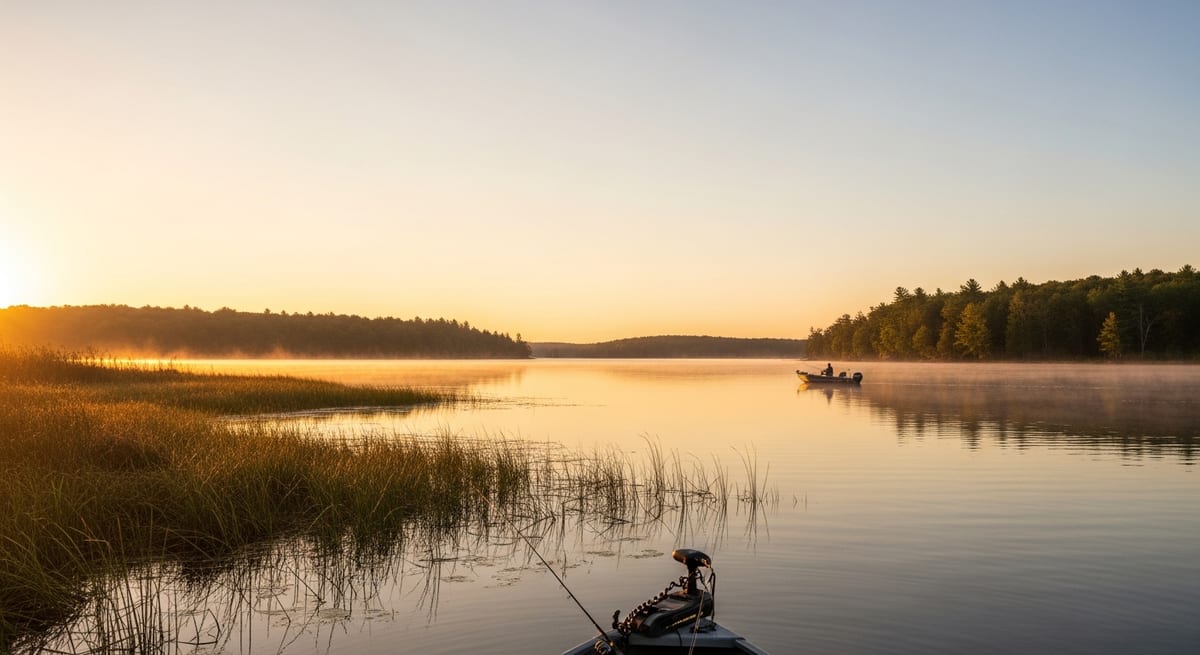
Pull up to Lake Quaddick on a mid-April afternoon and you'll see pike nosing through six inches of water in the shallows. Fish pushing 36 inches, barely concealed under the cattail edges, aggressive enough to eat a spinnerbait on the drop. They're not glamorous in the fishing media, but anglers who target them seriously find some of the most explosive freshwater action in the state. Connecticut's pike fishery is underrated and underfished. That's good news for the people who actually show up.
Where Pike Live in Connecticut
Find slow water with weeds and you're in pike country. They don't chase. They wait. A pike tucked into a lily pad flat is already watching your lure before it hits the water. Give them cattail edges, submerged weed beds, backwater sloughs, or any weedy bay with slow current, and they're home.
Top CT waters for pike:
Thames River drainage (northeastern CT): The Quinebaug River and its larger impoundments are among the more consistent pike producers in the state. Lake Quaddick in Thompson and the Quinebaug River below Putnam Dam are reliable spots that most anglers overlook entirely. This is the most productive pike corner of Connecticut that most people drive through without stopping.
Connecticut River backwaters: The wide, slow backwaters north of Hartford, particularly around the Enfield and Warehouse Point areas, hold pike in the warmer months when they push into weedy shallows. The CT River itself isn't prime pike water, but the associated backwater ponds and oxbows are worth exploring.
Candlewood Lake: The state's largest lake has pike, though they tend to be more scattered than in the Thames drainage. Focus on the coves at the northern end, more vegetation, slower water, better ambush structure.
Gardner Lake (Salem) and Bashan Lake (East Haddam): Smaller systems in eastern CT with documented pike populations. Both see lighter pressure than the Thames drainage, which is worth something.
Seasonal Patterns
Winter (January-February): Ice fishing for pike is a CT tradition. Pike stay active under the ice and hit dead bait, smelt, sucker, on tip-ups without much coaxing. The Thames drainage ponds are the go-to ice destination. Before heading out, check current local ice conditions through CT DEEP reports or your local bait shop; a commonly cited minimum is 4 inches for walking and 8 inches for snowmobile traffic, but those numbers mean nothing if you haven't confirmed the specific water that day.
Early spring (March-April): Pre-spawn and spawn period. Pike push into the shallows as water temps climb above the mid-30s, which in Connecticut typically happens somewhere in late March through April, varying by year and water body. They'll be in the shallowest weedy bays you can find, sometimes in 18 inches of water. This is the best time of year to catch pike from shore. They're aggressive and will hit almost anything. Note: CT has a pike closed season for some waters during the spawn. Check current CT DEEP regulations before targeting them in spring.
Late spring/early summer (May-June): Post-spawn pike are feeding hard. They move off the shallow spawning areas to weed edges in 4-10 feet of water. Strong season for big pike on artificials.
Summer (July-August): Pike go deep as surface temps climb. Still catchable, but you need to find cooler water: 10-25 feet. Trolling deep-running crankbaits or dead-baiting near bottom structure beats casting the weed flats in the midday heat.
Fall (September-November): Excellent. As temperatures drop, pike push back into shallower weedy areas and feed aggressively before winter. October is often the best month for big pike in CT. Water temps in the 45-58°F range put them in full-feed mode.
What They'll Eat, and When
The lure question with pike comes down to water temp and depth. Cold water means slow and deep. Warm water means big and shallow. Everything else is detail.
Spinnerbaits: The all-season workhorse. A 1/2 to 1 oz spinnerbait with a large single blade, colorado or willow-leaf, and a white or chartreuse skirt covers water efficiently and pushes through light vegetation. Slow-roll near weed edges and hang on.
Large swimbaits: 5-8 inch paddle-tail swimbaits on heavy jig heads (1/2 to 1 oz) are deadly. Pike eat them hard. White, chartreuse, and natural perch or sucker patterns all work depending on water clarity.
Spoons: A proven pike producer. The Johnson Silver Minnow and Eppinger Dardevle have been catching pike for generations. Weedless versions let you fish through lily pad mats where big fish park themselves.
Topwater (summer mornings): Big jointed Jitterbugs, walk-the-dog stickbaits, and large prop baits over weed flats in low light are thrilling. The surface strikes are violent and worth getting up early for.
Dead bait: Especially effective in cold water under 45°F. A 6-10 inch dead sucker or shiner suspended under a float at the right depth will out-fish any artificial in winter and early spring. Don't overlook this one.
Wire leaders: Not optional. A pike's teeth will cut through fluorocarbon and mono in one bite. Use a 6-12 inch single-strand wire leader (27-30 lb) or a coated wire leader. You will lose fish without one, no exceptions.
Tackle and Gear
Rod: Medium-heavy to heavy action, 7'-7'6 casting or spinning rod. Pike fishing involves heavy lures and big fish, light tackle is inadequate and makes hook removal harder on the fish.
Line: 30-50 lb braid mainline. Braid's zero-stretch gives you a real advantage setting the hook on pike, which have hard, bony mouths. Always pair with a wire leader.
Hooks: Size 2/0-5/0 trebles on lures. For dead bait rigs, a size 2/0-4/0 single hook in the back and a treble through the dorsal area (snap rig) is standard.
Net: Use a large rubber or coated mesh net. Pike are long fish. You need a net with at least a 24-inch opening to land them cleanly. Avoid knotted nylon mesh, which damages scales and the protective slime coat.
Forceps and long-nose pliers: Bring them and use them. Pike teeth are numerous and sharp. Never put fingers in the mouth. Long forceps or a hook removal tool keep your hands intact. A jaw spreader helps on deeply hooked fish.
Regulations and Handling
Regulations (verify current year on CT DEEP website): Connecticut imposes a spring closed season on pike in some waters during the spawning period, often March 15-May 15 in the Thames River watershed and associated waters, though this can vary by location. The minimum size limit is often 24 inches with a 2-fish daily bag limit, but regulations vary by water body. Always check the current CT DEEP Inland Fisheries regulations pamphlet. They update annually.
Handling pike: Pike are strong, flexible, and defensive. The correct hold for photos and hook removal is the jaw hold: thumb and index finger firmly around the lower jaw (not inside the mouth), other hand supporting body weight horizontally. Keep the fish horizontal, vertical holding strains the jaw joints. Pike aren't bass; don't lip them and hold them vertically.
Release: Pike are sensitive to handling in warm water. If temps are above 65°F, keep air exposure under 30 seconds. Revive by holding the fish upright in the water and moving it gently forward and back until it kicks free on its own.
EVERY SATURDAY MORNING
Weekly fishing intelligence
Nationwide conditions, what's biting, and honest gear deals. One email, no noise.
No spam. Unsubscribe anytime.