
Block Canyon Head Is 80 Miles from Stonington. What You Find There Looks Nothing Like the Sound.
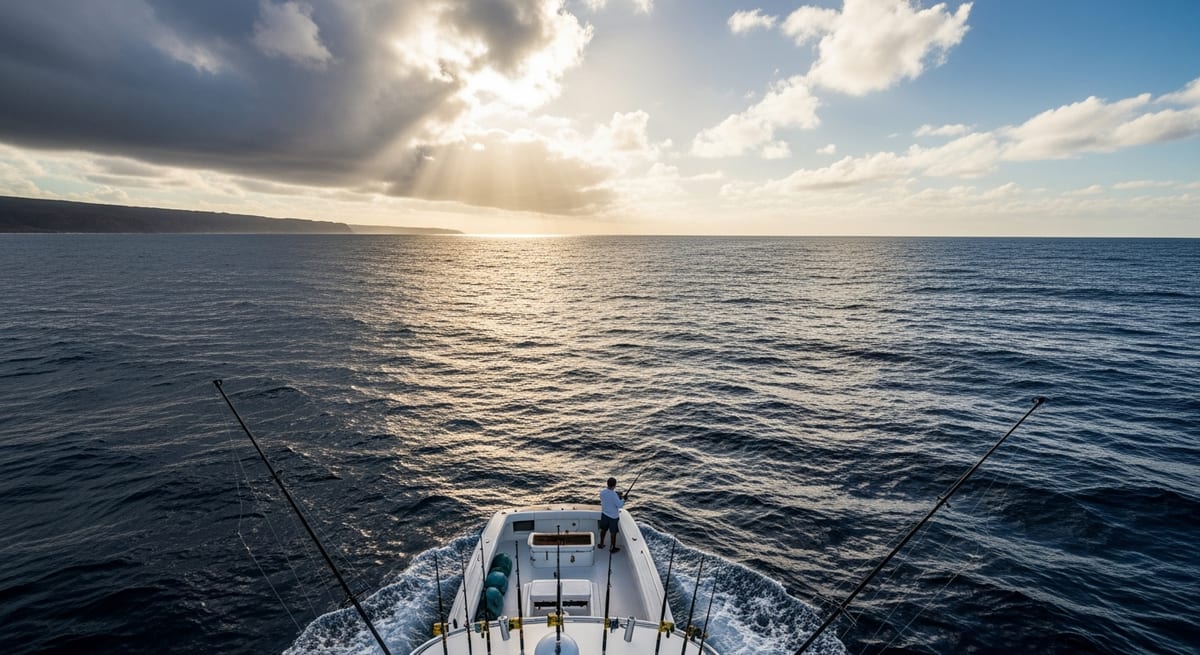
Canyon captains operating out of Stonington and Westerly consistently report the same reaction from first-time offshore clients: anglers who've spent years working Long Island Sound have no frame of reference for what happens when school bluefin push bait to the surface eighty miles out. The fish boil by the hundreds, audible before they're visible, moving through bait schools hard enough that the commotion reaches the bridge before the binoculars do. Connecticut sits within genuine reach of bluewater. The canyon heads, the shelf edge, Gulf Stream eddies pushing north in strong years, but it takes a real commitment to get there. What follows draws on accounts from CT and RI canyon captains, NOAA HMS public landing data, and reports from anglers who've made the run from eastern CT ports.
How Far Out Is 'Offshore' from Connecticut?
From CT ports, offshore fishing breaks into three real tiers:
Nearshore offshore (20-50 miles out): The open waters south of Long Island, the deeper sections of the New York Bight, and the South Shore grounds are reachable in 1-2 hours from eastern CT ports like Stonington and New London. These grounds hold tuna, primarily bluefin in season, along with mahi-mahi and large bluefish in open water. It's a manageable day-trip run on a fast boat.
Mid-range offshore (50-80 miles): The grounds south of Block Island and the approach to the shelf edge, including the Block Canyon and Veatch Canyon approaches. Large bluefin, yellowfin, blue shark, and the occasional billfish in a warm-water year.
Canyon fishing (80-120+ miles): Hudson Canyon, Block Canyon, Veatch Canyon, and Baltimore Canyon are the destination. The canyon heads, typically in 300-600 feet of water, sit within range of fast center consoles or larger sportfishermen departing from eastern CT. From the Stonington/Westerly area, Block Canyon head runs roughly 80-100 miles depending on your departure point and which head you're targeting; verify your waypoints against current NOAA charts before you leave the dock. This is where the fishing changes entirely: yellowfin tuna, bigeye, mahi-mahi, white and blue marlin, and swordfish are all realistic targets.
The Species Worth Making the Run For
Bluefin tuna: Connecticut sits in the heart of the western Atlantic bluefin migration corridor. School fish, roughly 15-75 lbs, appear surface-feeding in summer and early fall, sometimes as close as the waters just south of Block Island. Giant bluefin (200-1,000+ lbs) are targeted by serious anglers in fall, typically at the canyon heads. Trolling with spreader bars and large swimming plugs is the standard nearshore approach; live baiting and chunking are the canyon techniques.
Yellowfin tuna: The primary offshore target for most CT anglers making the canyon run. Fish in the 15-80-lb range are available at the canyon heads from July through October, with August and September typically the most consistent. High-speed trolling and chunking both produce. NOAA HMS recreational landings data for the Northeast consistently shows yellowfin as one of the top bluewater returns for private boat anglers running the canyons.
Mahi-mahi: Follow warm Gulf Stream eddies that push toward CT waters in summer. In strong eddy years, mahi come within reach of the shelf edge. Most fish run 3-15 lbs, with an occasional bull topping 30. Anglers who've worked warm-eddy weed lines off Block Canyon describe days when a trolled ballyhoo draws a strike almost before it settles into the spread, in a strong eddy year, when fish are stacked tight along a temperature break, the action can be relentless.
Swordfish: Deep-drop swordfishing at the canyon heads has developed a committed following among CT bluewater boats in recent seasons, based on reports from Stonington and Westerly captains active on these grounds. The technique involves drifting bait in 1,000-1,800 feet at night. Target fish typically run 100-400+ lbs, nOAA HMS recreational swordfish landing records show Northeast catches regularly reaching and exceeding 300 lbs in productive years. Specialized terminal gear and a committed crew are required, but the technique produces when conditions cooperate.
Shark: Blue shark are abundant offshore in summer and will eat almost anything. For mako, NOAA effectively closed directed shortfin mako retention for Atlantic recreational anglers around 2023, with the prohibition covering the vast majority of permit categories. The situation has shifted significantly from what older dock-level guidance may suggest. Verify current NOAA HMS rules before any trip where mako is a target; the regulatory trend has moved in one direction and is not expected to reverse near-term.
Where CT Anglers Stage Their Canyon Trips
Stonington/Mystic area (eastern CT): The closest practical departure point for offshore grounds. Dodson Boat Yard in Stonington and the marinas along the Mystic River offer fuel and provisioning. Staging from eastern CT cuts meaningful time off the canyon run compared to mid-coast ports, time that translates directly into hours of fishing.
New London/Groton: Thames River marinas are active with private fishing boat operations and offer solid fuel infrastructure. A reliable departure option for anglers based in the greater New London area.
Westbrook/Old Saybrook: Mid-coast option for anglers based in central CT. The longer run to offshore grounds is real, factor it into your fuel load and departure time. You're adding meaningful miles to an already early morning.
Westerly/Watch Hill (RI, just over the CT line): Captains who run Block Canyon and Veatch regularly often prefer staging from RI South County. The southern positioning is a genuine tactical advantage on both miles and bottom time. Watch Hill and Snug Harbor Marina in Westerly are established bluewater departure points with infrastructure built around offshore trips. The state border is just a line; fish from the port that puts you closest to your target grounds.
Booking a Canyon Charter: What to Expect and What to Pay
Private charter trips: Several CT-based charter captains run offshore trips on a full-boat basis, typically 8-10 hours for a genuine canyon run. Community-reported quotes from CT and RI canyon captains in 2025-2026 place full-day offshore charters in the $1,500-$3,500 range for a group of 4-6, with significant variation depending on the captain, vessel, and whether fuel is bundled into the rate. Confirm pricing directly when you book, fuel surcharges vary and can move the number substantially.
Top offshore captains in CT and RI fill fast. Some book out as early as January for summer dates. Referrals within the local fishing community are the most reliable path to a vetted offshore captain, reputation on these grounds travels by word of mouth, not advertising.
Shared/open boat trips: Some party boats and shared charters run offshore trips by the seat. Less common for true bluewater than for inshore work, but options exist from CT and RI ports for anglers who can't fill a full charter.
What a canyon trip actually looks like:
- Departure typically 3-5 AM to arrive at the canyon head for first light
- Two to four hours running each way depending on boat speed and departure port
- Four to eight hours of actual fishing time at the grounds
- Offshore conditions are genuinely rough on some days, seasick-prone anglers should come prepared or reconsider the trip
- Heavy tackle, large lures, and real physical demands when you're fighting a fish that doesn't want to come up
The Permit Stack You Need Before You Leave the Dock
Offshore fishing from Connecticut involves overlapping state and federal regulations. Verify the following before any trip. These rules change, and being wrong offshore is a federal matter:
CT saltwater fishing license: Connecticut requires a recreational saltwater fishing license. Verify the current fee structure, age thresholds, and exemption categories directly with CT DEEP (ct.gov/deep) before your trip. These details are updated periodically and are worth confirming rather than assuming.
Federal HMS Angling Permit: Federal regulations govern all the offshore species worth running for. Individual anglers on private boats need a federal Highly Migratory Species Angling Permit before targeting bluefin tuna, billfish, or swordfish. Charter boats carry their own HMS permits.
Bluefin tuna: Managed under federal HMS regulations with size minimums, bag limits, and mandatory catch reporting. School fish and giant fish fall under different categories. Do not assume what applied last season still applies.
Billfish: Catch-and-release only in most recreational categories. Blue marlin, white marlin, and sailfish are photographic trophies under federal law. You're not keeping one.
Swordfish: Recreational retention allowed under specific NOAA limits; HMS permit required. Current limits and any seasonal adjustments live at fisheries.noaa.gov, check every season.
Mahi, yellowfin, bigeye, shark: Federal bag limits apply to all of them. For shortfin mako specifically, directed retention has been effectively closed for most Atlantic recreational permit categories since approximately 2023, verify current NOAA HMS guidance rather than relying on dock-level information that predates recent closures. Current rules live at fisheries.noaa.gov, and the offshore community has learned the hard way that season-to-season assumptions on shark regs don't hold.
EVERY SATURDAY MORNING
Weekly fishing intelligence
Nationwide conditions, what's biting, and honest gear deals. One email, no noise.
No spam. Unsubscribe anytime.