
Most CT Anglers Write Off January. The Ice Crowd Shows Up Anyway.
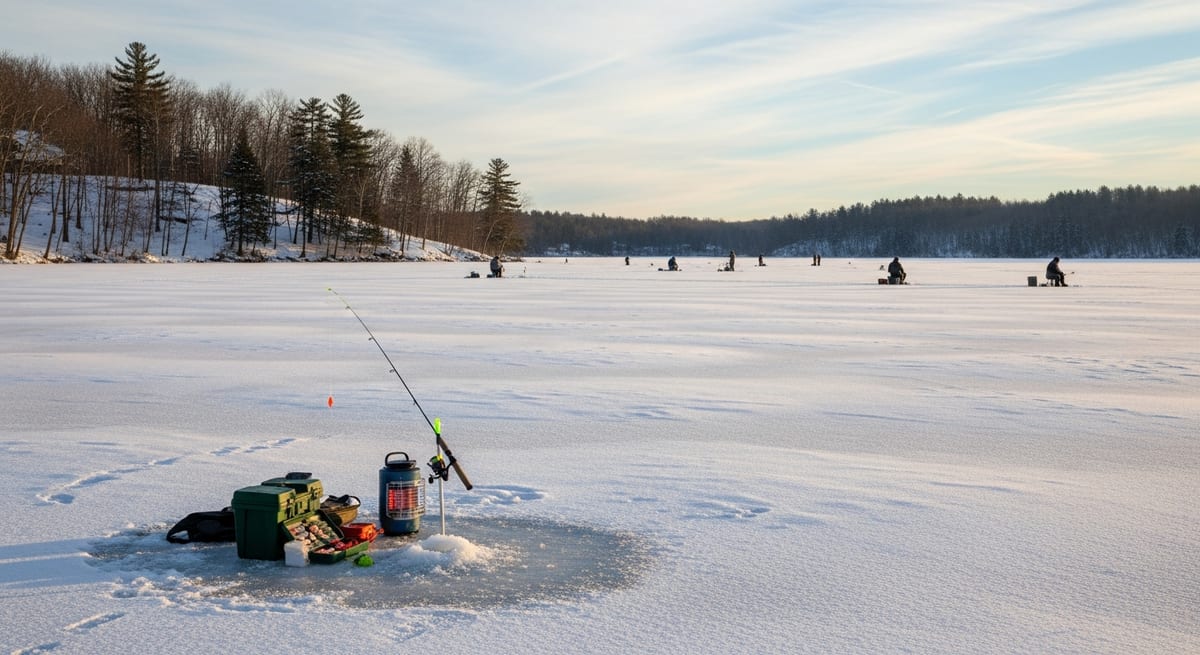
Anglers fishing Mashapaug Lake in Union during hard January freezes have reported finding yellow perch schools stacked at 12-18 feet, active through the coldest days of the season on small waxworm-tipped jigs. The kind of mid-winter session that most Connecticut anglers never experience because they packed their rods away in November. Connecticut's ice season is real, if compressed. Most winters deliver four to six weeks of fishable ice on inland ponds and shallow lakes, enough for yellow perch, chain pickerel, bass, and occasional stocked trout. Higher-elevation ponds in Litchfield and Windham counties tend to set first and thickest. The anglers who consistently get on good ice do their homework, and take the ice thickness standards seriously, before they ever drill a hole.
The Ice Thickness Standard That Doesn't Move
Ice thickness is the foundational variable, and the numbers don't shift based on how cold it's been or how many other anglers are already out there. Connecticut ice conditions vary dramatically by location and year. The consequences of getting it wrong are severe and fast.
The consensus across ice fishing safety organizations, consistent with what CT DEEP reinforces in its winter fishing guidance, runs as follows:
- Under 4 inches: Stay off. No exceptions.
- 4 inches: Minimum for a single person on foot. Test continuously with an ice chisel or auger as you advance. Do not assume.
- 5-6 inches: A more comfortable margin for a solo angler; treat this as a starting floor for a small group, spread out, stay well apart, and keep testing.
- 8-12 inches: Required for snowmobiles and ATVs, conditions that rarely develop in CT.
Moving water, springs, and pond inflows create weak spots that aren't visible from the surface. Experienced CT ice anglers describe hitting soft, layered ice on the auger well before visual inspection suggested any concern. The only reliable test is drilling, not looking.
Self-rescue gear: Ice picks worn around the neck and a throw rope in a bag are standard practice on any CT ice. If you go through: stay horizontal, use the picks to pull yourself forward, and roll away from the hole, standing up on weakened ice is the wrong move.
Which Connecticut Ponds Actually Freeze?
Not every CT pond is worth watching in winter. The waters with a consistent track record among local ice anglers share a few traits: elevation, shallower average depth, and distance from the coast. A few that come up most often in CT fishing community discussions and DEEP access records:
Mashapaug Lake (Union): In northeastern Connecticut, this has been a consistent perch producer based on angler reports from recent seasons, particularly for schools of yellow perch in the 8-11 inch range during January cold snaps. The remote location in Windham County means it tends to freeze earlier than central CT ponds. Pickerel and bass have also been reported. Access via the state forest road off Route 171.
Gardner Lake (Salem/Montville): Produces yellow perch, largemouth bass, and chain pickerel. The public boat launch provides ice fishing access. At roughly 490 acres, it's one of the larger CT lakes where fishable ice develops in most winters, size means more water to cover, but also more fish.
Lake Lillinonah (Brookfield/Newtown): The main lake rarely freezes solidly enough, but local reports indicate the backwater coves, particularly the northern section near Route 133, tend to set first and produce perch and pickerel in hard cold stretches. Worth watching in extended January freezes.
Squantz Pond (New Fairfield): Smaller, tends to freeze more reliably in hard winters than larger lakes nearby. Yellow perch, pickerel, and largemouth are the targets. A recurring mention in CT ice fishing discussions on community platforms.
Litchfield County ponds: The smaller, higher-elevation ponds in northwestern CT freeze first and stay frozen longest. CT DEEP's fishing access map lists dozens of ponds in this area, several of which carry strong winter reputations among local anglers for perch and pickerel when the season sets up.
Perch, Pickerel, and What Else Is Under the Ice
Yellow perch are the most reliably available species and the core of CT ice fishing. Schools at mid-depth, typically 10-20 feet, are what most CT ice anglers are specifically targeting. Small jigs (size 4-8) tipped with waxworms, mealworms, or perch eyes on 2-4 lb monofilament on an ultralight rod is the consistent approach. Drop to bottom, lift two feet, jig gently.
When perch are active, the bite is immediate. When it slows, the consensus among CT ice anglers is to shift to a near-dead-stick presentation, barely twitching the jig rather than actively working it, which often triggers fish that are ignoring a moving bait.
Chain pickerel stay aggressive under ice. Tip-ups with live or dead shiners fished 6-12 inches below the ice surface over weedy shallows (6-10 feet) is the standard approach. When a flag goes up, most experienced CT ice anglers wait 10-15 seconds before setting the hook, letting the fish fully turn the bait before striking. Set too early and you pull it clean.
Largemouth bass slow dramatically in cold water but remain catchable near bottom structure on finesse jigs and small soft plastics worked very slowly. A secondary target, not a primary reason to be on the ice, but reported incidentally by perch anglers on several of the listed ponds.
Rainbow trout are stocked in some CT ponds and have been caught through the ice on small jigs, spoons, and live bait under tip-ups. Check the CT DEEP stocking reports for which ponds receive fall trout plants. Those waters are worth prioritizing early in the ice season while fish are still present.
The Gear Setup: What CT Ice Anglers Actually Bring
The gear setup for CT ice fishing is deliberately simple. The short season rewards a focused, purpose-built kit over heavy investment. Based on what local anglers consistently report using:
Auger: A 6-inch hand auger covers most CT conditions. For a typical day drilling 8-12 holes in new ice, a quality manual unit (Mora is frequently cited in CT ice fishing forums) handles it without the bulk and expense of a power auger.
Rod: Short (24-36 inch) ultralight ice rod with a small spinning reel and 4 lb monofilament. HT Enterprises, Frabill, and St. Croix all make functional ice combos in the $25-45 range, not glamorous, but well-rated for the perch applications CT ice fishing revolves around.
Tip-ups: 4-6 tip-ups for passive pickerel fishing while you actively jig for perch. Standard wooden or plastic frame tip-ups with dacron line and a #4 treble hook are sufficient. Check the tip-up regulations for your target water before the trip. Some CT ponds carry method restrictions (see below).
Shelter: Optional for CT conditions. A portable pop-up ice shelter makes extended cold sessions significantly more comfortable and blocks wind. For sessions under two hours on mild days, most local anglers skip it entirely.
Electronics: Not required but genuinely useful. The Vexilar FL-8 comes up consistently in CT ice fishing gear discussions. It shows depth, bottom contour, and fish position below the jig in real time, which changes how quickly you locate suspended perch schools. Worth it if you plan to fish multiple sessions a season.
CT DEEP Regulations: What to Verify for the 2024-2025 Ice Season
Connecticut fishing regulations apply year-round, including through ice season. Size and bag limits for all species match the open water seasons. A valid Connecticut fishing license plus any required stamps is required before you drill your first hole.
Two things worth confirming in the 2024-2025 CT DEEP Fishing Regulations booklet before your first outing:
Tip-up permissions on specific ponds. Some CT waters carry restrictions on fishing methods, and while this isn't universal across ice fishing waters, it's worth confirming your target pond permits tip-ups before hauling them out. Method restrictions are listed by specific water body in the regulations booklet, not just in the general rules.
Trout pond gear and size rules. If rainbow trout are on your target list, some CT trout ponds carry additional gear restrictions or size minimums beyond the standard freshwater regulations. Check the individual water listing, not just the general trout section.
The CT DEEP posts ice condition reports during cold periods and maintains an active presence on social media, checking their official accounts before heading out often surfaces recent angler reports on which waters have been yielding safe ice. Their website fishing conditions page is also updated during active ice seasons and is worth bookmarking.
EVERY SATURDAY MORNING
Weekly fishing intelligence
Nationwide conditions, what's biting, and honest gear deals. One email, no noise.
No spam. Unsubscribe anytime.