
Ice Fishing in Connecticut: The Complete Guide to CT's Winter Fishery
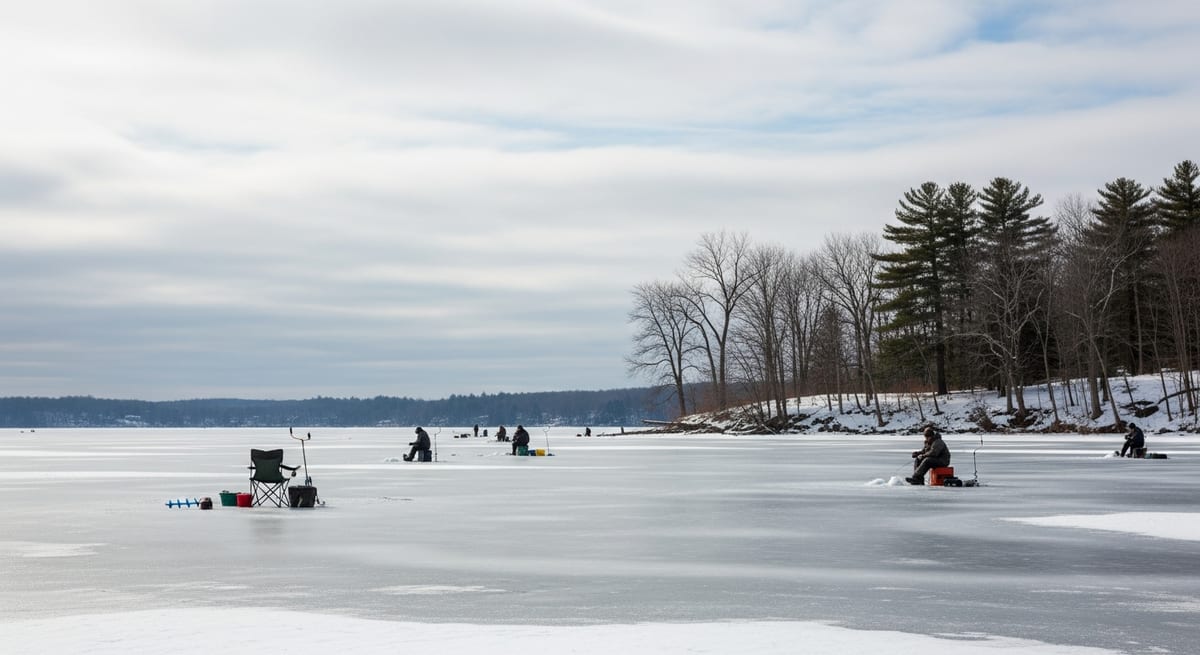
Lake Wononscopomuc in Lakeville is one of fewer than five Connecticut waters that CT DEEP stocks with lake trout. A species most New Englanders drive to Vermont or Maine to chase. That tells you something about CT ice fishing: the opportunities are real, and most anglers miss them entirely. The season is shorter and less reliable than the Upper Midwest, and you're not drilling a hundred holes on a giant frozen lake. But yellow perch show up in numbers, chain pickerel have serious attitude, largemouth bass are an overlooked winter target, and tiger muskies are in the mix at select waters. Start with the safety section, cT ice demands it, then work through timing, locations, and tactics.
CT Ice: Thinner Than You Think
CT ice is variable and often unreliable. Ice that looks solid can be dangerously thin in spots, particularly during the first and last weeks of the season. Take this seriously. No fish is worth going through the ice.
Minimum ice thickness guidelines (based on guidelines from ice safety organizations and state DNR recommendations):
- 4 inches: Absolute minimum for a single person on foot. This is the floor, don't push it.
- 5-6 inches: Safe for a single person with confidence. Most CT anglers start at this thickness.
- 8-12 inches: Safe for a small group. Snowmobiles require at least 8 inches.
- 12+ inches: Required for ATVs or vehicles. Don't put vehicles on CT ice. The season is too short and conditions too variable.
CT-specific hazards:
- Springs and inlet/outlet areas thin ice even when the rest of the lake looks solid. Always check near inflows and outflows.
- Pressure cracks form from temperature fluctuations. Step over, don't step on.
- Dark ice, gray or black, is weak. Avoid it.
- After any rain or warmup, assume the ice is compromised until you've tested it yourself.
Always bring: Ice picks worn around your neck for self-rescue if you fall through, a length of rope, your phone, and leave a trip plan with someone who knows where you're going.
The CT Ice Season: Short, Variable, Worth It
The CT ice fishing season typically runs December through mid-February, with significant year-to-year variation. Climate has made the season shorter and less predictable in recent decades. Some years ice never fully forms on popular lakes; other years you get 6-8 solid weeks of fishing.
What builds fishable ice: A sustained cold snap with overnight lows in the single digits and daytime highs below 25°F will typically produce fishable ice on most CT lakes within a week to ten days. Conditions vary by lake depth and exposure, smaller, shallower lakes freeze faster. Check local fishing forums, the CT DEEP Fishing Report page, and state-specific Facebook groups for real-time ice-up reports from anglers who were just out there.
Peak perch season: January through early February, once ice is established and fish have concentrated at mid-depths. Yellow perch are the most reliable target when bass and pickerel go lethargic in extreme cold.
Late season: The final week or two before ice-out often produces excellent perch and pickerel action. Fish feed actively as conditions shift. It's also the most dangerous time on the ice. Check thickness every trip and trust nothing that looks marginal.
Where the Fish Are: CT Lakes Worth Targeting
Lake Wononscopomuc (Lakeville): Reaches depths over 100 feet in the main basin, one of the deepest lakes in Connecticut, and that depth helps produce consistent, quality ice when the season cooperates. Excellent yellow perch populations throughout. CT DEEP stocks lake trout here annually, one of the very few waters in the state to receive them, and confirmed tiger muskie stockings round out the target list. The most distinctive ice fishing destination in Connecticut, and worth the drive from anywhere in the state.
Bantam Lake (Litchfield): One of CT's largest natural lakes, spanning roughly 900 acres. Good yellow perch and chain pickerel fishing with an accessible public launch. The size means ice takes longer to form than on smaller lakes, confirm conditions before making the trip.
Tyler Lake (Goshen): Smaller and more reliable. Perch and pickerel show up consistently when temperatures hold, and the lake tends to freeze before its larger neighbors.
Amos Lake (Preston): A quieter eastern CT option with solid perch and pickerel action in winters that cooperate. Draws less pressure than the western lakes and worth keeping in your rotation.
Wyassup Lake (North Stonington): Eastern CT's most dependable ice fishery when temperatures cooperate. Perch and pickerel are the main draw.
CT River backwaters (Haddam area): Shallow oxbows and coves along the river freeze before the main channel and concentrate perch, pickerel, and sometimes largemouth. Haddam Meadows State Park provides public access to some of these areas, scout them in fall before the ice comes.
Stocked trout waters: CT DEEP stocks select lakes for ice fishing each season. The list changes year to year, check the current stocking report at ct.gov/deep before you go.
What You're Fishing For
Yellow perch are the backbone of CT ice fishing. They school tight, they bite when bass and pickerel won't, and a mess of 8-10 inch perch makes one of the best fish fries you'll eat all winter. Find them at 8-20 feet over soft bottom near the edges of dying weedlines. A small tungsten jig: 2-3mm in white, chartreuse, or pink, tipped with a waxworm, mealworm, or a small perch eye is the standard setup. Drop to the bottom, reel up 6-12 inches, and jig with subtle movements. If you're not marking fish within 10 minutes, punch another hole and move.
Chain pickerel are aggressive and often bigger than anglers expect: 18-22 inch fish are common, and 24-inch-plus specimens show up every season in CT. Set tip-ups with 4-6 inch live shiners at mid-depth, just above the weedline. Pickerel suspend there waiting for prey. When the flag flies, start moving toward the tip-up but don't rush the strike, let the fish run a few seconds, then set hard.
Largemouth bass are the most overlooked CT ice fishing target. They're there, they're catchable, and almost nobody is targeting them. Fish slow, small tube jigs (1.5-2 inch) on 1/16 oz heads in 12-20 feet of water near structure where you'd find bass in summer. They won't chase; get the bait in front of their face.
Tiger muskies: CT DEEP stocks tiger muskies in select waters, including Wononscopomuc. Catching one through the ice is rare but legitimate, not a fantasy. Large tip-ups baited with 6-8 inch sucker bait and set near deeper structure give you the best shot. If you're at Wononscopomuc, leave one flag out for tigers.
Stocked trout appear in the waters CT DEEP targets each winter. Power Bait, salmon eggs, and small spoons all produce. Check the current stocking list at ct.gov/deep before you go.
Gear That Works for CT Conditions
Ice auger: A 6-inch hand auger handles most CT ice fishing. The ice rarely exceeds 12 inches on our lakes, and a 6-inch hole is sufficient for everything except very large fish. Power augers are overkill unless you're drilling 20-plus holes. Hand auger, sharp blade, done.
Jigging setup: A 24-28 inch medium-light ice rod paired with a small spinning reel or inline reel spooled with 4-6 lb monofilament or 6 lb fluorocarbon. A sensitive tip matters more than most anglers expect, perch bites in very cold water can be nearly imperceptible, and the difference between a good ice rod and a cheap one shows up right there.
Tip-ups: Standard flag-style tip-ups for bait fishing (pickerel, bass, trout). The Frabill Arctic Fire and HT Enterprises Polar II are reliable, inexpensive options. CT regulations allow up to 8 lines per licensed angler for ice fishing, bring 5-8 tip-ups to run a productive spread.
Ice shelter: Not required for a day trip, but a portable flip-over shelter (Clam, Frabill, or Eskimo) changes the experience on brutal days. For casual CT ice fishing, layered clothing and a 5-gallon bucket as a seat get the job done most of the time.
Electronics: A flasher. The Vexilar FL-8 is the classic, or a compact ice fish finder lets you watch fish approach the jig in real time. You can see a perch swim in, watch it inspect the bait, and trigger the strike. Once you've fished with one, fishing blind feels like a step backward.
Regulations Worth Knowing
License: Standard CT fishing license required. Ice fishing falls under the same regulations as open-water fishing, no special license needed. Lines: Up to 8 tip-ups or lines per licensed angler. Attended lines only, unattended lines are prohibited. Species limits: Standard year-round limits apply. Check CT DEEP for current species-specific regulations before you go. Season: No formal ice fishing season in CT. Fish when the ice is safely thick and the body of water is legal to fish.
Check for water-specific regulations at ct.gov/deep/inland-fisheries before fishing any new lake. Some waters carry special rules that don't appear in the general regulation summary.
EVERY SATURDAY MORNING
Weekly fishing intelligence
Nationwide conditions, what's biting, and honest gear deals. One email, no noise.
No spam. Unsubscribe anytime.