
The Parking Lot at Still Meadow Drops From Thirty Cars to Three in December. The Trout in That Pool Don't Notice.
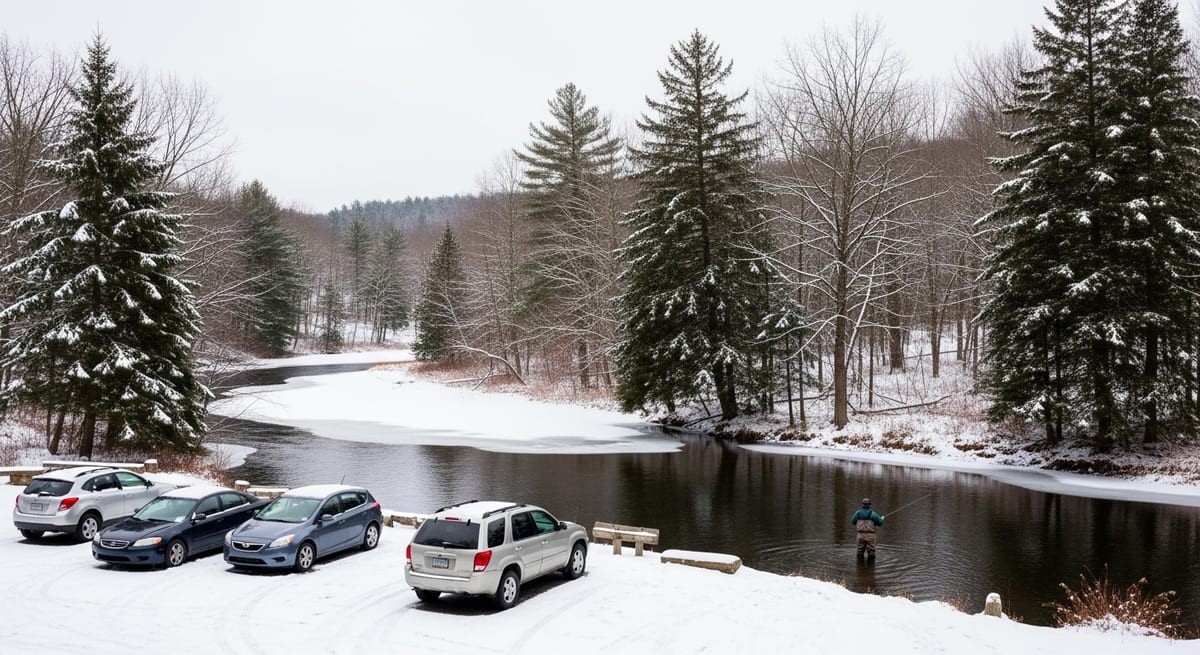
By December, the parking lot at Still Meadow on the Farmington drops from thirty cars to three. Regulars who fish the river year-round note this every season. The crowds thin by mid-November while the fish hold in the same deep pools they used all fall. Cold water changes the approach, not the outcome. Trout metabolism slows, presentations need to slow with it, and the anglers who adapt find CT's better winter runs almost entirely to themselves.
What Cold Water Actually Does to CT Fish, and What It Doesn't
Fish are cold-blooded, so their metabolism slows as water temperatures drop. They need less food, but they don't stop feeding. The most persistent assumption among CT anglers in winter is that cold water means lockjawed fish. What it actually means is slower fish with different priorities.
Slow down everything. Cold fish won't chase. A fast-moving lure passes right by without a response. CT trout anglers who fish through January consistently report the same pattern: trout will ignore a Mepps spinner worked at normal speed and take the same lure when slowed to a crawl along the bottom. Slower retrieves, longer pauses, and subtler presentations produce bites that a standard warm-weather approach misses entirely.
Fish deeper. Surface water cools fastest; fish move to the warmest available depth. The deep pools of a river or the bottom of a lake. Once ice forms, the warmest water (around 39°F, the temperature of maximum density for freshwater) sits at the bottom. That's where the fish stack.
Down-size your presentations. Smaller baits and lures match winter feeding patterns. A 3-inch jig or small live minnow typically outproduces larger presentations that cold fish won't burn the calories to chase.
CT Trout From December Through February: What the Farmington and Housatonic Regulars Report
Stocked rainbow, brown, and brook trout in Connecticut rivers and streams are actively catchable all winter long. Trout are cold-water fish. They feed in the 34-50°F range that describes most CT water from December through February. The Farmington and Housatonic are the rivers CT fly anglers most consistently return to for winter trout, both known among regulars to hold fish through the hardest stretches of the season.
Where to find winter trout:
- Deep pools: Below rapids and riffles, winter trout stack in slow, deep water where they don't have to fight current. Anglers who fish the Farmington in December and January consistently report one key adjustment: abandon fast water entirely until temperatures climb above 45°F. Even runs that held fish in October sit empty in February. The fish push into the deep, slow pools and won't move out until spring warming begins.
- Warm-water inputs: Anywhere slightly warmer water enters, springs, culverts, tributary confluences, tends to concentrate trout in winter. Worth slowing down to probe carefully before moving on.
- Tailwaters: CT rivers below regulated reservoirs often produce the most consistent winter trout. The Farmington tailwater below Colebrook Reservoir in Riverton is one of the most-cited winter destinations among CT trout anglers.
Winter trout tactics CT anglers return to:
- Small nymphs and wet flies dead-drifted in pools, bead-head Prince Nymphs and Pheasant Tails are the flies CT nymphing anglers most consistently recommend for water below 40°F
- Small in-line spinners (Mepps #0-1, Rooster Tails in chartreuse) worked slowly. The emphasis on slow retrieves is consistent across angler reports
- Salmon eggs and PowerBait for bait anglers, classic cold-water trout baits that continue to produce on CT stocked water
- Live or dead minnows on a small jig head for targeting larger winter trout; stacked browns in deep pools respond to minnow presentations that they won't travel far for in cold water
CT Ice Fishing: A Legitimate Pursuit in a Variable Season
Connecticut ice fishing is a real pursuit, typically January through mid-February in a solid year, but CT ice is genuinely variable. Some winters deliver six weeks of fishable conditions. Some years produce two weekends. That variability is part of the CT ice fishing experience, and anglers who account for it avoid long drives on bad information.
Always check local conditions before driving out. Bait shops nearest to target water typically have the most current ice reports before conditions hit online forums. The commonly cited minimum is 4 inches for a single angler on foot; 6 or more is the threshold most experienced CT ice anglers use before bringing a small group, though CT's inconsistent freeze quality leads many locals to err above those benchmarks.
Yellow perch are the most reliable CT ice target. Found throughout the state on warm-water lakes and ponds, perch respond well to small jigs tipped with wax worms or maggots. Once electronics mark a school, anglers typically hold position on them for extended sessions.
Chain pickerel are aggressive through the ice and excellent on the table. Medium jigs, small ice-fishing spoons, and tip-ups with live shiners all produce pickerel. Weedy bays and shallow flats in 3-8 feet of water are the standard pickerel zones.
Largemouth and smallmouth bass are slower in ice conditions but catchable, and frequently overlooked. Large jigs worked slowly near deep structure produce bass through the ice on waters that hold them.
Rainbow and brown trout on lakes that carry over fall stockings can produce excellent ice fishing. Spoons and small jigs fished near the thermocline are the standard approach.
Lakes with ice fishing history: Mashapaug Lake in Union, Black Pond in Meriden, Mansfield Hollow, Highland Lake, and West Hill Pond have produced in past winters, but access, ice quality, and conditions vary significantly year to year. Local bait shops and CT ice fishing forums carry the most current reports; check both before committing to a destination.
Open-Water Winter Options: Rivers, Saltwater, and What CT Anglers Who Stay Out Report
Most CT winters run stretches without fishable ice. Moving water doesn't freeze under normal CT winter conditions, and anglers who shift focus to rivers and saltwater structure find legitimate action through December and into January.
Rivers and streams for trout: River trout fishing continues through December and into January most years. Anglers who target the lower Farmington in January, even on mornings well below freezing, report finding stacked browns in twelve feet of slow water with near-zero fishing pressure. Slow, deep pool sections hold the most fish, and reduced competition makes those spots fish better than they do in October.
Saltwater winter options worth knowing:
- Tautog: CT DEEP sets tautog seasons annually and regulations shift year to year, always verify current open dates at ct.gov/deep before planning any late-season trip. In seasons where the fall window has extended into late November or early December, anglers targeting deep rocky structure have found fish. Current DEEP regulations and recent reports from local tackle shops are the most reliable guide to what's open.
- Stripers: A committed group of CT shore anglers pursues stripers through December and into early January. Fish thin out but tend to run large, staging in harbors, near warm-water discharges, and in river mouths. Regulars who work CT harbor mouths in December describe a numbers-down, size-up pattern that rewards patience.
- Winter flounder: Traditionally an early spring fish in CT (March-April), flounder begin appearing in harbors and tidal creeks in late winter. Bloodworms and sandworms fished on the bottom in shallow, protected water are the standard approach.
Winter Gear: What CT Anglers Who Stay Out Through February Actually Use
The pattern CT winter regulars describe most often isn't a wrong-lure problem. It's a gear problem. Anglers who cut the day short in cold weather typically trace it back to a single under-insulated layer or inadequate foot protection, not bad fish sense. Cold, wet conditions expose gear shortcomings in the first hour of a session.
Layering that holds up: Moisture-wicking base layer, insulating mid-layer (fleece or down), waterproof and windproof outer shell. Hands and feet go first. Neoprene gloves and insulated waterproof boots are non-negotiable for anglers who stay out past the first cold front. Anglers who've cut February sessions short on the Housatonic consistently point to wet hands and inadequate foot insulation as the primary culprits.
Ice safety. The non-negotiables:
- Ice picks (awls) worn around your neck, if you break through, these are the primary self-rescue tool
- Fifty feet of rope, for assisting someone who's gone through
- Never fish ice alone; always have a partner who knows the plan
- Float suit or immersion suit for serious ice anglers
- Check cell service before committing to a remote spot, coverage near many CT lakes is limited
Hypothermia awareness: Wet and cold together progresses faster than most people expect. Know the signs, persistent shivering, confusion, clumsiness, and plan the exit before those signs appear. The car and the heater are part of the safety gear.
Conditions shift quickly on CT water in winter. Anglers who stay comfortable stay out longer, and the late-morning and midday windows, when surface temperatures tick up a few degrees, consistently produce the most active fish across all CT winter species.
EVERY SATURDAY MORNING
Weekly fishing intelligence
Nationwide conditions, what's biting, and honest gear deals. One email, no noise.
No spam. Unsubscribe anytime.