
CT Pickerel Anglers on Pachaug Pond, Rogers Lake, and Gardner Lake Report the Ice-Out Bite Runs Before Bass Wake Up, and the Y-Bone Reality Divides the Community on Eating Them. What CT Freshwater Regulars and DEEP 2025-2026 Regulations Reveal About Cold-Water Presentations, Tip-Up Tactics, and the Dedicated-Targeting Window
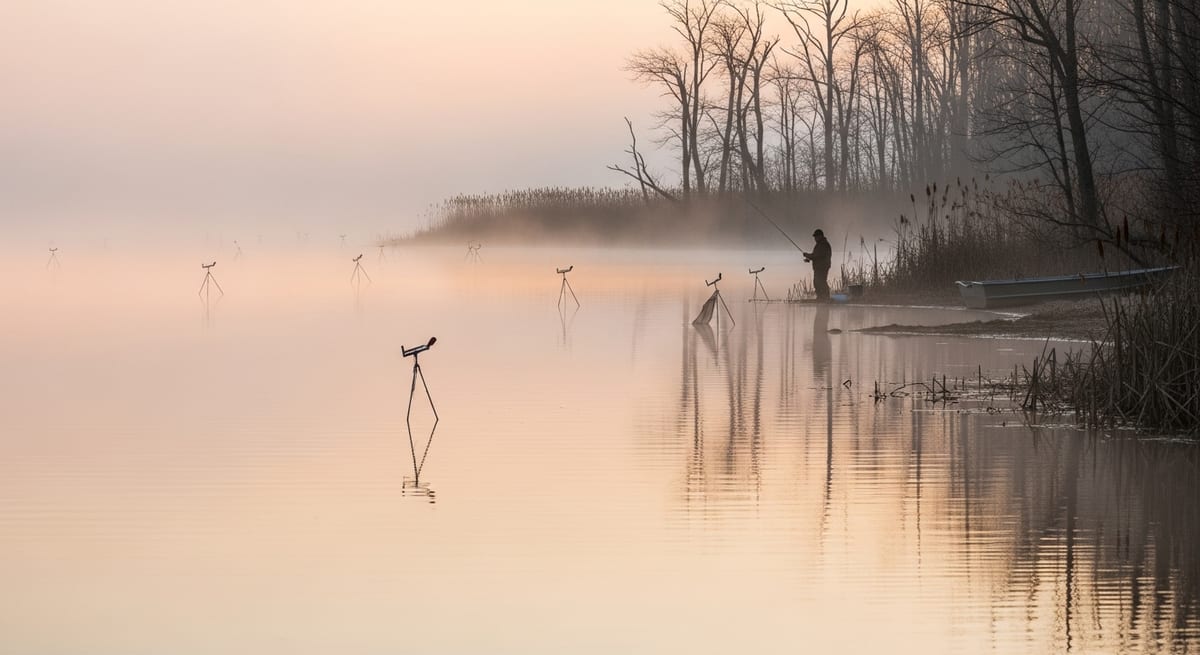
Anglers who specifically target pickerel on Pachaug Pond in Voluntown and Rogers Lake in East Haddam report consistent action from late February through early April, a window that runs while largemouth bass and yellow perch in the same water are still largely inactive in the cold. Under CT DEEP's 2025-2026 freshwater regulations, chain pickerel carry a 12-inch minimum size limit and a 6-fish daily creel limit on most Connecticut waters. Most CT freshwater anglers encounter pickerel accidentally while fishing for bass or perch; the consensus among regulars who dedicate sessions to them is that targeting pickerel specifically, with presentations matched to cold-water ambush behavior and structure, produces a genuinely different experience than picking them off as bycatch.
What DEEP Distribution Data and CT Freshwater Communities Report About Pickerel Presence
Chain pickerel are among Connecticut's most widely distributed freshwater predators. DEEP statewide survey data indicates pickerel are present in most Connecticut ponds, lakes, and slow-moving river sections with vegetated shallows. Gardner Lake in East Haddam, Tyler Lake in Goshen, Pachaug Pond in Voluntown, and Black Pond in Meriden all carry populations that CT freshwater regulars report reliably across seasons and pressure levels. They are efficient ambush predators that hold tight to vegetation edges, fallen timber, and structure breaks in shallow water.
Anglers on impoundments like Bantam Lake and Lake Lillinonah note that pickerel hold in weedy coves that bass tournament competitors tend to skip, which keeps pressure low on dedicated pickerel water. Under DEEP's 2025-2026 regulations, the statewide standard is a 12-inch minimum size limit and a 6-fish daily creel limit. Most pickerel caught on Connecticut public water run 13-16 inches; fish over 20 inches draw notice in community reports from larger, lower-pressure ponds.
The Ice-Out Window: Why Cold-Water Anglers on Pachaug Pond and Rogers Lake Prioritize Pickerel in March
Pickerel are unusual among major CT warmwater game fish in remaining aggressive in water temperatures between 38 and 50 degrees F, a range that keeps bass and yellow perch largely stationary on bottom. Anglers who fish Pachaug Pond and Rogers Lake in late February and early March report pickerel actively feeding along weed edges in 2-4 feet of water while the rest of the impoundment is still effectively cold-dormant. Target areas: any remaining emergent vegetation from the previous season (cattail edges, submerged aquatic plant beds, shoreline timber), particularly on south-facing coves where water warms a few degrees faster than the main basin.
The community consensus on cold-water presentations centers on three approaches: slow-retrieved gold spinnerbaits, small swimbaits on a light jig head worked near bottom, and soft plastic jerkbaits (a Zoom Fluke or equivalent) worked with extended pauses. CT freshwater regulars who fish pickerel specifically note that cold-water fish will not track a lure far from cover; the presentation needs to pass close to the structure, not just through the general zone. The ice-out window on most CT ponds runs roughly three to five weeks, from the date weed edges first open to when largemouth begin moving onto the same structure.
Tip-Up and Jigging Tactics: What CT Ice Anglers Report on Smaller Inland Ponds
Tip-ups with live bait are the standard approach among CT ice anglers specifically targeting pickerel. Golden shiner (3-4 inch) and creek chub are the most commonly reported bait choices. Set tip-ups 12-18 inches off bottom in 4-8 feet of water near weed edges. Anglers who fish Black Pond and smaller inland ponds around Windham County report that pickerel suspend higher in the water column than northern pike, and setting bait too deep is a consistent miss. CT DEEP's 2025-2026 regulations restrict live bait species on many waters; verify current bait restrictions before the trip, as using live bluegill is not permitted on most CT impoundments.
When a flag fires, community consensus is consistent: let the fish run. Pickerel are known for running, stopping, turning the bait to orient it headfirst, and running again before swallowing. CT tip-up anglers who target pickerel regularly report the most common mistake is setting the hook during the first run, before the fish has committed. Give 5-10 seconds after the run settles before applying pressure. Jigging works as a supplement: a silver Swedish Pimple (3/4 oz) worked aggressively in 8-15 feet, or a tube jig near bottom. CT ice anglers report tip-ups consistently outproduce jigging over a full session when targeting pickerel specifically.
Summer Vegetation Tactics: CT Anglers Who Fish Pachaug's Lily Pads and Tyler Lake's Weed Flats
Summer pickerel hold in dense vegetation throughout the warm season. Anglers who fish Pachaug Pond's extensive lily pad fields and Tyler Lake's submerged weed beds report pickerel concentrate in the thickest cover during midday heat and push to weed edges in early morning and late afternoon. Best summer presentations from CT freshwater communities: weedless spoons (Johnson Silver Minnow or equivalent) worked through pad fields, inline spinners in open weed pockets (Mepps Aglia No. 2, gold blade), and weedless soft plastics on a wide-gap hook retrieved through vegetation lanes.
Frog lures over pad fields produce strikes, but CT anglers who fish heavily vegetated ponds report conversion rates on pickerel run lower than on bass because of how pickerel approach a surface lure from below. Strikes from summer pickerel are typically hard and sudden. Anglers who specifically target pickerel rather than incidentally catching them while bass fishing often run a short 12-15 lb wire trace to prevent bite-offs on quality lures; fluorocarbon leader is adequate for most situations, but heavy vegetation with larger fish shifts the calculus toward wire.
Tackle That CT Freshwater Regulars Actually Run for Pickerel
Pickerel do not require specialized gear. Light to medium spinning with 15 lb braid and a 10-12 lb fluorocarbon leader handles the full range of presentations. A medium-power 6.5-7 foot spinning rod works across spinners, soft plastics, and small swimbaits without over-sizing for the fish. For weedless presentations in heavy cover, some CT regulars run 20 lb braid as a main line to manage contact with dense vegetation without compromising lure action.
Leader material: fluorocarbon handles most CT pickerel fishing without bite-offs, as pickerel teeth are smaller and less serrated than northern pike. A short 15 lb single-strand wire trace is worth considering when fishing large fish in very heavy cover. Hook size: size 2 to 1/0 depending on presentation. CT anglers who target both pickerel and pike note that pickerel have a proportionally smaller mouth for their body length; oversized hooks result in more missed strikes on pickerel than on pike. Ice fishing setup: 30-40 lb monofilament tip-up line to the swivel, 18-24 inches of 15 lb fluorocarbon leader to the hook.
The Y-Bone Reality: What CT Freshwater Anglers Report About Pickerel on the Table
Chain pickerel at the table generates the most divided opinions of any common species in CT freshwater communities. The core issue is the Y-bone structure: an extensive system of forked intermuscular bones running through the fillet that makes simple filleting impractical and catches most anglers off guard the first time. CT freshwater regulars are generally candid on this point: pickerel are not a beginner-friendly table fish. Fish from warm, low-oxygen water in midsummer are commonly reported to carry a muddy flavor that makes eating them unrewarding. The casual reputation for good eating circulates from cold-water fish prepared same day; it does not reflect the full range of the catch.
Anglers who value pickerel for the table consistently cite two approaches: the score-and-fry method (parallel cuts every quarter inch through the fillet, then deep fry, which dissolves the fine Y-bones in hot oil) and traditional Northeast pickling (the curing process softens the bone structure over several days). Cold-water fish from the late February ice-out window through early April rate consistently better on flavor in community reports than fish taken from the same waters in July. The community consensus among CT anglers who eat pickerel regularly is to plan for it during the early-season cold-water window, not opportunistically off a summer bass trip.
EVERY SATURDAY MORNING
Weekly fishing intelligence
Nationwide conditions, what's biting, and honest gear deals. One email, no noise.
No spam. Unsubscribe anytime.