
The CT Night Bite Follows a Temperature Trigger, and It's a Different Threshold for Stripers, Catfish, and Summer Bass
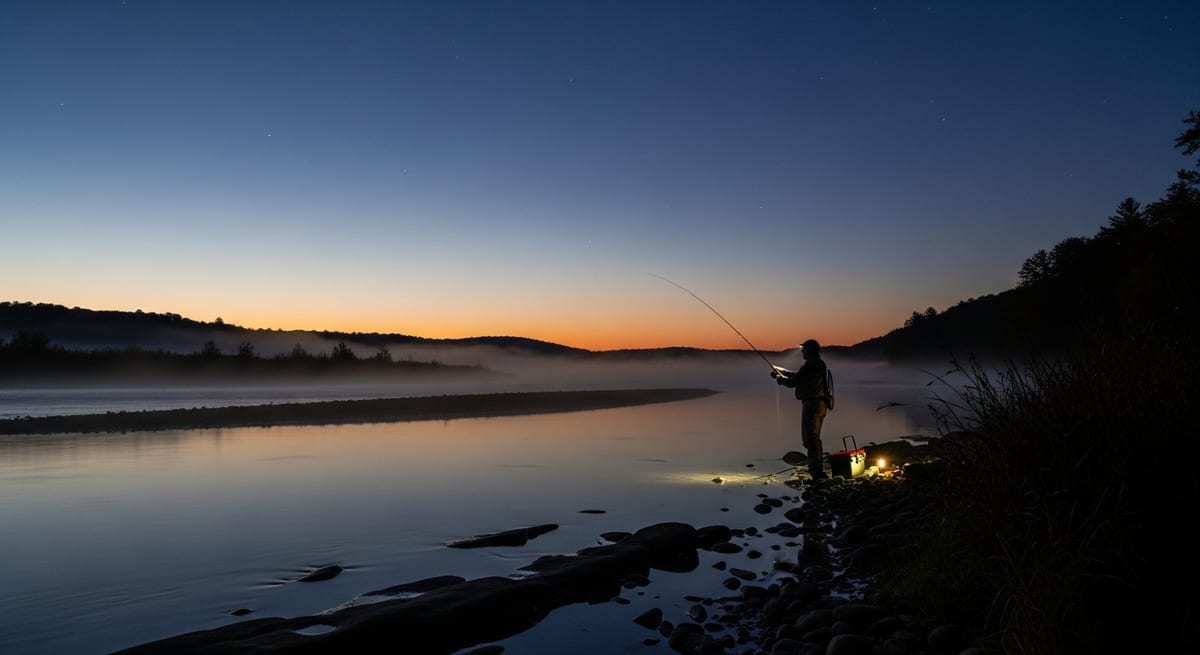
The Temperature Numbers That Actually Predict a Productive Night
Surface temps in Long Island Sound tributaries typically push into the high 60s by mid-to-late May, and according to community-aggregated reports from CT shore anglers across multiple seasons, that temperature threshold predicts striper night action more reliably than either season or moon phase.
The windows, by species:
- Striped bass: High 60s surface temp, typically late May onset on CT tidal water; productive through September as long as temps hold below 74°F. Anglers fishing the lower Connecticut River and the Niantic basin in August report patchy surface activity during overnight heat spikes above that threshold.
- Channel catfish: Mid-60s water temp, typically mid-June on CT rivers. Community reports from the Connecticut River corridor show that dusk-to-midnight catfish activity doesn't materialize consistently until water holds at that level.
- Largemouth bass: Surface feeding resumes after dark on most CT lakes from late May through August once daytime temperatures make midday sessions unproductive. The pattern is consistent across reported sessions on larger impoundments where boat pressure compounds temperature stress on fish behavior.
Moon phase and tide direction compound the effect. The combination cited most often among CT shore striper anglers: new and full moon periods, incoming tide, first two hours after dark. Anglers who target that specific combination report more consistent results than those fishing on a fixed schedule regardless of tidal timing. The waning quarter moon on an outgoing tide comes up frequently in discussions of slow-night post-mortems.
When surface temps fall below 60°F in October, after-dark feeding windows on tidal water narrow sharply. Most CT shore regulars shift to daytime sessions or move inland before the end of the month.
Which Species Move After Dark in CT, and What Separates the Productive Windows
Striped bass are the primary driver of CT night fishing activity, and the pattern is one of the more consistent observations in CT shore fishing communities: fish that won't respond to surface presentations in afternoon light will chase swimmers aggressively at 10pm in the same locations. This holds particularly on incoming tides at river mouths and rocky points along the Sound. Current CT DEEP regulations set a 28-inch minimum with a one-fish daily limit in state waters, verify at ct.gov/deep before going out, as striper regulations have changed in recent seasons and may change again.
The 65-72°F surface temperature range draws the most reliable action. Once water climbs above 74°F, overnight action gets less predictable, and anglers fishing the lower Connecticut River in August report reduced surface activity during sustained heat.
Channel catfish follow a different calendar. The Connecticut River from Haddam north produces reliable catfish reports from dusk through midnight in June, July, and August, but primarily once water temperatures hold in the mid-60s and stabilize. Bottom rigs with cut bunker chunks or chicken liver are the consistent community recommendation for this stretch. The daytime catfish session on these waters rarely replicates what's possible after dark when temperatures are right; this is one of the clearer cases in CT fishing where the night shift is the productive shift.
Largemouth bass on CT inland lakes shift into shallow-structure feeding after dark through the summer, docks, weed edges, and rocky shorelines all show up in community reports for topwater activity that stalls out by mid-morning on hot days. The consensus among CT kayak anglers who fish both windows is that summer evening sessions after 9pm on structure-heavy inland lakes consistently outperform midday deep-water efforts.
Snapper bluefish show up under dock and marina lights in August through September in Noank, Mystic, and Old Saybrook harbors. A small jig or soft plastic under a lit public dock produces reliably. They're not the target species that draws most anglers out after dark, but they're a consistent secondary catch when striper action is slow, aggressive enough on light tackle to make a slow night useful.
CT Access Points, and What the Access Actually Looks Like After Dark
Tidal River Mouths: The lower Connecticut River, Niantic River mouth, and lower Thames all generate striper reports on incoming tides after dark. Haddam Meadows State Park on the Connecticut River offers free parking and flat bank access. A documented catfish and striper location for summer night sessions. The Niantic River mouth has public bank access on the east bank with a pull-off on River Road; this is one of the more frequently referenced night fishing access points in eastern CT angler reports.
Rocky Points and Jetties: Black Point in East Lyme has a public access area off Black Point Road, with parking along the road before the private association gate. This stretch produces stripers and bluefish on moving tide. CT coastal access is a genuine source of confusion at night, private beach associations control many CT points, and access that appears open in daylight often isn't. CT DEEP's coastal access maps are the most reliable guide to what's currently open to the public. Anglers exploring new-to-them coastal spots after dark are advised to verify access status in advance; navigating private property disputes at midnight adds real risk to an already lower-light situation.
Bridge Shadow Lines: On any tidal CT waterway, the shadow line where bridge lighting meets dark water creates a current seam that stripers hold and ambush from. Anglers fishing tidal bridges in CT describe fish stacked in the transition zone facing current, intercepting baitfish swept through. Access and trespassing considerations vary significantly by bridge location. This is worth confirming before committing to any specific spot.
Marina Dock Lights: The August snapper blue bite under dock lights at Noank, Mystic, and Old Saybrook marinas is well-documented in local angler reports. Most marina docks are private; the public town docks in Noank and Mystic are accessible and worth checking on calm summer nights when lights are on and bait is visible near the surface.
Lake Lillinonah for Catfish: The DEEP boat launch at Lovers Leap State Park in New Milford provides access to the reservoir, which covers the New Milford and Bridgewater area. Night bank fishing and anchored boat sessions in the upper coves have produced catfish reports through summer. Verify current launch hours with DEEP before planning an evening visit, as access hours at state boat launches vary by season.
What CT Night Anglers Consistently Reach For
Night striper fishing in CT doesn't require a specialized arsenal, but anglers who fish after dark regularly tend to simplify toward a narrower selection. The community consensus on CT striper forums clusters around a few specific setups and largely ignores the rest.
Rod and reel: Medium-heavy spinning in the 7-foot range paired with a 4000-5000 series reel is the configuration that comes up most in CT night fishing discussions. Braided main line in the 20-pound class with a 20-24 inch fluorocarbon leader handles most tidal scenarios, enough backbone for a keeper-size striper, sensitive enough to register the soft takes that happen in slower current seams.
What CT night anglers reach for most:
- Dark-colored swimmers, black or black/purple (SP Minnow, Yo-Zuri Crystal Minnow): A slow, steady retrieve just below the surface. Dark profiles outperforming lighter patterns after dark is the single most consistently repeated gear observation in CT night striper discussions. The working theory cited in these threads: silhouette against ambient surface light is the take trigger, not flash. This holds enough across enough sessions that anglers who haven't tried black yet are consistently told to.
- Surface plugs (pencil-style or popper): Over shallow rocky shorelines and in protected coves on calm nights when fish are actively pushing bait. Less reliable as a blind-search tool; more effective when conditions and timing are already aligned.
- White bucktail (1-3 oz) with paddle tail or pork rind trailer: The standard for bridge pilings and current seams, and the most frequently mentioned single lure in CT night fishing discussions about structured locations. Simple, durable, and difficult to argue with.
Cut bunker chunks or chicken liver, bottom-rigged, handles catfish from Haddam north on the Connecticut River.
Lighting: A headlamp with red-light mode is standard for CT night sessions, red preserves night vision when landing fish or re-rigging without destroying dark adaptation. A backup light source is standard practice, particularly on stretches of coastline where cell signal is unreliable. For boat fishing, CT DEEP's boating regulations specify current navigation lighting requirements, verify directly rather than relying on any summary, including this one.
Tide Height Is the Safety Variable Shore Anglers Most Often Skip
The safety failure mode that comes up repeatedly in CT shore fishing communities isn't weather or equipment. It's anglers who know a spot well in daylight but haven't tracked how tide height changes it after dark.
On exposed rocky points along the Sound, the difference between a comfortable low-tide walk-in and a difficult crossing at high tide can be a few hours. The CT shore fishing community consistently flags this for spots like Black Point in East Lyme, where exposed rock sections that are dry at low water can become hazardous crossings as the tide fills. Checking both tide height and tide direction for the specific access point, not just the nearest general forecast, is the step that comes up most often as the one anglers skip.
Practices reported most consistently in CT night fishing safety discussions:
- Tell someone your location and expected return time before any night session, particularly on jetties and isolated rocky shoreline. Consistently listed as the step most anglers skip, including experienced ones.
- Carry a charged backup battery pack. Navigation apps drain phone batteries faster than expected during night sessions, and CT coastal cell coverage has enough gaps that running low is a real scenario.
- Wear a PFD from a kayak, jetty, or any position where a fall puts you in open water with no easy self-rescue. CT DEEP's boating and fishing safety resources are the authoritative source for current PFD requirements in state waters.
- Fish with another angler on exposed jetties and rocky points when possible. The risk calculus on solo jetty fishing after dark is higher than most anglers treat it, and CT shore fishing communities increasingly say so directly.
Regulations: Night fishing is legal statewide year-round in CT, and all standard size and bag limits apply after dark. CT fishing licenses are required for marine species and for freshwater species (anglers 16 and older), available at ct.gov/deep. Striper minimum size and bag limits have changed in recent seasons; confirm current rules directly at ct.gov/deep before going out. The DEEP freshwater fishing guide contains the current trout season calendar, which varies by water body and shouldn't be relied on from memory or secondhand sources.
EVERY SATURDAY MORNING
Weekly fishing intelligence
Nationwide conditions, what's biting, and honest gear deals. One email, no noise.
No spam. Unsubscribe anytime.