
Night Fishing in Connecticut: The Best After-Dark Species, Spots, and Tactics
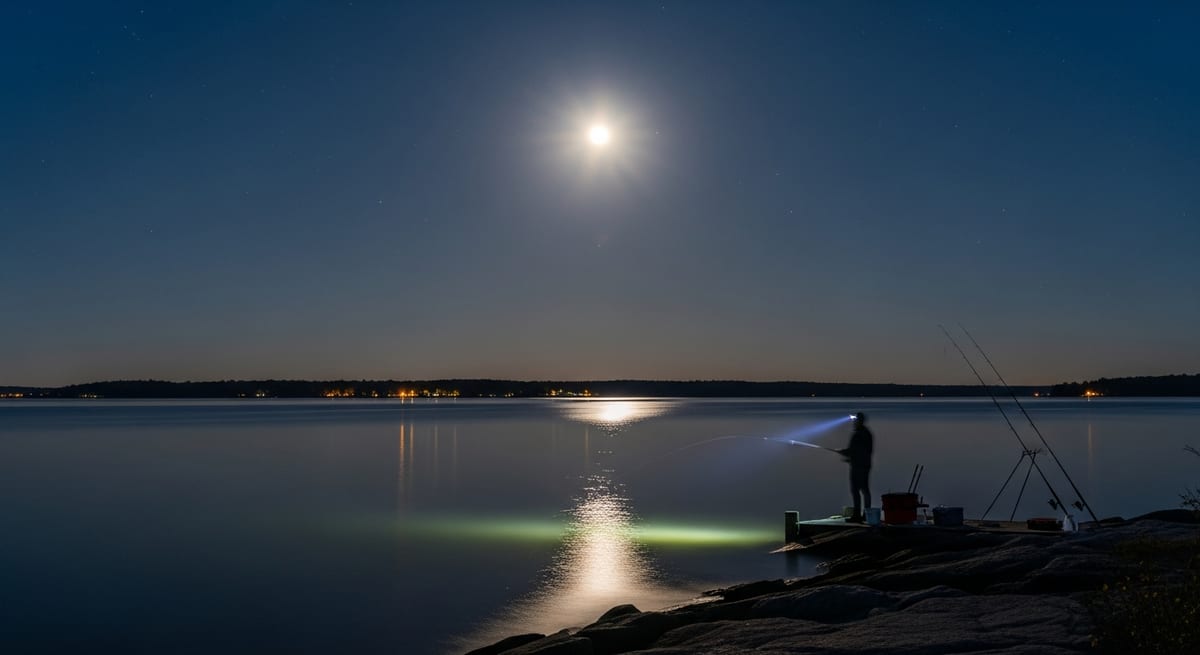
The stripers that ignored every plug cast at Hammonasset Beach during the afternoon often start crashing sand eels in the trough after 10 PM, sometimes within wading distance of the sand. Night fishing in Connecticut isn't just a heat-of-summer workaround. For stripers, largemouth bass, and catfish, the after-dark bite regularly outperforms anything the daytime produces, and for certain species at certain times of year, it's not even close.
Why Fish at Night in Connecticut
Three factors make Connecticut night fishing consistently productive:
1. Temperature. Connecticut summer days often push surface temperatures toward the mid-70s in shallower lakes and ponds, sometimes higher in late July. Bass and stripers grow lethargic in warm water, feeding in shorter, more concentrated windows. After dark, surface temps drop, oxygen levels stabilize, and fish that were sluggish at noon become active and willing.
2. Light. Predatory fish use darkness as cover. Stripers that were pushed out of skinny water by boat traffic and bright sun move back in after dark. Bass that were holding deep in structure move to weed edges and flats to feed. Prey species, shiners, perch, bunker, lose their visual advantage after sunset, and predators know it.
3. Pressure. Connecticut's most popular fishing spots are pressured hard during the day. At night, most anglers are home. You'll often have entire stretches of shoreline to yourself.
Night Fishing for Striped Bass
Summer night striper fishing on the Connecticut coast is some of the best accessible saltwater action in the Northeast. Big fish that won't show during the day become catchable from shore after 10 PM.
Best spots:
- Hammonasset Beach State Park (Madison): Long sandy beach with a defined trough running parallel to shore. Wade the trough during an outgoing tide and work swimming plugs toward the cuts. Parking is open until 11 PM in summer.
- Bluff Point Coastal Reserve (Groton): Rocky shoreline with structured current. Park off Depot Road and hike the half-mile trail to the point. Stripers hold behind the rock formations on a dropping tide.
- Connecticut River mouth at Old Saybrook: The North Cove outflow and Saybrook breakwater both produce on moving water. The jetty rocks are accessible from Saybrook Point; wade carefully at low tide.
- Niantic Bay seawall: Easy access, productive for schoolies and occasional larger fish. Walk the seawall east of the Niantic River mouth on an incoming tide.
When to go: Moon phase matters. Full moon nights illuminate the surface and trigger more active feeding on the flats. Some anglers prefer new moon darkness for fish pushed into shallower water. Both conditions produce. Best tides: two hours before and after moving water. Dead slack noticeably slows the bite.
Season runs mid-June through late September; July and August see the most consistent inshore concentrations.
Lures that produce:
- Large surface plugs (Gibbs Danny, Creek Chub Pikie). The topwater blow-up at night is worth staying up for
- Swimming plugs (SP Minnow, Mag Darter) retrieved just below the surface with a slow, steady retrieve
- Large soft plastics (8" shad tails, Sluggos) on a 1-1.5 oz jighead, swum slowly near structure
- Bucktail jigs (2-3 oz) with a soft plastic trailer, worked along current edges
Rod/reel: A 9-foot medium-heavy spinning rod (St. Croix Triumph Surf or similar) paired with a 4000-5000 series reel loaded with 30lb braid and a 20lb fluorocarbon leader handles most CT surf situations well.
Light: Use a headlamp with a red light mode. White light destroys night vision and spooks fish in skinny water. Keep lights off while fishing, on only when rigging or landing fish.
Night Bass Fishing on CT Lakes
Largemouth bass are natural night feeders. Across Connecticut's lakes and ponds, the best summer bass fishing often doesn't start until 9 or 10 PM. Shallow-water bass that retreated to the depths in afternoon heat slide back into the shallows after dark to feed aggressively.
Productive spots:
- Lake Lillinonah (Newtown/Bridgewater): The Route 34 bridge area holds consistent largemouth through summer. Work the weed edges adjacent to the deeper channel. Public launch at the Newtown boat ramp off River Road.
- Gardner Lake (Salem): Accessible weed flats on the west shore produce well after dark. Bass push from the deeper center basin onto the 3-5 foot weed edges by 9:30 PM on most summer nights.
- Moodus Reservoir (East Haddam): Rocky structure along the north bank and dock lights near the campground draw bass into casting range after sundown.
Best conditions: Water temps in the low-to-mid 70s trigger the strongest night movement. When surface temps climb above 80°F in late July, fish often push even shallower at night than they would in cooler water.
Techniques:
- Topwater is the most productive approach. A Zara Spook or buzzbait calls fish in from distance. Work it slowly, night bass key on sound more than sight.
- Swimbaits and slow-roll spinnerbaits produce on weed edges. The blade's vibration creates a sound profile fish can track in the dark.
- Large plastic worms (10-12 inch) Texas-rigged and worked slowly along the bottom near structure. Move slower than feels natural.
- Jigs along the break between depth and the feeding flats catch fish moving in both directions.
On the water safety: Wear a PFD on any boat or kayak. Mark your launch point on a GPS or map app before fishing an unfamiliar lake. Carry a backup light source, headlamps fail at the worst possible moment.
Night Fishing for Catfish in Connecticut
Channel catfish are one of the most overlooked night fishing opportunities in Connecticut. They feed heavily after dark in warm weather, are present in most major rivers and several lakes, and fight harder than most anglers expect on light tackle.
Where to find catfish in CT:
- Connecticut River (Hartford to Haddam): The most productive catfish water in the state. The stretch from Haddam Meadows State Park downstream toward Hurd State Park is accessible by car and holds good numbers of channel cats. Smaller bullhead catfish are found in nearly every CT lake and slow river stretch.
- Housatonic River (Derby to Shelton): Channel catfish in the lower section, particularly below the Derby Dam. Access from Shelton Riverwalk or the Derby boat ramp.
- Salmon River lower reaches: The confluence with the Connecticut River near Haddam holds catfish that move in from the main river after dark.
- Lake Candlewood and Bantam Lake: Both hold channel cats and bullheads. Candlewood's deeper coves near the Squantz Pond state access area fish well in summer.
Tactics:
- Bottom presentation: catfish feed near the bottom using their sensitive barbels. Use a sliding egg sinker rig: 1-2 oz sinker, 18-24 inch fluorocarbon leader to a 3/0-5/0 circle hook.
- Bait: cut baitfish (shad or sunfish) is the most reliable option in CT. Chicken liver works but comes off the hook easily; use mesh bait bags. Nightcrawlers are effective for bullheads and smaller channels.
- Find current: in rivers, catfish hold in deep pools adjacent to current. Behind boulders, in river bends, and below dams are classic locations.
- Wait them out: catfish often go quiet for long stretches, then feed actively. Multiple rods with clip-on bells or rod holders let you cover more water while you wait.
Size: Channel catfish in the Connecticut River can reach 15-20+ pounds. Most catches run 2-6 lbs. The state record channel cat is over 21 lbs.
Night Fishing Safety and Gear Checklist
Night fishing introduces hazards that don't exist during the day. A few essentials before you go out:
Safety basics:
- Tell someone where you're going and when you expect to be back
- Wear a PFD on any boat or kayak, always, not just in rough conditions
- Wear rubber-soled wading shoes on rocky shorelines, rocks are significantly slicker after dark
- Keep a charged phone in a waterproof pouch
- Fish with a partner when possible, especially in unfamiliar areas
Gear checklist:
- Headlamp with red light mode + fresh batteries
- Backup flashlight or second headlamp
- Needle-nose pliers or hook removal tool (unhooking fish in the dark without good pliers is how you get a treble hook in your thumb)
- First aid kit
- Bug spray with DEET, connecticut mosquitoes from June through September are relentless along river and lake shorelines
- Bug net hat for extended time near dense vegetation
One rule that prevents most problems: Walk any new shoreline spot in daylight before fishing it at night. Know where the undercut banks, deep drop-offs, and slippery ledge rock are before you're navigating them at midnight with a headlamp on low.
EVERY SATURDAY MORNING
Weekly fishing intelligence
Nationwide conditions, what's biting, and honest gear deals. One email, no noise.
No spam. Unsubscribe anytime.