
Night Fishing for Striped Bass in Connecticut: A Practical Guide
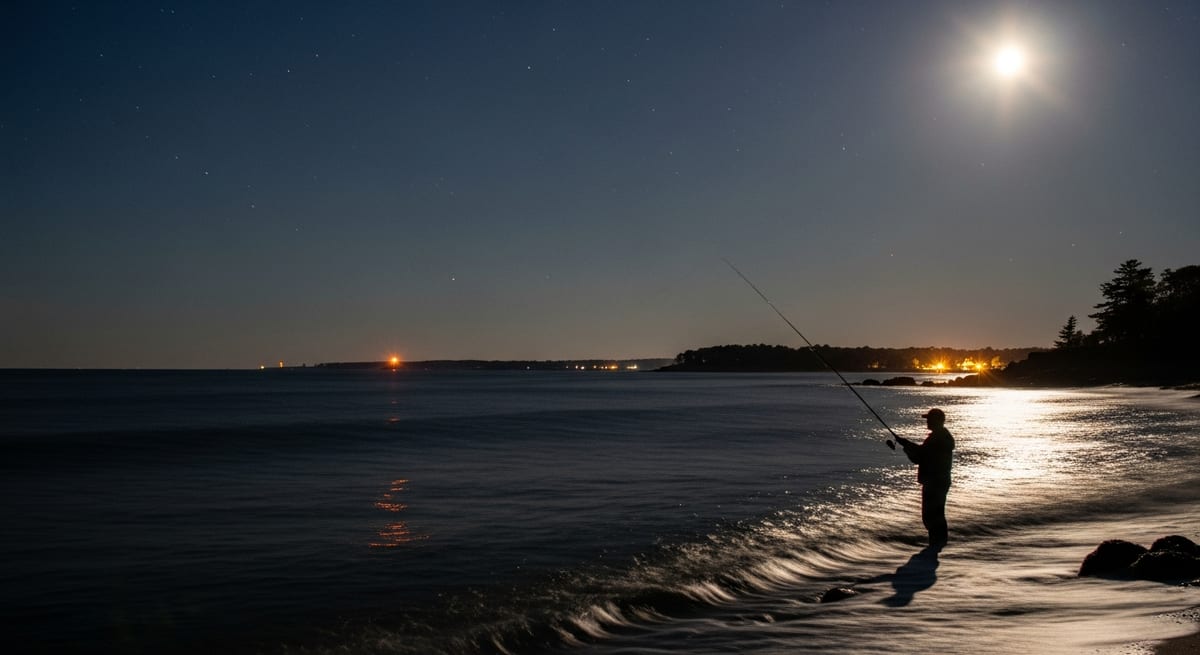
The largest striped bass caught in Connecticut every year are taken at night. After dark, big stripers lose their wariness, move into shallower water, and feed aggressively on a tidal schedule that experienced anglers learn to predict. Night fishing is a skill that takes some development, different gear, different presentations, different mindset, but the payoff in fish size makes it worth learning.
Why Night Fishing Works for Stripers
Striped bass are visual predators during the day but transition to using their lateral line and hearing at night. In daylight, large stripers in clear Connecticut waters stay deep and are boat-wary. After dark, they push into water 2-6 feet deep, often within feet of shore, to feed on eels, crabs, lobsters, and disoriented baitfish.
The behavior shift is dramatic: fish that were completely ignored artificial lures at noon will destroy a surface popper at midnight. Night fishing accesses the trophy-size fish that day fishing rarely produces.
The tidal calendar is your tide chart: Stripers feed on tidal movement. The bite windows are reliable: moving water (2-3 hours of outgoing or incoming) is consistently more productive than slack water. The most reliable windows are the outgoing tide from roughly 2-3 hours after high tide through the point where current slows before going slack, and the incoming tide as current builds from dead slack. The peak of either movement is usually the best bite.
Moon phase matters: New moon and full moon produce the strongest tidal currents and, generally, the best night striper fishing. Bright full moons can make fish spooky in extremely shallow, clear water, on these nights, fish deeper structure or use darker-colored lures.
Shore Locations for Night Striper Fishing
Rocky jetties and breakwaters: Rocky structure adjacent to deep water is the premier night shore location. The rocks attract crabs and lobsters; eels hunt the rocky substrate; stripers follow the food. Jetties at the mouths of rivers and harbors, old Saybrook, Niantic, Clinton Harbor, New Haven, are productive night locations.
River mouths and tidal rivers: Stripers push up tidal rivers at night, often much farther than they penetrate in daylight. The Thames, Niantic, and CT River tidal reaches all see night striper activity through the season. Fish the current edges and deep holes adjacent to the main channel.
Rip tide points: Underwater points that create current rips concentrate baitfish and the stripers that feed on them. Night rip-fishing from shore requires knowing the location in daylight first, navigating rocky structure in darkness requires familiarity you shouldn't try to build for the first time after dark.
Parking and access: Many CT shore access points have restricted hours. Know the posted hours before parking for a night session. The last thing you want is a locked gate at 2 AM. Harkness Memorial State Park in Waterford, Esker Point in Groton, and Hammonasset Beach State Park in Madison all have designated fishing access, but hours vary seasonally.
Night Fishing Lures and Presentations
Soft plastic swimmers (paddle tail, dark colors): At night, lure color matters differently than during the day. Stripers use silhouette and vibration more than exact color. Dark colors (black, dark purple, dark olive) produce a stronger silhouette against the ambient light. A 5-6 inch paddle tail swimbait on a 1-2 oz jighead in black or dark purple is one of the most consistent night striper lures in CT.
Surface poppers and stick plugs (dark colors): Walking plugs (Yo-Zuri 3DB Pencil, Daiwa Salt Pro Minnow, Super Strike Little Neck Popper) worked with a side-to-side walk-the-dog action produce explosive night surface strikes that you can hear before you see. Black over white is the classic night striper surface pattern. The contrast is visible from below against the sky.
Live eels: As covered in our live bait guide, eels are the definitive night fishing bait for large stripers. Hook through the lip, cast to rocky structure, keep light tension, and wait. The biggest fish of the season come on eels at night.
Bucktail jig: A white or yellow bucktail jig (1-3 oz depending on current) worked along the bottom through current seams is one of the oldest and most effective striper presentations in Long Island Sound. Dress it with a pork rind trailer or a 5-inch soft plastic paddle tail.
Speed and retrieves: Night presentations are generally slower than daytime. Stripers can easily track and intercept slower-moving prey in darkness; there's no benefit to fast retrieves that make bait "flee" and can pull lures out of the strike zone.
Night Fishing Safety Essentials
Safety is not optional for night fishing. The conditions that produce good stripers, rocky jetties, tidal rivers, fast current, dark shores, are also the conditions most likely to produce falls, twisted ankles, and dangerous wading situations.
Headlamp: Use a headlamp, not a hand-held flashlight. You need your hands free for casting, landing fish, and maintaining balance on rocks. Red-light mode preserves your night vision (important for watching line and water); white light for tying knots and rigging. Keep extra batteries in your tackle bag.
Non-slip footwear: Wet algae-covered rocks at night are extremely slippery. Wading boots with studs (metal-cleated rubber soles) or felt soles provide traction. Street shoes or rubber-soled waders without grip are dangerous on wet jetty rocks.
Wading buddy rule: Never wade fast current or rocky shore at night alone. Tell someone where you're fishing and when to expect you. A twisted ankle in the dark on a remote jetty with no cell service is a serious situation.
PFD on jetties: Consider an inflatable belt PFD for jetty fishing at night. A fall off a jetty end in strong current at night is extremely dangerous.
Stay off wet rocks at the waterline: The wet zone on rocks (the zone that's been wave-washed) is usually coated in algae and is the most slippery surface you'll encounter. Keep to the dry upper sections of rocks when possible.
Know your exit: Before dark, walk your exit route from the fishing spot. Knowing the safe way back in light helps avoid a panic scramble over unknown rocks at 1 AM.
Building a Night Fishing System
Night fishing has a learning curve. The first few sessions often feel chaotic, casting in the dark, finding fish without visual cues, staying safe on unfamiliar structure. Here's how to develop the skill efficiently:
Start at known locations: Fish a location in daylight first. Walk the rocks, identify the current seams, find where fish are likely to hold. Returning at night to a location you've already studied reduces disorientation significantly.
Go with an experienced angler first: One night session with someone who knows the location and technique compresses months of solo learning. Fishing clubs and guides run night striper trips throughout the season.
Simplify your gear: Night is not the time for multiple lure changes, complex rigging, or unfamiliar tackle. Bring two or three proven lures, pre-rig them, and focus on presentations rather than tackling a new lure system in the dark.
Keep a logbook: Note conditions (tide phase, moon phase, air and water temperature, wind direction), locations, and what worked. Striper feeding patterns are consistent. The same conditions that produced fish last September will produce fish this September.
EVERY SATURDAY MORNING
Weekly fishing intelligence
Nationwide conditions, what's biting, and honest gear deals. One email, no noise.
No spam. Unsubscribe anytime.