
January Ice at Bantam, April Tidal Push on the Connecticut River. CT's Two-Species Perch Season Runs Back-to-Back and Almost Nobody Is Working It.
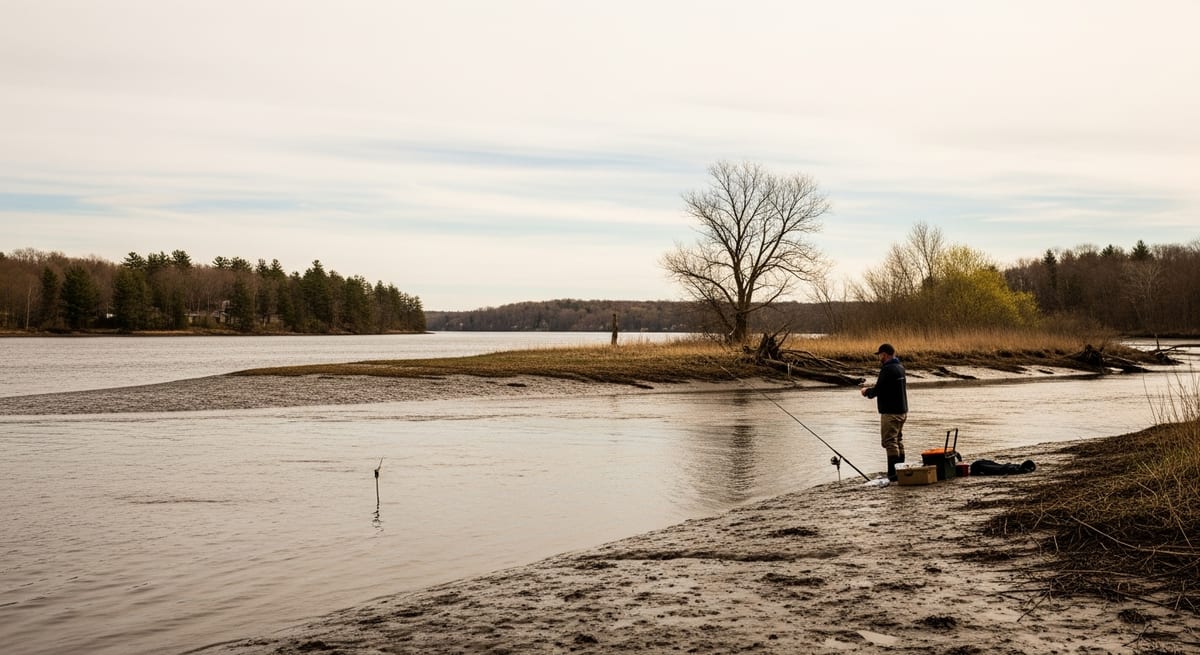
The soft-bottom basin at Bantam Lake holds yellow perch from ice-in through early March, with schools stacking in the 12-20 foot range through the coldest stretches of January and February. Come April, the same light-tackle setup moves to the Connecticut River, where white perch concentrate in the tidal zone between Haddam and Middletown during the spring spawning push. CT DEEP survey data shows stable perch populations statewide across both water types. The fisheries run back-to-back, but both windows open when most CT freshwater anglers are already locked onto bass and trout.
Yellow Perch: Ice-In Through the March Thaw
Yellow perch are one of Connecticut's most consistent ice fishing targets. CT DEEP annual survey data shows stable yellow perch populations across the major lakes and reservoirs, and ice anglers who work the state regularly describe them as the most reliably active species through the coldest mid-winter stretches.
Where to find them: Anglers who fish Bantam Lake, Lake Beseck, Candlewood Lake, and Lake Saltonstall regularly report consistent yellow perch through December, January, and February. Ice fishermen at Bantam describe locating fish over soft-bottom flats in the 12-20 foot range, often near submerged vegetation edges or where creek channels meet the main basin. Candlewood anglers typically probe deeper before settling on active fish. The depth band is a starting point, conditions and the specific lake shift it.
Gear and presentation: The setup most commonly reported among CT ice fishing regulars: light to ultralight ice rods (24-30 inch) with 4-6 lb monofilament, small hooks (size 6-8), and a teardrop jig tipped with a live waxworm, mealworm, or small piece of nightcrawler. The pattern anglers consistently describe, jig aggressively to draw fish up, then slow to subtle movements, is the standard approach on CT perch water. The pause when a fish rises toward the bait on a flasher or portable sonar is the trigger move regulars cite most often.
On numbers: Ice anglers who locate perch schools on productive CT water describe them as dense and cooperative. The consensus among regulars on CT ice fishing boards is that finding the first fish is the work. The school typically follows. Multiple fish per drop is common once a school is pinpointed, and days with significant bags are possible on good water in mid-January through February, though catches vary considerably by lake, location, and the specific winter.
Open water: Post-spawn yellow perch appear in shallow weedy coves (4-8 feet) in April-May. Small jigs, spinners, and live worms produce. Summer fish school deeper and turn up regularly as bycatch while fishing for bass.
White Perch: The Spring Tidal River Push
White perch are technically not a perch species, biologically they sit closer to striped bass, but they school like perch, hit hard, and produce comparable table quality. In Connecticut, white perch dominate the brackish zones of tidal rivers and colonize coastal ponds with saltwater connections.
The spring run: The Connecticut River spawning push, which concentrates white perch between Haddam and Middletown from mid-April into early May, is the peak event. Anglers who fish the CT River in spring describe fish stacking in harbors, tidal coves off the main channel, and dock-lined backwaters as they push upriver. The Thames and lower Housatonic see similar runs on a smaller scale. These fish are predictable enough that regulars plan specific trips around the window rather than fishing it incidentally.
Where else they show up: White perch in Connecticut's coastal tidal ponds fish well through summer and into fall, particularly in the brackish transition zones. They've also established in freshwater reservoirs statewide. Anglers on some inland waters report them as prolific year-round bycatch on light tackle. Ice fishing for white perch in coastal ponds is productive in January-February, with anglers describing aggressive bites in the 4-8 foot range over structure.
What they eat: White perch take small soft plastics, small spinners, worms, and live grass shrimp. The same ultralight rig used for yellow perch covers both species. CT anglers fishing the spring tidal run describe fish that hit hard and run well relative to their size. The comparison to juvenile stripers isn't just about taxonomy.
Table Quality, Consumption Advisories, and Regulations
CT perch fishermen are consistent on one point: yellow perch rank among the best-eating freshwater fish in the Northeast. The flesh is white, firm, and mild. The consensus across CT fishing forums, ice fishing communities, and DEEP creel survey notes puts them above most freshwater table options, pan-dressed or filleted, with simple prep (butter, salt, light breading), they're the species many longtime CT freshwater anglers target specifically to fill the freezer.
White perch carry the same reputation for eating quality. The profile is similar, mild, firm, white flesh, with slightly more moisture depending on the water type.
Cleaning: The challenge is time. Yellow perch average 6-10 inches, and cleaning a significant bucket requires patience. An electric fillet knife cuts the process considerably. Many CT perch anglers scale and pan-dress smaller fish rather than filleting, faster and less wasteful on a 7-inch fish.
Consumption advisories: CT DEEP issues fish consumption advisories for specific water bodies based on contaminant testing. Advisories covering PCBs, mercury, and related pollutants exist for portions of Connecticut's major tidal rivers, including sections of the Connecticut River and Thames River. Check current CT DEEP advisories at ct.gov/deep before eating fish from any tidal river, particularly from urban stretches. Advisories are updated periodically and restrictions vary by river section and species.
Regulations: As of the 2024-2025 season per published CT DEEP regulations, yellow perch carry a 50-fish daily limit on most Connecticut waters with no minimum size, but limits vary by water body and are revised annually. White perch regulations also vary by water. Confirm current limits at ct.gov/deep before fishing; specific impoundments may carry different rules than the statewide default, and regulations change between seasons.
EVERY SATURDAY MORNING
Weekly fishing intelligence
Nationwide conditions, what's biting, and honest gear deals. One email, no noise.
No spam. Unsubscribe anytime.