
Yellow Perch Ice Fishing in Connecticut: The Best Winter Bite on CT Lakes
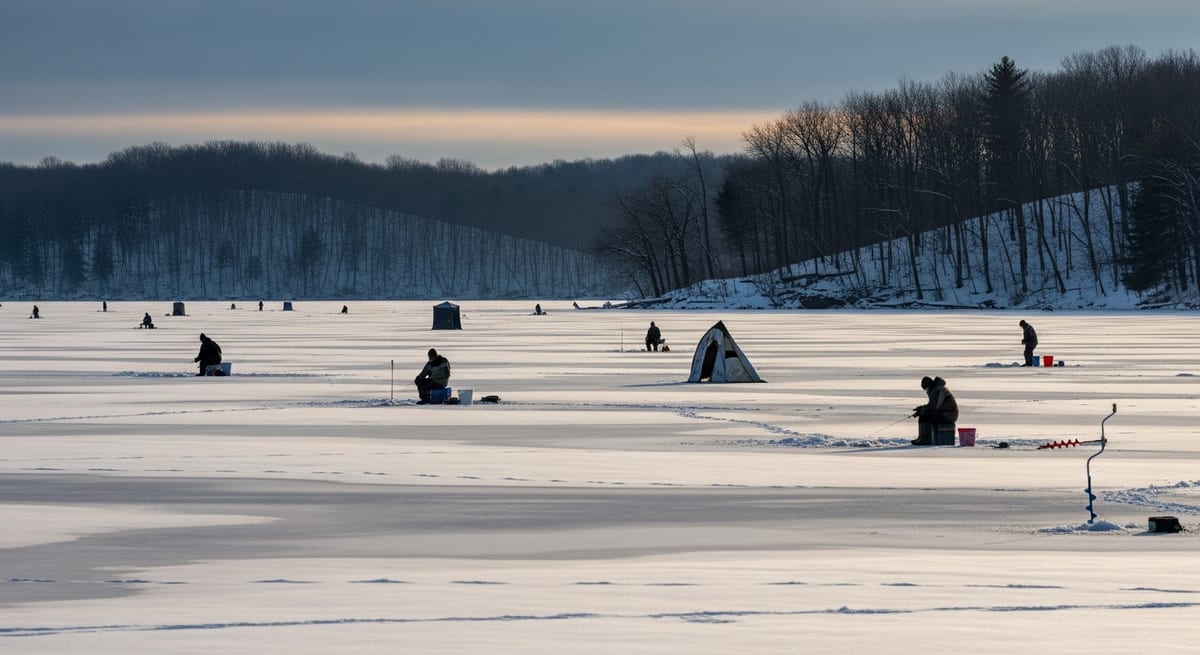
East Twin Lake in Salisbury was iced up by Christmas week. The Litchfield County highland lakes typically freeze two to three weeks ahead of lower-elevation waters, and when that happens, perch are the first fish worth drilling for. Yellow perch are the gateway drug of Connecticut ice fishing: they're active when other species have shut down, they school tight, find one hole and you can fill a bucket, and a mess of perch fillets fried in cornmeal is hard to beat all winter. January is your window in most years; some winters give you late February, some cut short. Either way, CT perch offer the most consistent ice action in the state, with most fish coming out of 12-20 feet near weed edges and hard bottom.
CT Ice Season: When It Locks Up and How to Check It
Connecticut winters typically produce fishable ice on inland lakes, but ice thickness and quality vary enough year to year that you should never assume, check local reports before committing.
Ice thickness. The rules of thumb most CT ice anglers follow:
- 4 inches of clear blue ice: commonly cited minimum for a single person on foot
- 5-6 inches: comfortable for one angler with a full sled of gear
- 8-12 inches: generally adequate for a small group or snowmobile
- Avoid gray or white "snow ice" even at these thicknesses. It forms from refrozen slush and is significantly weaker than clear blue ice
These are guidelines you'll hear from experienced CT ice anglers, not official state minimums. When in doubt, stay off.
Typical CT ice window: Mid-January through mid-February in an average winter. The Litchfield County highland lakes, east Twin, West Twin, Mashapaug, and others in the northwest corner, often lock up in late December and hold ice into late February. Lower-elevation lakes in central and coastal CT can have marginal or no ice in mild years. Don't trust last year's conditions.
Check before you go: The CT DEEP Fisheries Division posts ice condition updates during the season. CT Fish Talk (regional fishing forum) is the best real-time source for current conditions. Your local bait shop is worth a phone call.
CT Lakes Worth Making the Drive
Yellow perch are widely distributed in Connecticut lakes. These waters consistently produce through the ice:
East Twin Lake and West Twin Lake (Salisbury): Among the most reliable ice fishing destinations in CT for perch. The Salisbury area lakes freeze early, hold fish in 15-22 feet over weed edges, and see moderate winter pressure. Access from the public boat launch on East Twin.
Mashapaug Lake (Union): Remote northeastern CT lake with consistent perch populations and light winter pressure. The seclusion is part of the appeal, drill a grid in 14-20 feet and work until you find the school.
Lake Quaddick (Thompson): Solid yellow perch fishing through the ice, with bonus pike showing up on tip-ups. Set a couple of dead smelt in deeper water while you jig perch in the 12-18 foot range. The Thompson area lakes see less pressure than the Litchfield County waters and are worth the drive on a busy January weekend.
Bashan Lake (East Haddam): Mixed species ice fishing, perch, pike, and some crappie. Good for anglers who want to run tip-ups while working a perch school at the same time.
Candlewood Lake: Perch fishing in the coves and shallower bays. The main lake takes longer to freeze than smaller inland lakes and can be marginal or unsafe when the Litchfield County waters are solid, confirm ice conditions locally for your specific access point before heading out.
Finding the School (And Not Moving Off It Too Soon)
Perch school tightly in winter, if you're not catching, you're more likely not over a school than fishing water with no fish. Location strategy beats presentation every time.
Depth: Winter perch in CT lakes typically hold in 12-25 feet, often near the first major break or drop-off adjacent to their summer holding areas. They tend to move shallower during early and late ice and settle deeper in the coldest mid-winter weeks.
Structure: Focus on weed edges (even dead brown weeds hold schools through winter), rock piles, submerged points, and the outer edge of flats where the bottom drops away. Hard bottom in moderate depth is the most consistent producer.
Work a grid: Drill holes 10-15 feet apart in a grid pattern and rotate between them until you find active fish. Once you get a bite or mark fish on a flasher, drill more holes around that spot and stay on the school. If the bite dies, don't wait more than 10 minutes before relocating, perch schools move.
Use a flasher: A sonar unit (Vexilar, Marcum, or Deeper) changes the game for perch ice fishing. You can confirm depth, watch fish rise to inspect your bait, and know immediately whether a hole is worth staying in. If you're serious about CT perch through the ice, a flasher pays for itself in a season.
Light Gear, Right Lures, and the Slow-Day Rig
Perch fishing uses lighter tackle than most CT ice species. This is not a tip-up game.
Rod and reel: A light to medium-light ice rod, 28-32 inches, with an inline or spinning-style reel. Perch bites can be subtle in cold, clear water. A sensitive tip matters. A medium-light St. Croix or HT Enterprises rod in that length range is what most CT perch anglers run.
Line: 4-6 lb monofilament or 4 lb fluorocarbon. Light line is necessary in clear water and for detecting subtle bites. Store your spare spool inside a warm gear bag, monofilament stiffens badly in very cold temps.
What's working:
- Swedish Pimple (1/4 oz): The classic CT perch ice lure. Drop to bottom, jig vertically with short snaps. Tip with a perch eye or small minnow piece for extra attraction.
- Jigging Rap (size 3 or 5): The horizontal swimming action on vertical jigging draws larger perch and often pulls in pike cruising behind the school.
- Small tube jig (1/16-1/8 oz) with a minnow head: For finicky fish or suspended schools. Use a subtle quiver rather than a full jig stroke, perch will follow it down but won't commit if it's moving too fast.
The slow-day rig: A plain #8 hook with a single wax worm fished 2-3 inches off bottom on a short leader below a light split shot. It shouldn't outperform a Swedish Pimple, but on dead-slow days it often does. Don't overthink it.
Bonus tip-ups: Set a couple of tip-ups with dead smelt in 20-25 feet nearby while you're jigging. Pike follow perch schools through winter and they will find your bait.
No Bag Limit, No Size Minimum, pack a Cooler
Connecticut yellow perch regulations: No minimum size, no daily bag limit. You can keep what you catch. Yellow perch is one of the few CT species with no harvest restrictions, if you find the school and they're biting, you can fill a bucket legally.
Eating yellow perch: White, flaky, mild, perch fillets are some of the best eating from any CT freshwater fish. The thin fillets fry beautifully in a light cornmeal coating, ideally in a cast iron pan with butter. Most CT perch run 6-9 inches, so plan for quantity: 20-30 fish makes a solid frying session for two. Clean them the same day for best flavor.
License: A standard Connecticut fishing license covers ice fishing, no separate ice fishing license required. Anyone 16 and older needs a valid CT license regardless of species.
EVERY SATURDAY MORNING
Weekly fishing intelligence
Nationwide conditions, what's biting, and honest gear deals. One email, no noise.
No spam. Unsubscribe anytime.