
Chain Pickerel Keep Biting Through November When Connecticut Bass Have Gone Lockjawed. Kayak Anglers Working the Weedy Coves Have Known This for Years.
The Fish You've Been Accidentally Catching Your Whole Life
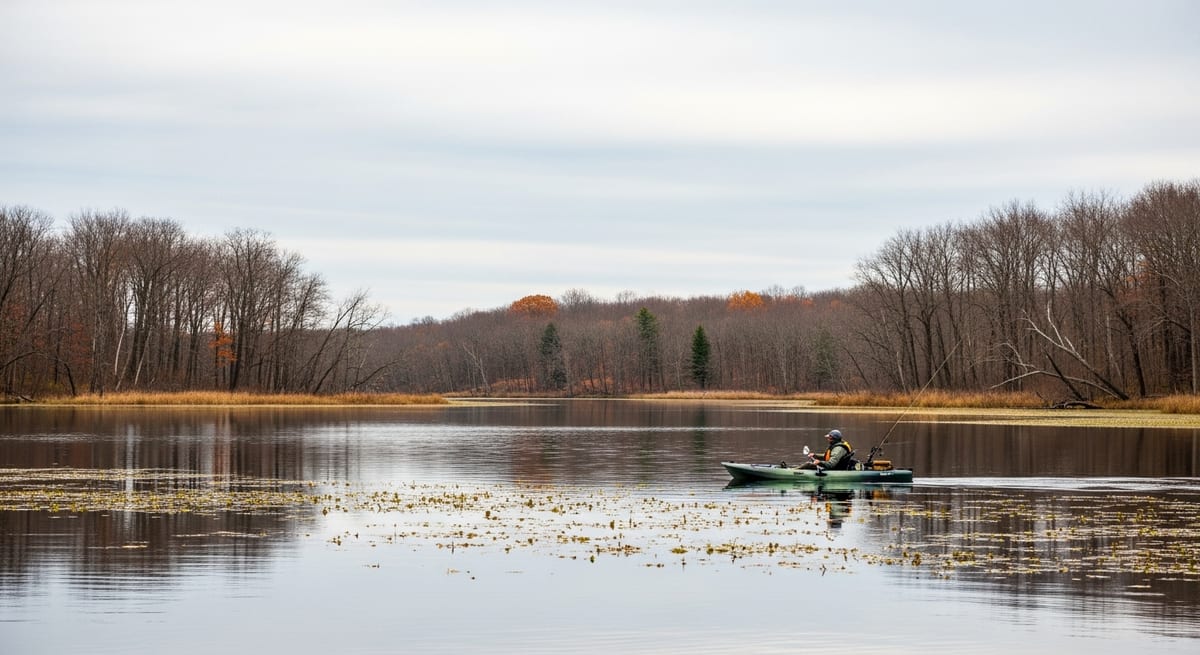
Anglers fishing the weedy coves at Moodus Reservoir and Lake Zoar in October and November consistently report chain pickerel hitting topwater lures on days when largemouth bass across the same water have refused to bite for weeks. Chain pickerel are in nearly every lake, pond, and slow-moving river in the state. Most anglers encounter them while targeting bass or trout, grunt at the slime and the teeth, toss them back, and never ask why that fish hit while the target species refused. The ones who eventually start targeting pickerel deliberately tend to become repeat converts.
Northern pike are a different conversation, less widely distributed, more tied to specific water bodies, and a genuine trophy fishery when you locate them. The Connecticut River drainage and select lakes in both the eastern and western parts of the state hold pike, but deliberate effort is required to connect consistently.
Both species are ambush predators. They hold in weed edges, lily pad fields, and submerged structure, then explode on anything that swims within range. They hit hard, fight angry, and their razor teeth will slice through light line quickly. Connecticut freshwater forums and bass tournament reports document regular leader cutoffs from both species, often on gear anglers assumed was plenty heavy. Learn that early.
Tell Them Apart Before You Rig Up, your Leader Depends On It
Chain Pickerel: The default toothy predator in Connecticut. Dark olive-gold body with a distinctive chain-link pattern running the length of the flank, unmistakable once you've seen it. Most CT pickerel run in the 12-20 inch range, though anglers who fish heavy weed cover on productive lakes report significantly larger fish with regularity. Anything genuinely qualifying as a trophy typically pushes 24 inches or better, but what counts varies by water and angler. Found in virtually every CT water body with any vegetation whatsoever, if there are lily pads, there are pickerel.
Northern Pike: Less common in CT. Recognizable by the elongated body, duck-bill snout, and light bean-shaped spots on a dark background. The opposite color scheme from pickerel. CT pike waters include the Connecticut River, Bantam Lake, and a handful of other locations. Big fish exist in these waters, but expect to put in real time before connecting consistently.
The practical difference that matters most is terminal tackle. For pickerel, 25-30 lb fluorocarbon leader at 18-24 inches handles most situations. For pike, move to a short wire leader. The consensus among CT pike anglers is 6-9 inches of 20 lb single-strand wire finished with a haywire twist. The most common mistake anglers report is running too-light terminal tackle, then being baffled when line comes back frayed. Don't skip the wire on pike water.
Waters That Consistently Produce: Where CT Anglers Report Pickerel and Pike
For Chain Pickerel:
- Lake Zoar (Monroe/Oxford): one of the larger bodies in the state with extensive shallow vegetation. Anglers on CT freshwater forums consistently cite pickerel stacking in the coves and weed edges from spring through fall. Public launch access off Route 34.
- Amos Lake (Preston): a consistent pickerel producer with good shore access. Smaller water that doesn't see the pressure of the bigger lakes, which matters by mid-season. Angler reports describe light fishing pressure relative to its productivity.
- Moodus Reservoir (East Haddam): heavy weed growth supports both bass and pickerel. Fall fishing here draws consistent community reports; anglers who work the die-back weed edges in October describe strong action as vegetation begins pulling back from the shallows.
- Coventry Lake: reliable year-round, particularly in the weedy north end where pickerel hold tight to structure.
- Connecticut River backwaters: the floodplain coves and oxbow ponds off the main stem hold some of the largest pickerel in the state, according to anglers who fish the area regularly. The Salmon Cove area in East Haddam appears repeatedly in fall pickerel reports from mid-October through November.
For Northern Pike:
- Connecticut River (upper section): the primary CT pike destination per DEEP inland fisheries guidance. Concentrate on slower backwater areas and tributary mouths, not the main channel. Spring is the peak window, particularly April through early May.
- Bantam Lake (Litchfield): CT's largest natural lake with a documented pike population per DEEP survey data. The depth profile gives pike somewhere to live year-round.
- Highland Lake (Winsted): a pike population has been reported here in past seasons; consult the most recent DEEP inland fisheries survey or creel data for current status before making a trip specifically for pike.
CT pike fishing is not Ontario or Minnesota. Anglers who target pike here consistently describe it as a quality game, not a numbers one, which is part of why the fishery sustains itself in waters that see relatively little pike-specific pressure.
Gear, Leaders, and Lures: What CT Anglers Use for Both Species
Rod and Reel: Medium to medium-heavy spinning or baitcasting setup, 6.5-7 ft. Enough backbone is needed to drive a hook through the bony mouths on both species. A 7 ft medium-heavy baitcaster covers larger open water; a 6.5 ft medium-heavy spinning rig handles tight quarters around vegetation. Any quality 3000-4000 spinning reel works for pickerel fishing; a low-profile baitcaster suits open water pike work.
Line and Leader: 15-20 lb braid to a 25-30 lb fluorocarbon leader for pickerel. Add a 6-9 inch wire leader if targeting pike. Rigging the leader before reaching the water avoids retying terminal tackle in the boat after spooking fish. A mistake CT anglers who fish these species regularly take pains to avoid.
Best Lures:
- Spinnerbaits (1/4-1/2 oz): The first-choice lure among CT anglers targeting pickerel through weed edges, retrievable through light vegetation without constant snagging. White or chartreuse blade in stained water; silver in clear.
- Soft plastic swimbaits (4-6 inch): Natural profile on a 3/8 oz jighead, slow-rolled along weed edges. Community reports consistently flag this as the reliable cold-water approach for late fall when the bite slows, particularly effective on neutral fish in water below 50°F.
- Gold spoons: Classic for pike, but productive on pickerel as well. Let it flutter on the fall, especially over deeper weed beds. A No. 4 or No. 5 gold spoon draws consistent community reports for cold-morning sessions when other presentations go quiet.
- Jerkbaits: Rapala-style jerkbaits in perch, gold, or firetiger. Suspending models perform in cold water. The CT kayak angler community frequently cites 3-5 second pauses between twitches as the key variable that separates productive fall sessions from blank ones.
- Topwater in summer and early fall: Pickerel will blow up on Heddon Torpedoes and Jitterbugs in shallow weedy water at dawn. Anglers who target pickerel deliberately describe this as the most visually exciting way to fish the species in Connecticut.
Timing: Both species are most active in cooler water. Community reports from CT freshwater anglers and northeast fisheries guidance consistently point to roughly 45-65°F as the productive temperature range. Spring (April-May) and fall (September-November) are peak windows. In the fall 2024 season, CT anglers reported consistent pickerel action in weedy coves by mid-October as surface temperatures cooled. Summer fishing slows in heat, but early morning topwater can still produce in the shallows before the sun climbs.
Before You Go: Current CT DEEP Regulations
Always verify current regulations directly at the CT DEEP Inland Fisheries website before you fish, what follows reflects general published guidance as of the time of publication, not guaranteed current rules.
- Chain Pickerel: CT DEEP does not list a standard statewide bag limit for chain pickerel in most inland waters. Specific water bodies, particularly designated trout management areas and special regulation waters, may carry additional restrictions. Look up the rules for your specific destination at the DEEP freshwater fishing guide before you go, not just statewide defaults.
- Northern Pike: Regulations vary significantly by water body. Many CT pike waters carry minimum size limits and reduced bag limits to protect populations that are still developing. Don't assume statewide defaults apply; look up the specific destination every time.
CT inland fishing license required for all anglers 16 and older.
One point the regulation sheet won't cover: catch-and-release on larger pickerel and any pike encountered does meaningful work for the fishery over time. These aren't stocked trout. The fish that grow large in CT do so over years. A quick photo and a clean release on any fish pushing 20 inches or better is worth more to future seasons than filling the cooler.
EVERY SATURDAY MORNING
Weekly fishing intelligence
Nationwide conditions, what's biting, and honest gear deals. One email, no noise.
No spam. Unsubscribe anytime.