
Most CT Bass Anglers Drive Past the Best Smallmouth Water in the State Without Stopping
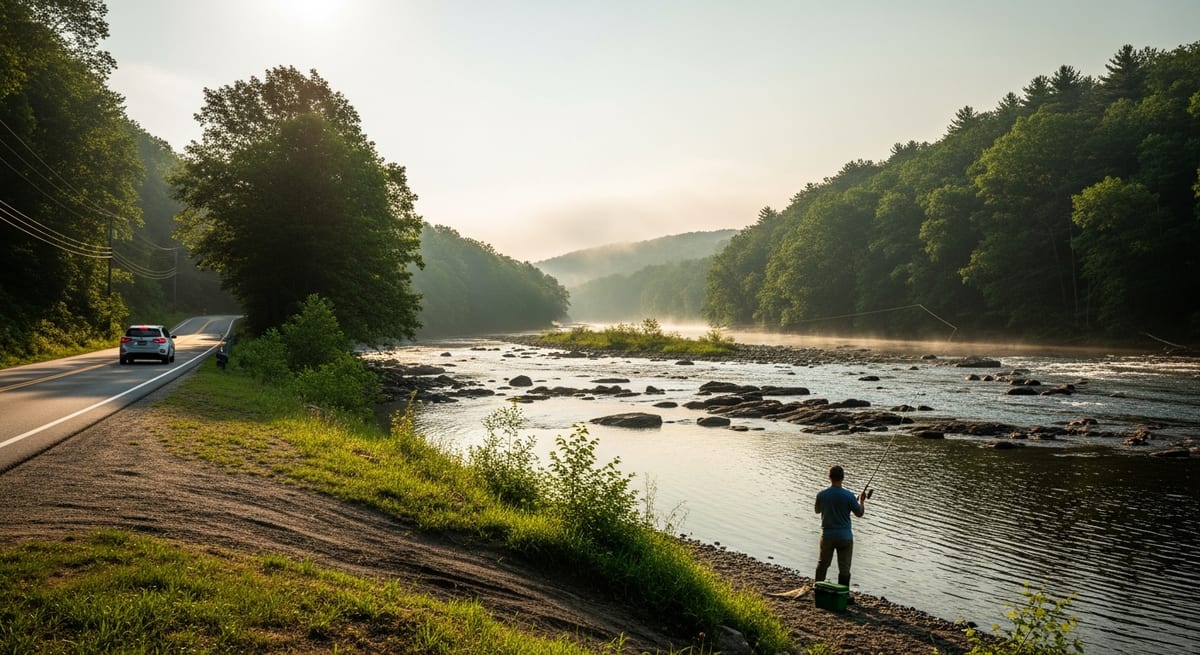
Why CT River Smallmouth Hit Different
The Shetucket River below the Quinebaug confluence, one of the most consistently cited smallmouth stretches in eastern CT angling circles, draws a fraction of the weekend pressure that comparable largemouth ponds pull on the same day. Wade anglers who have shifted part of their season toward river smallmouth often describe the same shift in perspective: once you've fought a two-pound river smallmouth in current through three or four aerial runs on light tackle, warmwater pond fishing reads differently.
CT's smallmouth fishery is genuinely underserved relative to the largemouth scene. Forum threads and local fishing club reports consistently note that the rivers and rocky lake structure where smallmouth concentrate receive significantly less pressure than warmwater ponds across most of the state. The asymmetry is real, and it matters when deciding where to launch on a crowded summer weekend.
Smallmouth favor clear, cool, rocky habitat, river runs, ledges, gravel bars, and the rocky shoals of larger lakes and reservoirs. They're rarely found in thick vegetation or shallow mud-bottom areas. The habitat signature is rock, current, and depth transitions. Anglers who come from a lily-pad largemouth background typically need a few trips to recalibrate, but the fish move the learning along quickly.
One practical note before heading out: CT DEEP regulates bass seasons by waterbody type, and many CT rivers and lakes carry a closed season that runs through late spring. The current CT DEEP Freshwater Fishing Guide lists exact opener dates and minimum size limits by water. Anglers new to CT river bass fishing are sometimes caught off guard by a closed season that extends well into May on certain waters, worth five minutes of verification before planning spring trips.
Rivers and Lakes CT Smallmouth Anglers Return To
Rivers (where most wade-fishing effort concentrates):
Shetucket River (Norwich area): The stretch below the Quinebaug confluence is consistently identified by CT river anglers as among the most reliable smallmouth water in eastern CT. Rocky substrate, clear flows, and accessible wading make it a natural starting point for anglers new to river smallmouth targeting. Fish are reported from opener through October, with late August and early fall typically producing the strongest action.
Quinebaug River (Plainfield to Putnam area): The mid-section offers solid smallmouth habitat in rocky runs and deep pools. CT river anglers note that fish hold well into summer in the deeper pools as river temps climb. The Quinebaug tends to run slightly cooler through its mid-section, which extends the productive summer window.
Willimantic River: Upper sections have rocky runs worth targeting. CT river fishing regulars tend to rank the Willimantic as a secondary destination, worth the drive when the Shetucket is running high or off-color, but less consistent as a primary focus for dedicated smallmouth trips.
Connecticut River (Enfield to Middletown): The riffle-and-pool sections of this stretch hold smallmouth, though largemouth tend to dominate the slower backwater areas. A viable option for anglers already working the main river for other species.
Lakes and reservoirs:
Bantam Lake (Litchfield): One of CT's larger natural lakes, smallmouth typically hold along rocky shoreline and points, particularly toward the cleaner northern end. It's a noted smallmouth destination among Litchfield County anglers who target the species specifically.
Lake Lillinonah (Newtown/Bridgewater): The rocky points and coves of this Housatonic River impoundment draw consistent smallmouth attention. CT bass anglers familiar with the lake often identify the northern sections as the most productive through early fall.
Lake Zoar (Monroe): Another Housatonic impoundment with good rocky structure. Anglers who fish both Zoar and Candlewood frequently note that Zoar draws lighter recreational boat traffic, which tends to translate to less-pressured fish on summer weekends.
Candlewood Lake: Smallmouth concentrate on rocky points and deeper structure, particularly in the northern sections. The southern end pulls heavier boat traffic during summer weekends, which affects fish distribution noticeably.
Three Windows That Actually Matter
Spring (April-May). The pre-spawn push: Water temps climbing through the 50s into the low 60s is the consistent trigger CT river anglers describe. Fish move shallow onto gravel flats and rocky areas, often in 3-8 feet, sometimes shallower on calm sunny afternoons. A pattern that comes up repeatedly among CT river regulars: the most common spring mistake is fishing too deep. Smallmouth that have already pushed onto gravel in 4-6 feet are routinely passed over by boat anglers anchored in 12-15 feet. Wading anglers often have a structural advantage in spring for exactly this reason.
Summer (June-August), go early or go deep: Once surface temps push past 75°F, most fish move to deeper rocky structure during midday, points dropping into 10-20 feet are typical holds. Early morning and evening are when they're found shallower on active feeding runs. CT smallmouth regulars consistently describe the 6-8 AM window on calm summer mornings as the bulk of the productive daily bite. Boat traffic and sun angle after 9 AM change the calculus on most CT lakes and rivers.
Fall (September-October), typically the strongest bite of the year: Water temps dropping back into the 60s and 50s trigger aggressive feeding and a return to shallow rocky areas during morning and evening. October river sessions consistently produce strong numbers. Anglers who wade CT rivers through late October regularly describe it as the best stretch of the year. The foliage timing runs concurrent, which makes the wading worth it on its own terms.
A regulation note worth confirming before spring trips: bass closed seasons on CT inland waters typically extend into late May or early June. The specific opener varies by waterbody type. The current CT DEEP Freshwater Fishing Guide at ct.gov/deep has the exact dates. This is when most anglers new to CT river bass fishing get caught off guard.
Reading River Water, what the YouTube Guides Skip
River smallmouth fishing is mostly about reading water. CT river anglers consistently identify four types of structure as the most reliable starting points:
- Boulder gardens: Fish hold on the downcurrent face of boulders and in the slack water pockets behind them. The effective cast is upstream and past the boulder, working the lure through the slack zone, not directly at the rock face. Most anglers target the rock itself; the productive water is a few feet downstream in the slack pocket.
- Ledge drops: Vertical or angled rock ledges dropping into deeper water are prime ambush spots. A ledge with current deflecting off it tends to hold fish all season. It combines depth, current break, and rocky structure in one location.
- Current seams: Where fast water meets slow water. Fish hold in the slow side and dart into the current to intercept food. These seams are visible on the surface. The line where choppy water turns smooth. They're often the most productive water in a run and the most consistently overlooked by anglers new to river fishing.
- Bridge pilings: The eddies behind pilings concentrate smallmouth. CT river anglers work each piling methodically, multiple casts per structure before moving on, rather than covering water quickly and moving to the next spot.
Wading safety on rocky CT rivers comes up in every serious discussion of the fishery. Felt soles or cleated wading boots are the standard on rocky river substrate, smooth rubber soles in current on ledge rock fail in conditions that look completely manageable from the bank. CT wading discussions flag this consistently because the rivers read as approachable and aren't always forgiving. Cleated rubber is the practical minimum; felt is preferred on slick ledge.
What Actually Works (and What Collects Dust)
Tube jigs: For rocky river substrate, this is where most experienced CT smallmouth anglers start. A 3-4 inch tube in green pumpkin, smoke/green flake, or crayfish brown, rigged on a 1/16-3/8 oz jig head weighted to match current speed, dragged slowly along the bottom with occasional hops. The crayfish imitation reads well on rocky substrate, and CT river regulars who fish tubes alongside other plastics consistently put it at the top of the list for river work.
Drop shot: Summer lake fishing on deeper structure shifts the equation. A 6-10 inch leader from sinker to hook with natural soft plastics in green pumpkin or shad colors, worked very slowly on rocky bottom. This rig finds fish that ignore faster presentations when water temps have pushed smallmouth below 15 feet. CT lake anglers who target summer smallmouth on structure tend to arrive at the drop shot after working through other options first.
Ned rig: Clear water and pressured fish change the calculus. A 2.75-inch TRD worm on a 1/8-1/4 oz mushroom head is minimal enough that educated fish still take it, cT smallmouth anglers identify it as the finesse go-to when conditions get tough: flat calm, high sun, water that's had significant weekend pressure.
Inline spinners: Rooster Tail and Mepps in smaller sizes produce well in river current, particularly in spring and early summer. As water temps peak in July and August, slower presentations consistently outperform them on most CT river systems. The current-speed advantage they offer matters less when fish have dropped to deeper structure.
Topwater (summer and fall mornings): Poppers and walking baits produce the most dramatic strikes this fishery offers, explosive surface hits on calm mornings in clear water. CT smallmouth regulars note that anglers new to the technique frequently strike too fast, before the fish has fully committed. Waiting out the fish before setting the hook is the single adjustment that changes the hookup rate.
Live crayfish: Anglers willing to manage live bait consistently report that a crayfish hooked through the tail on a light jig head, drifted through rocky river structure, is difficult to beat on a fish-per-cast basis. It requires more logistics than soft plastics, but on rocky CT rivers where crayfish dominate the natural forage base, the results tend to reflect the presentation.
EVERY SATURDAY MORNING
Weekly fishing intelligence
Nationwide conditions, what's biting, and honest gear deals. One email, no noise.
No spam. Unsubscribe anytime.