
Smallmouth Bass Fishing in Connecticut: Rivers, Reservoirs & the Fish Most CT Anglers Overlook
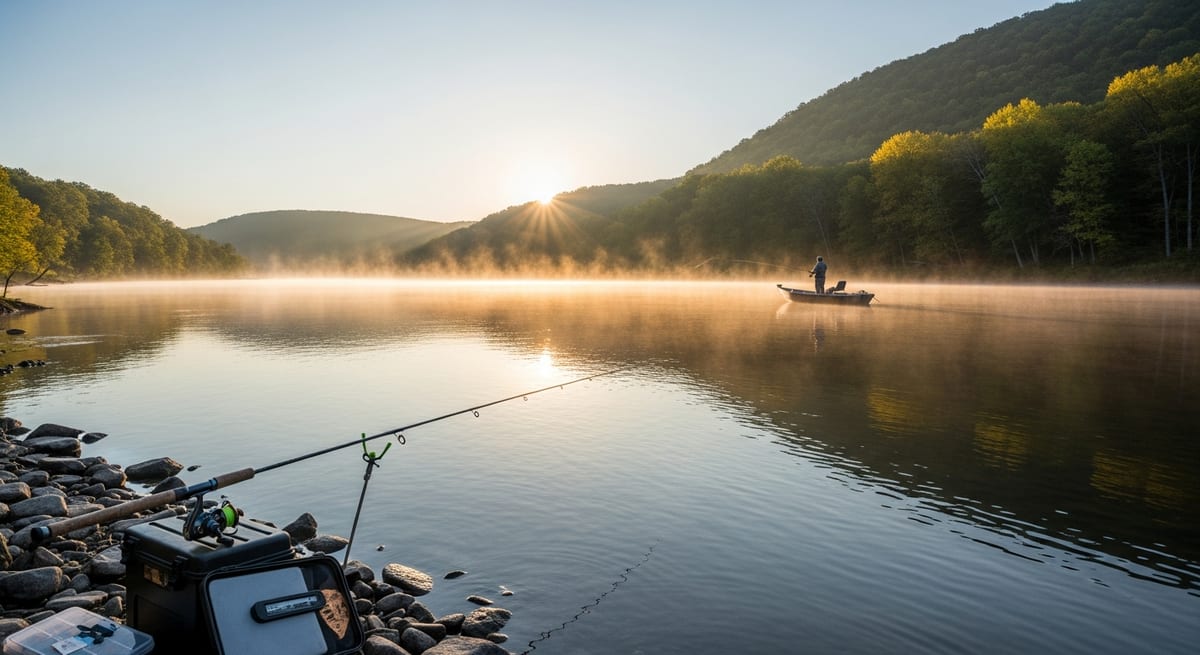
The Housatonic below Stevenson Dam has stretches where you can wade past three pods of smallmouth before reaching your first riffle, and most Connecticut anglers have no idea that kind of fishing exists in the state. Every angler who catches them for the first time says the same thing: they had no idea Connecticut had fish that fought this hard. A 3-pound smallmouth in a river current will test any light tackle outfit in ways a 4-pound largemouth in a pond simply won't. The fish are there. Most anglers just aren't looking.
Where Smallmouth Live in Connecticut
Smallmouth bass prefer different habitat than largemouth. They favor cooler, clearer water with rocky structure: rivers with gravel and boulder runs, rocky lakeshores, and reservoirs fed by cold tributaries. They're not in every pond the way largemouth are, but the rivers and reservoirs they inhabit often hold exceptional numbers.
Housatonic River (western CT): Widely considered one of the best smallmouth rivers in the state. The stretch from Stevenson Dam (Monroe) north through Ansonia, Derby, and Seymour holds outstanding populations of smallmouth and some very large fish. Wading is excellent in summer low water. Shore access points exist throughout. The Housatonic also holds largemouth in slower water and flathead catfish.
Connecticut River: The main stem Connecticut River holds smallmouth in the rockier, faster sections north of Hartford. The Enfield Rapids area is a well-known smallmouth spot. Fish are present throughout the river but concentrate at riffles, rocky points, and bridge pilings with current.
Salmon River (Colchester/East Haddam): A cold, clear tributary of the Connecticut River. Excellent trout water in the upper reaches, with smallmouth taking over in the lower, wider sections near the CT River confluence.
Lake Lillinonah (Southbury/Newtown): Connecticut's best mixed bass lake. The rocky shorelines and main lake points hold smallmouth; the coves hold largemouth. Understanding which bass to target in which habitat makes Lake Lillinonah a productive two-species fishery.
Candlewood Lake: Rocky shorelines and deep, clear water make Candlewood a legitimate smallmouth lake, particularly in the deeper areas with submerged rock piles.
Shepaug River (Litchfield County): A protected Wild and Scenic River with good smallmouth fishing in the lower sections accessible to the public. Clear, cold water, rocky substrate.
Seasonal Patterns
Pre-spawn (late April-early May): Smallmouth move to rocky shallows as water temps climb into the mid-50s and above. They're aggressive and feeding hard. Rocky points with adjacent deeper water are the staging areas. This is a reliable time to target them with reaction baits, crankbaits, swimbaits, and tube jigs.
Spawn (mid-May-mid-June): Smallmouth nest on rocky or gravel bottoms, often in water ranging from a few feet to around 8 feet deep depending on water clarity and bottom type. Males are visible on beds and aggressive. Post-spawn females move off quickly and are scattered, focus on males and pre/post-spawn fish near the beds. River fish typically spawn 2-3 weeks later than lake fish at similar latitudes because river water temperatures lag behind still water.
Summer (July-September): The best river smallmouth season. Low water concentrates fish in pools and runs. Wading becomes easy and rewarding. Early morning topwater (walking plugs, Whopper Plopper, small prop baits) over rocky shallows is exceptional. Midday fish drop to deeper pools, tube jigs and drop shots worked along the rocky bottom are the consistent producers.
Fall (October-November): Smallmouth feed aggressively as water cools, similar to largemouth. Crankbaits and swimbaits matching the fall shad/sucker forage are effective. River fish concentrate in the deeper pools adjacent to the last riffles before winter.
Winter: Smallmouth become lethargic in water below 45°F. They hold deep in river pools and lake basins. Catchable on finesse presentations but not actively pursued by most CT anglers.
Largemouth bass follow a parallel seasonal cycle in CT's warmer, slower waters. The largemouth bass seasonal patterns guide breaks down the year-round equivalent for anglers fishing both species.
Lures and Presentations
Tube jig (3-4 inch, 1/4-3/8 oz jig head): The single most consistent smallmouth lure in CT's rocky rivers and reservoirs. Drag it along the bottom, give it a hop-and-pause, and let it settle. Green pumpkin, brown/orange, and natural shad colors. Tube jigs have been a go-to for Northeast smallmouth anglers for decades and still outperform most modern alternatives on difficult days.
Ned rig (3 inch Z-Man TRD or similar, 1/10-3/16 oz mushroom head): Exceptional finesse presentation for clear water and pressured fish. The buoyant tail stands up off the bottom at rest, giving a lifelike posture even when you stop moving the bait. Fish it on light fluorocarbon (6-8 lb) with a spinning setup. Deadly for post-spawn smallmouth staging near bottom structure.
Wacky-rigged finesse stickbait (4 inch): What works for largemouth works for smallmouth too. In slower river pools and lake fishing, a wacky stickbait falling through the water column triggers smallmouth that ignore everything else. A smaller size than the largemouth-oriented 5-inch is usually more effective for smallmouth.
Swimbait (3.5-5 inch paddle tail, 1/4-3/8 oz jig head): Excellent for covering water in rivers and along rocky lake shorelines. Natural shad, alewife, and perch colors match the forage base. Retrieve at medium speed, occasionally pausing to let the bait sink.
Small crankbait (2-3 inch, shad colors): Bounce a small shad-pattern crankbait off rocky bottom in rivers and along lake points. The deflection off rocks triggers reaction strikes. Rapala Shad Raps and similar diving crankbaits in the 3-4 foot depth range work well at summer low water.
Topwater (summer dawns): A Whopper Plopper 75 or small buzzbait over rocky shallows at first light during summer is one of the best smallmouth presentations in CT rivers. The explosive surface strikes in shallow, fast water are worth setting the alarm early for.
Gear Recommendations
Spinning setup (primary): 6'6-7' medium or medium-light action spinning rod with a fast tip, 2500 size spinning reel, 8-12 lb fluorocarbon. This handles tube jigs, Ned rigs, wacky stickbaits, and smaller swimbaits. Fluorocarbon mainline, no leader needed, provides sensitivity and low visibility in clear water without the stretch of monofilament.
Light line option: 6-8 lb fluorocarbon on a light spinning setup is necessary for finesse presentations like the Ned rig in clear water or post-cold-front conditions. Don't fish light line in heavy current, lost fish and broken lines in fast water are frustrating.
Wading gear: For river fishing, neoprene waders and felt-sole wading boots (or rubber with studs) are standard. The Housatonic's rocky riverbed in low summer water is very fishable without waders on warm days, but wet wading requires good footing.
Landing net: Use a rubber-coated net for smallmouth. Net them immediately after a quality fight rather than trying to lip them, smallmouth in current will thrash and can escape a lip-hold in a way a largemouth in a pond won't.
Connecticut Regulations
Connecticut smallmouth bass regulations (verify current year at CT DEEP website):
Minimum size: 12 inches total length Daily bag limit: 5 bass per day (usually combined largemouth and smallmouth) Season: Year-round on most waters, with potential seasonal closures on specific rivers, check the CT DEEP Inland Fisheries guide for river-specific regulations
Housatonic River special regulations: The Housatonic has additional fly fishing only and catch-and-release sections in the trout management area upstream of Stevenson Dam into Litchfield County. Confirm which sections allow conventional gear before you fish, regulations vary by stretch and can change year to year.
EVERY SATURDAY MORNING
Weekly fishing intelligence
Nationwide conditions, what's biting, and honest gear deals. One email, no noise.
No spam. Unsubscribe anytime.