
School Stripers Are at the CT River Mouths in Late April. The Trout Stocking Schedule Is Running. Pre-Spawn Bass Are Staging on Southern CT Ponds. April Opens Earlier Than Most Anglers Treat It.
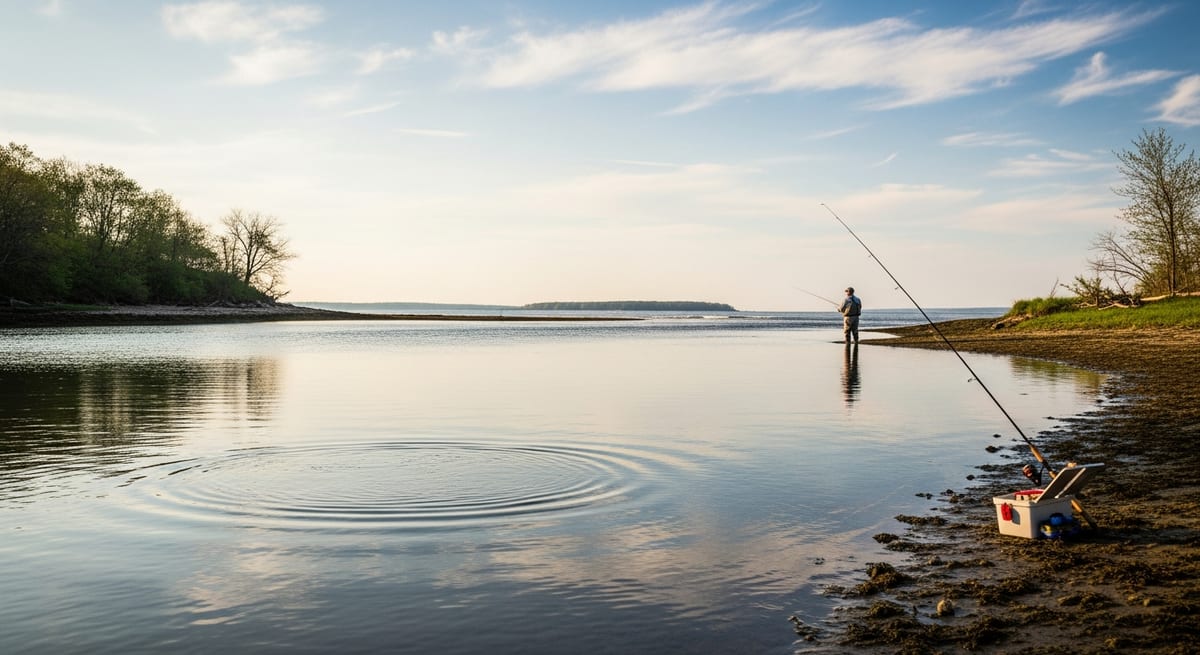
Anglers who fish the lower Housatonic and Thames River mouths consistently report school stripers, typically 18-24 inches, showing up in late April, two to three weeks before the main migratory push arrives from open Sound water. At the same time, CT DEEP's spring stocking schedule is already running on the Farmington, Salmon, and Housatonic rivers, and pre-spawn largemouth are staging on the drop-offs of southern CT ponds. April runs three distinct fisheries simultaneously. CT anglers who plan around all of them don't wait for May.
Trout Stocking: First Wave on the Farmington, Salmon, and Housatonic
CT DEEP began its spring stocking program in late March. By mid-April, most major rivers and stocked ponds will have received at least one stocking wave. The Farmington River, Salmon River, Housatonic River, and Willimantic River are all receiving brown and rainbow trout per the public DEEP stocking schedule, posted again each week at ct.gov/deep and worth checking before making the drive.
What's working: Anglers fishing the Farmington and Salmon early in the stocking season consistently report light spinners, mepps Aglia size 0-2 in gold, or small spoons, producing well on freshly stocked fish. After fish have been in the river a week or more, the consensus among CT trout anglers shifts toward live bait (worms, salmon eggs) or small marabou jigs under a float in deeper pools and slower runs.
Farmington TMA: Wild fish in the TMA begin responding to early-season hatches as water temperatures climb. Quill Gordons and Blue Quills typically emerge when water temps reach the upper 40s into the low 50s°F on sunny afternoons. Anglers who fish the TMA regularly report watching for risers between noon and 3 PM on warm April days as the first consistent hatch activity of the year.
Opening weekend crowds: Opening day falls on the second Saturday of April and draws significant crowds. Anglers who fish the stocked rivers year over year note that by Monday or Tuesday the crowds thin dramatically, stocked fish are still present and catchable, with far better access to productive water.
Water levels: Check USGS stream gauges before heading out. Rivers can run high and fast from spring runoff in April. Farmington River anglers reference the Tariffville gauge. The generally reported threshold for safe wading is below 500 cfs. The Salmon River gauge at Cobalt provides similar guidance for that system.
Pre-Spawn Bass: Southern CT Ponds First, Northern Lakes Weeks Behind
Largemouth bass in Connecticut's ponds and lakes are in or entering pre-spawn staging in April. Shallower southern CT waters, smaller dark-bottom ponds and protected coves, are typically reaching the 50-58°F range that triggers pre-spawn activity by mid-April. Anglers fishing northern CT lakes such as Candlewood and Bantam should expect water temperatures to lag 5-8°F behind smaller southern ponds due to greater surface area and depth; the pre-spawn staging window there typically runs two to three weeks later.
Where to look: Points with adjacent deep water, the mouths of creek arms entering ponds, and the first drop-off outside spawning flats, typically 4-8 feet. Bass anglers who target the pre-spawn window across CT describe the biggest females holding on these transitions, feeding actively before the spawn.
What to throw: Suspending jerkbaits with long pauses are the consistent early-April producer when water is below 55°F, per reports from CT bass tournament anglers tracking pre-spawn timing each spring. As water breaks above 55°F, swimbaits, squarebill crankbaits, and weightless soft jerkbaits over the shallows become more productive.
Where to start: Many CT bass anglers begin their spring season on smaller, dark-bottom town and state ponds. These warm fastest. Gardner Lake, Mashapaug Lake, and the smaller ponds of southwestern CT are consistent early-season targets before water temps on larger lakes like Bantam and Candlewood fully catch up.
Early Stripers: River Mouths Before the Migratory Push
Early stripers are showing at Connecticut's tidal river mouths in late April. These are typically resident school fish, not the larger migratory stripers that arrive from May onward, but they represent the season's first consistent striper action, and CT coastal anglers who fish the river systems make a point of being out for it.
Where to find early stripers: The Housatonic River, Connecticut River (below the Enfield Dam), Thames River, and Niantic River all see early striper activity in April as water temperatures rise. Tidal rivers and estuaries warm faster than open Sound water, concentrating fish first. Anglers fishing the lower Housatonic report the most consistent early-season action, particularly on outgoing tides near deeper channel edges.
What's working: Small paddle tail swimbaits (3-4 inch) on 1/2-1 oz jigheads worked along drop-offs and channel edges are the consistent early-season report from CT coastal anglers. Bucktail jigs on current seams and small swimmer plugs cast across current and worked downstream in the rivers also produce. April fish typically run 18-26 inches.
2026 regulations, verify before you fish: Connecticut's current striper slot limit is 28-35 inches with a 1 fish per person per day bag limit in state waters, in effect as of the 2025-2026 season. Slot dimensions have changed in recent years and citations for out-of-slot fish are common, check CT DEEP Marine Fisheries regulations for the current season before fishing to confirm no additional changes are in effect.
May Preview: Shad Run, Migration Push, and Spawn Timing
May is when Connecticut's fishing comes alive across every species:
Striper migration: School stripers are already at the river mouths; the larger migratory fish start arriving in May. When bunker (menhaden) push into the Sound in earnest, typically by mid-May. The big stripers follow. May is when trophy-class fish become consistently accessible from shore and boat.
Bass spawn: Largemouth bass will be on beds in many CT waters by mid-May. The pre-spawn action described above gives way to spawning fish visible on beds in clear, shallow water. Post-spawn feeding typically starts in early June and is one of the more reliable summer bite windows on CT ponds and lakes.
Shad run: American shad begin their run up the Connecticut River in late April and build through May. The shad run at Enfield Falls and below the CT River dams is a distinct fishery, shad dart jigs and small spoons produce fish that are among the best light-tackle fighters in New England, and the run draws dedicated shad anglers from across the region each spring.
Spring trout: Stocking continues through May. The Farmington Hendrickson hatch, running late April through May, is the signature CT fly fishing event of the year. Anglers who fish the TMA during the Hendrickson emergence describe it as the best dry fly opportunity Connecticut offers in any season, worth planning a trip around well in advance.
EVERY SATURDAY MORNING
Weekly fishing intelligence
Nationwide conditions, what's biting, and honest gear deals. One email, no noise.
No spam. Unsubscribe anytime.