
CT Anglers Leave a Third to Half the Meat on the Carcass. The Filleting Fixes Are the Same Across Every Species.
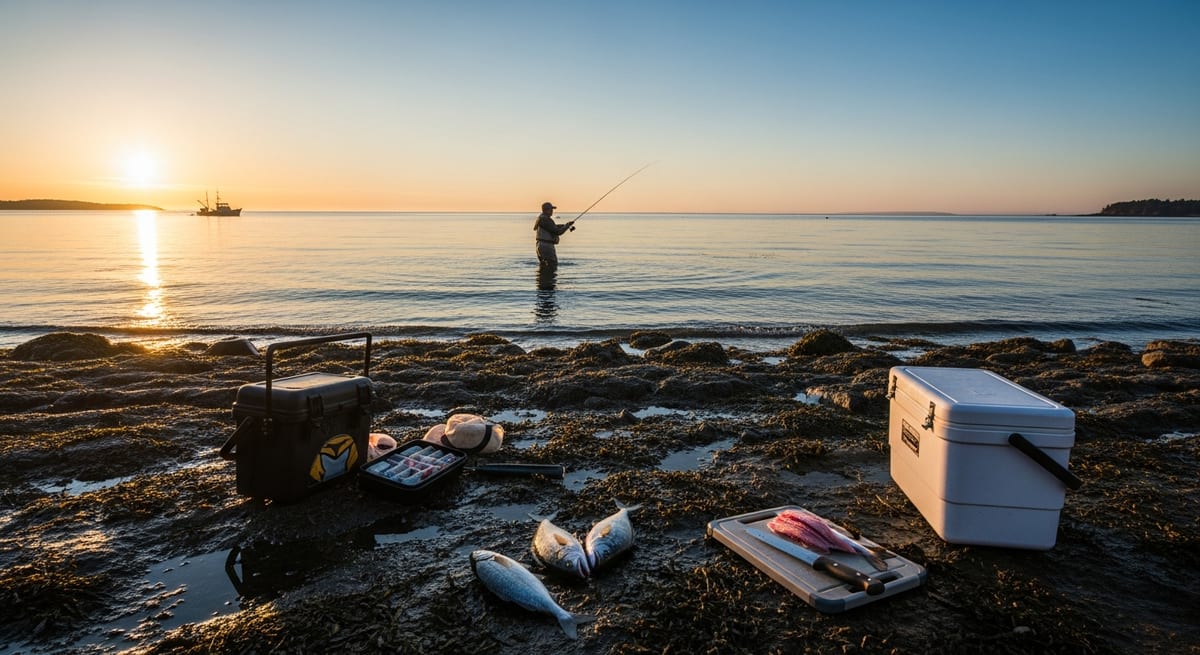
Anglers who watch experienced filleters work a cleaning table at Candlewood Lake or the Thames River boat launch consistently report the same thing afterward: the physical technique is simpler than they expected, and the errors they'd been making were almost entirely about blade angle and unnecessary force. The spine-tracking motion that experienced CT filleters pass along, blade flat, light pressure against the vertebrae, letting the ribcage guide rather than forcing the cut, is the one adjustment most anglers describe as the turning point. The pattern is consistent across species: wrong knife, fighting the blade through the ribcage instead of contouring around it, and skipping the bloodline cut on saltwater fish. The sections below cover each species CT anglers commonly keep, with specific notes on what experienced filleters do differently, and where the wasted meat usually comes from.
What You Need Before You Start
The right equipment makes a bigger difference than most anglers expect:
Fillet knife: A flexible 7-8 inch fillet knife handles most species. The flexible blade contours to the fish's ribcage. A stiff blade fights it. Dexter-Russell and Rapala make consistently well-reviewed options in this category; prices vary significantly by line and retailer, so check current listings before buying. Sharpness matters more than brand: a dull fillet knife wastes more meat than poor technique, and it's genuinely more dangerous because you compensate with force.
Sharpening steel or honing rod: Keep it next to the cutting board. A few passes before the first fish and again mid-session if the blade starts dragging. Anglers who fillet any volume consistently report that keeping the blade sharp throughout the session recovers noticeably more meat than starting sharp and finishing dull.
Cutting board: Large, non-slip. Rubber-backed boards stay put on a slippery cleaning table better than bare plastic. Some anglers use a fillet nail. A spike pressed into the fish's mouth to hold it steady, which earns its place when cleaning any volume.
Bowl or baking sheet: For collecting fillets as you work.
Sink with running water or a cooler of clean water: Keep the fish and fillets cold throughout. Warm fillets lose texture fast, and that matters most with trout.
Panfish: Bluegill, Perch, Crappie, and White Perch
Small panfish are the easiest species to fillet once the basic technique is in your hands. Yellow perch and white perch from places like East Twin Lake or the Thames River estuary are among the best-eating fish in Connecticut, cT anglers who have kept and eaten them consistently describe them as sweeter and more delicate than most people expect until they actually try them.
Step 1: Lay the fish flat on the cutting board. Make an angled cut just behind the pectoral fin, angling the blade toward the head. Cut down until you hit the backbone. Do not cut through the spine.
Step 2: Turn the blade flat, parallel to the cutting board, and run it along the spine from that first cut toward the tail. Keep the blade pressed lightly against the vertebrae. You want to feel the ribs and spine guiding the blade. Cut all the way to the tail, leaving the fillet attached there.
Step 3: Fold the fillet back, skin side down. Slide the blade between the skin and flesh, keeping it flat against the skin. Pull the skin taut with your other hand while cutting. It comes off in one clean piece when you maintain that tension.
Step 4: Check for pin bones. In larger yellow perch and crappie, a row of small bones runs along the centerline of the fillet. Run your finger down the flesh. You'll feel them. Pull with needle-nose pliers or a bone tweezer, or cut a narrow V along the lateral line to remove them entirely.
Yield: A 9-inch yellow perch yields a fillet roughly 3×2 inches, modest but real, and worth the few minutes it takes. Rinse in cold water immediately after skinning.
Bass: Largemouth and Smallmouth
Bass are a forgiving species to learn on, larger than panfish, with a straightforward skeletal structure. Most anglers build their fillet confidence on bass before moving to trout or saltwater fish. A 2- to 3-pound largemouth from Bantam Lake or Pachaug Pond gives you enough fish to work with and room to develop the motion.
Step 1: Scale if desired. Bass skin is edible and mild. Many anglers leave it on. If you want it off, use the back of your fillet knife or a scaling tool, working from tail to head.
Step 2: Make the initial cut behind the pectoral fin, angling toward the head, down to the backbone.
Step 3: Pivot the blade flat along the backbone and run it toward the tail. On a 2-pound bass, this typically takes about three smooth strokes. Keep the blade pressed against the spine and ribs throughout, if you're grinding against bone, the angle is off.
Step 4: At the ribcage, you can cut through the ribs (leaving them in the fillet for removal in the next step) or contour around them. Contouring wastes a small amount of belly meat but produces a cleaner fillet. Anglers cleaning any volume often cut through the ribs, faster, and the trim step takes seconds.
Step 5 (if you cut through the ribcage): Lay the fillet flat and trim the thin rib section from the belly. A shallow cut that follows the natural line where the ribs were.
Step 6: Remove the skin. Bass skin has a mild fishy quality many people prefer to skip. Blade flat, skin-side down, pull toward the tail.
Yield: A 2-pound bass typically yields two fillets of roughly 3-4 oz each. A 5-pound largemouth produces substantial fillets, solid for fish tacos, pan-frying, or anything off the grill.
Trout: Brook, Brown, and Rainbow
Trout have softer flesh than bass or panfish and need a gentler touch. The mistake most often flagged by experienced CT trout anglers is leaving fish on the bank or in a warm live well before cleaning, ice and speed matter more with trout than with any other freshwater species on this list.
Step 1: Gut the fish first. A finger run along the body cavity from vent to gills removes the innards cleanly. Rinse in cold water immediately.
Step 2: For smaller trout under 12 inches, many anglers skip the fillet entirely. Gut, rinse, and cook whole. You eat around the spine the same way you would with any whole-cooked fish, and the flavor is often better than filleted and refrigerated.
Step 3: For larger trout, use the same technique as bass. Trout have Y-bones. A row of pin bones running along the centerline of the flesh. Feel for them with your finger and pull with needle-nose pliers before cooking. They typically come out cleanly from a fresh fish.
Step 4: Trout skin can stay on or come off. Brown trout skin carries more flavor than rainbow. Pan-fried in butter with the skin on is a classic preparation, skin crisps quickly on a hot cast iron, and anglers who fish the Farmington and Housatonic regularly describe it as one of the better ways to eat a fresh-caught trout.
On freshness: CT trout anglers consistently note that the flavor difference between a fish cleaned immediately and one that sat in a warm live well for several hours is not subtle. It's the kind of difference that changes someone's opinion of trout as table fare. Clean within an hour and keep on ice throughout.
Striped Bass and Bluefish: The Saltwater Cut
Larger saltwater fish use the same technique as round freshwater species but require more physical effort. A 28-inch striper is a substantial piece of work. With bluefish specifically, the consensus among anglers who fish the CT coast regularly is that speed matters more than with any other species, bluefish deteriorate faster than almost anything else you'll commonly keep off Connecticut.
Check CT DEEP regulations before keeping: Striped bass are subject to minimum size limits and daily bag limits under joint federal-state management; bluefish carry separate federal limits. Both have changed multiple times in recent seasons. Verify current rules at ct.gov/deep before your trip, assuming last season's limits are still in effect is a common and avoidable mistake.
Step 1: Stripers have heavy scales. Many anglers skip scaling entirely and remove the skin at the end, if you're taking the skin off anyway, scaling is unnecessary work. If you want the skin on for cooking, scale with a heavy tool working head to tail.
Step 2: Make the initial cut from the back of the head, angling behind the pectoral fin. On a large striper, use body weight on the handle rather than arm force alone.
Step 3: Run the blade along the backbone toward the tail, pressing firmly against the spine. Stripers have thick, meaty fillets, expect several firm passes on a large fish.
Step 4: Remove the bloodline. The lateral line on stripers and bluefish contains a dark strip of flesh with a noticeably stronger, fishier flavor. Cutting it out is widely cited by CT charter captains and fish-house staff along the shoreline as the single step that does more for eating quality than anything else on a saltwater fish.
Step 5: Remove the skin. Hold the tail end and run the blade between skin and flesh.
On bluefish: Clean them immediately, ideally before leaving the water, and keep on ice throughout the trip. The target is table within 24 hours; two days in a cooler and the flavor becomes noticeably stronger. Anglers who have eaten a properly handled fresh bluefish often describe the species' reputation for strong flavor as a handling problem, not a species problem.
Flounder and Fluke: The Four-Fillet Technique
Flatfish require a completely different approach from round fish, and Connecticut's two common flatfish, winter flounder and summer flounder (fluke), share the same four-fillet cut but differ enough in size, season, and anatomy that they're worth treating separately.
Winter flounder are caught in late winter through early spring in shallow CT bays and estuaries, typically running 10-14 inches for legal keepers. The four-fillet technique applies, but the fillets are modest in size, exceptionally sweet, and worth the meticulous work, but different in scale from what you'd expect off a summer fluke.
Summer flounder (fluke) are significantly larger fish caught over sandy bottom in Long Island Sound through late summer. A legal-size fluke above 18 inches produces four substantial fillets of exceptional quality. Note that size minimums for summer flounder have shifted multiple times under joint CT/ASMFC management, verify current limits at ct.gov/deep before keeping.
The four-fillet cut (applies to both species):
Step 1: Lay the fish flat, dark side up.
Step 2: Make a cut along the lateral line from head to tail. A straight cut down the center of the fish to the backbone.
Step 3: From this center cut, angle the blade toward the edge of the fish and run it outward, keeping the blade flat against the ribs. The fillet peels away cleanly. Repeat on the other side of the center cut, two fillets from the top.
Step 4: Flip the fish and repeat on the white belly side, two more fillets.
Step 5: Remove the skin from each fillet. Flatfish skin comes off easily when the fillet is held flat against the cutting board.
Flatfish are among the finest eating fish in the Northeast, mild, sweet flesh with almost no fishy aftertaste. CT anglers who target them regularly describe the extra steps as among the most worth-it prep work you'll do at the cleaning table.
EVERY SATURDAY MORNING
Weekly fishing intelligence
Nationwide conditions, what's biting, and honest gear deals. One email, no noise.
No spam. Unsubscribe anytime.