
CT Anglers Who Fish Both the Farmington in April and the Coast in the Same Week Report the Spring Window Is Narrower Than Most Plan For. What DEEP Stocking Schedules, Bantam and Candlewood Pre-Spawn Communities, and Shore Reports From the Lower Housatonic Reveal About the March-Through-May Sequence
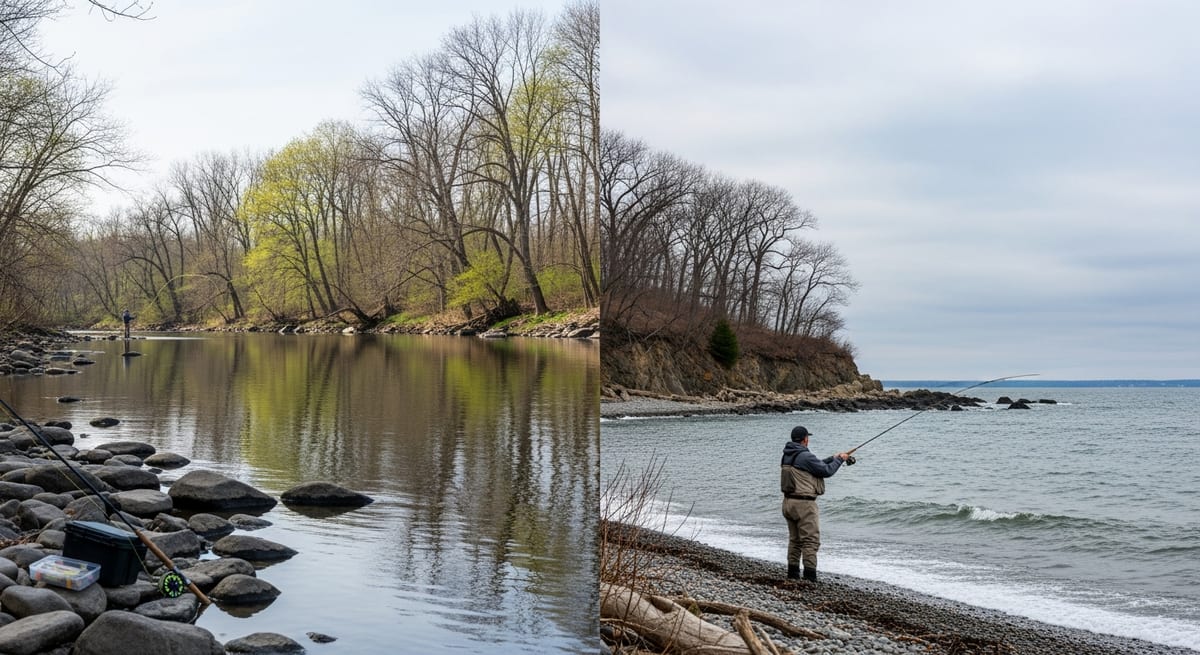
Anglers fishing the Farmington River's Trophy Management Area through late March 2026 report that DEEP's first spring stockings are landing in water still sitting in the 42-45°F range, conditions that push fresh fish tight to slow current seams and deep eddies, far from where most opening-week anglers concentrate pressure. Across the state, the spring sequence is compressing multiple species into a narrower overlap window than most trip plans account for: bass staging on main lake structure at Bantam Lake and Candlewood as afternoon temps push into the upper 40s, school stripers already showing at the Connecticut River estuary near Old Lyme and the lower Housatonic mouth, and yellow perch spotted on gravel shallows at Moodus Reservoir and Gardner Lake. CT DEEP's stocking schedule at ct.gov/deep is the primary freshwater schedule resource; estuary and coastal observations are drawn from community reports current through mid-March 2026.
Farmington TMA and Salmon River: What Stocked-Fish Behavior Looks Like in 42°F Water
CT DEEP has begun spring stocking, with the Farmington River, Salmon River, and Willimantic River among the first to receive fish this season. Communities fishing these rivers through mid-March 2026 report that early stockings in sub-45°F water produce fish that hold tighter to slow water and deeper eddies than stockies planted in the warmer conditions of late April. A behavioral pattern worth knowing before choosing where to wade.
As of mid-March, water temps on the Farmington are running in the 42-47°F range depending on section. Power Bait remains the most commonly reported producer for freshly stocked fish in these conditions. Spinner fishing typically picks up as temps push toward 52°F; most TMA regulars carry both setups and switch based on the thermometer reading, not the calendar.
The Housatonic TMA has seen early reports of wild fish activity. The Hendrickson hatch is typically several weeks out from a mid-March start date, but regulars on the TMA describe nymph fishing in deeper runs as the most consistent early-season approach. CT DEEP's stocking page at ct.gov/deep posts updated stocking reports through April and May as the schedule rolls forward.
Bantam Lake and Candlewood: Pre-Spawn Bass as Afternoon Temps Push Past 48°F
Southern CT impoundments, bantam Lake, Lake Lillinonah, and Candlewood Lake, are showing the first signs of pre-spawn staging, with water temps reaching 48-52°F during warm afternoon periods. Bass communities fishing these lakes in March 2026 describe fish moving from winter staging areas toward main lake points and the outer edges of shallow spawning coves as that temperature threshold is crossed.
Jerkbaits on 10 lb fluorocarbon are the most consistently reported setup for this staging window. The consensus among Bantam and Candlewood regulars is 3-5 second pauses between twitches once temps dip below 50°F; the bite on jerkbaits softens noticeably in colder water. Shaky head rigs with finesse worms account for the post-frontal days when fish pull off the shallows entirely.
Northern CT impoundments and higher-elevation lakes in Litchfield County are running colder. Anglers who fish both southern and northern CT waters report the pre-spawn window typically lags 2-3 weeks in the north. A gap worth building into any April plan. CT DEEP 2025-2026 regulations govern bass season statewide; the pre-spawn staging timing doesn't change the legal framework, but it changes which structure is worth targeting on any given water.
Connecticut River Estuary and Lower Housatonic: School Fish Before the Main Run
Early-run stripers are beginning to show across southern New England. Shore community reports from the Cape Cod Canal, the Connecticut River estuary near Old Lyme, and the lower Housatonic mouth off Devon describe fish in the 22-28 inch class, typical school-fish sizes that arrive ahead of the main migration by several weeks. Water temperature in the lower estuary is the primary run trigger; community observations from prior springs suggest consistent action typically builds once lower-river temps approach the mid-50s°F.
The most commonly cited access windows right now: river mouths on incoming tides, the lower Housatonic channel edges, and the CT River estuary flats near the mouth. Live eels aren't available this early at most bait shops along the coast. Bucktail jigs and large soft plastics on jig heads are the most reported setups for early school fish. Anglers tracking the migration corridor reference ASMFC stock-assessment updates alongside local community reports for run timing, as arrival dates vary meaningfully by year.
The main push of keeper-class fish under the current ASMFC slot: 28 to 35 inches, one-fish possession, typically reaches the CT coast in May. Shore communities at the lower Housatonic and Niantic Bay describe the peak window as running 10-14 days before the main body of fish moves through to northern waters.
Moodus Reservoir, Gardner Lake, and Bantam: Perch Moving to Shallow Spawning Flats
Yellow perch communities across CT describe a consistent spring transition: as ice clears and water temps push into the mid-40s, perch move from deep winter staging to weedy shallows and gravel shoals in 2-5 feet of water. CT DEEP's inland fisheries program identifies yellow perch as one of the state's more productive panfish species across a range of impoundments, though population quality varies significantly by water body.
Moodus Reservoir, Gardner Lake, and Bantam Lake are the most consistently cited spring perch waters in community reports. Small blade baits, swedish Pimple-style lures, small jigs tipped with a worm piece, and small inline spinners all produce during the spawning transition. Morning fishing is most commonly reported as the high-percentage period; perch activity typically drops as the spawn concludes and fish scatter back to deeper structure.
Claims of season-over-season quality trends for a specific water should be verified against CT DEEP creel survey data and the department's freshwater fishing reports at ct.gov/deep, individual impoundment conditions vary more than statewide summaries capture, and population cycles on smaller waters can shift significantly between seasons.
Ice-Out Timing and What the First Warm Week Actually Triggers
Most CT lakes at lower elevations are ice-free by mid-March in a typical year; higher-elevation impoundments in Litchfield County often hold ice into early April. Post-ice-out, fish move from winter staging structure toward shallower feeding and pre-spawn zones. A transition CT lake communities describe as taking roughly 1-2 weeks depending on how quickly air temperatures climb and stay elevated.
The first sustained stretch of 55°F+ air temps after ice-out is the trigger most consistently cited by CT impoundment regulars for the most aggressive shallow-water bass activity of the early season. Fish feeding after months of near-dormancy hit broadly and with less selectivity than mid-summer bass. Shore-access anglers who confirm a given lake's ice-out date via local tackle shops or DNR reports, rather than planning strictly from the calendar, tend to hit this window more accurately than those who guess from the date alone.
April Water Temperature Triggers and the Hendrickson Window
April is the most dynamic month in CT freshwater fishing, with multiple species peaking in tight succession as water temperatures climb from the mid-40s through the low 60s°F. Key thresholds reported by CT fishing communities across species:
Trout: Farmington River TMA and Housatonic TMA remain productive through April. The Hendrickson hatch on the Farmington typically peaks in the third or fourth week of April in years with normal spring temperature progression, fly anglers on the TMA consistently cite this as one of the most targeted hatch dates in the Northeast. Water temps in the mid-50s°F coincide with prime dry-fly conditions.
Bass: Pre-spawn staging at Bantam, Candlewood, and Lillinonah transitions to spawning-bed behavior once temps push past 60°F in the shallows. DEEP regulations govern harvest through this period; most CT bass communities target the pre-spawn window heavily and reduce harvest once beds are visible in clear water.
Stripers: The main push of slot-class fish: 28-35 inches under current ASMFC regulations, typically arrives at the lower Housatonic and Connecticut River mouth in May. Shore communities at Niantic Bay and the Race report consistent keeper action beginning in late April during warm-spring years, with the window tightening to 10-14 days of peak activity before fish push north.
EVERY SATURDAY MORNING
Weekly fishing intelligence
Nationwide conditions, what's biting, and honest gear deals. One email, no noise.
No spam. Unsubscribe anytime.