
The CT Squid Run Starts Before Most Anglers Check Their Rods. A Dock at Pilots Point in Late April Is Worth More Than a Boat in June.
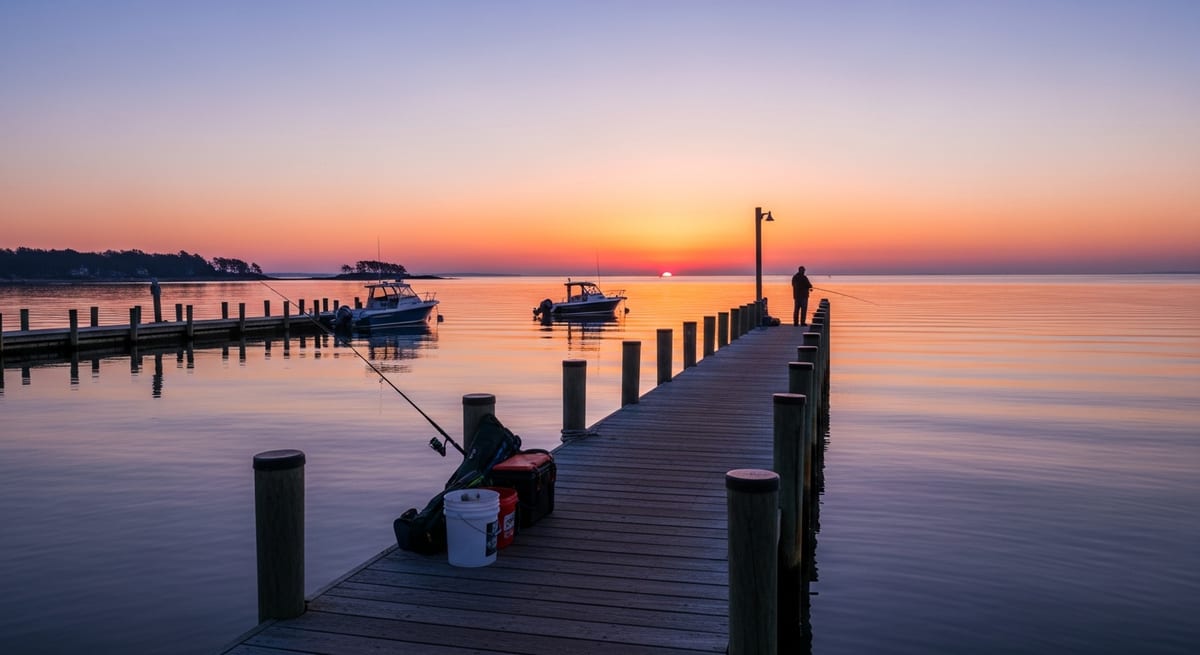
Longfin inshore squid (Doryteuthis pealeii) follow Long Island Sound's warming thermocline closely enough that experienced CT dock anglers have largely stopped watching the calendar and started watching water temperature readings instead. CT DEEP seasonal marine reports suggest the leading edge of the run typically appears when near-shore temperatures climb into the mid-50s°F in late April, and fades within days of the water pushing past the low-to-mid 60s. Anglers who fish Pilots Point in Westbrook on good May nights describe first-timers with bass gear and mismatched jigs going home with forty squid in a grocery bag. The pattern is consistent enough that it's become part of how CT squid regulars explain the fishery: when the timing lines up, peak density is forgiving. When it doesn't, preparation doesn't put squid on the dock. The run typically holds from late April through mid-June, with eastern Sound locations often seeing squid before the western harbors. Get out during the peak window and inshore night fishing rarely gets more productive anywhere in Connecticut.
When the Run Shows Up (and When It's Over)
CT DEEP seasonal marine reports suggest the squid run typically kicks off in late April as Long Island Sound water temperatures climb into the mid-50s°F. Peak action concentrates in May through early June. Once water temperatures push past the low-to-mid 60s, squid move offshore and inshore action drops off quickly.
A consistent pattern noted by CT dock anglers is that waiting for the run to be "officially confirmed" by local reports means the first wave has already moved through. The regulars start checking CT DEEP's marine fishing updates and local bait shops around the third week of April. Early nights, when only a handful of rods are working any given dock, are consistently described as among the best nights of the entire run.
Squid are most active after dark. The consensus among CT squid anglers who fish Pilots Point and Niantic Bay regularly is that the window from roughly an hour after sunset through midnight produces the strongest dock action. Squid follow baitfish, nOAA forage data identifies sand eels and juvenile menhaden as primary inshore prey, into nearshore water drawn in by dock lights.
Where CT Anglers Find the Most Consistent Dock Action
Brewer Pilots Point Marina (Westbrook): The lit docks here are the spot most CT squid anglers name first. Public dock access nearby means no slip is required. When asked where to spend a single night during the run, the dock crowd consistently points to Pilots Point.
Clinton Town Beach / Clinton Cove: Shore access with reliable spring squid activity. Sitting a bit east of center on the Sound, this area tends to see the leading edge of the run before western spots catch up. A timing difference CT anglers in the Clinton area note most seasons.
Niantic Bay: Sheltered water with lit docks along the waterfront. The Niantic Marina boat launch gives access to productive mid-bay water for anglers working from small vessels.
Stratford / Bridgeport Harbor: Western Sound squid typically arrive a little later than eastern locations, late May is the window most anglers here target. Ferry docks and lit piers concentrate fish along the waterfront.
Charter and party boats: Charter operators running out of ports in the Niantic, Groton, and Milford areas have historically offered evening squid trips in May, verify current operators and schedules with local marinas each season, as offerings change year to year. For anglers new to squid fishing, a guided trip is one of the more reliable ways to learn how experienced mates position boats and manage lights.
The Setup CT Squid Regulars Land On
Squid jigs (EGIs): These are small feathered or cloth-bodied lures with a ring of upward-pointing hooks at the tail. CT dock anglers who fish the spring run consistently land on sizes #2.0 to #3.0 for Long Island Sound squid. Colors: pink, orange, and chartreuse tend to perform better in murky water; clear or natural tones in cleaner conditions. Night glow jigs are widely reported as making a measurable difference after dark, regulars typically rotate through a few colors until squid signal preference on a given night.
Keep the gear light: The setup most CT squid regulars describe is a 7-foot light rod with a 2000-size reel, 8-10 lb braid, and a short fluorocarbon leader. Sensitivity is the point. Squid take the jig subtly, closer to added weight than a hard strike, and heavy gear significantly reduces the ability to detect those takes. Anglers fishing heavier bass mono setups report missing far more fish than those matched to light tackle.
Working the jig: Cast out, let it sink on a count of three to five seconds, then work it with sharp upward twitches followed by a pause on the drop. Squid almost always attack on the fall. Keep your line semi-taut to feel the weight change when one grabs. If fish are there but takes aren't converting, CT squid anglers suggest slowing the fall, give squid a moment to commit before the next twitch.
Dip nets: If squid are stacked under a dock light but not committing to the jig, a long-handled dip net and a headlamp is all that's needed. Shore anglers rely on this method more than newcomers expect, especially when squid are tight to the surface.
Regulations, verify Before Each Season
As of the 2024-2025 season, recreational squid fishing in Connecticut has not carried a bag limit in state waters, but squid management can shift year to year, and changes have arrived mid-season in past years. Verify current rules directly with CT DEEP's marine fishing portal at portal.ct.gov/DEEP/Fishing/Marine before heading out each spring.
A CT Marine Recreational Fishing License is required to keep squid. If you're on a licensed charter or party boat, the vessel's license covers passengers.
Cleaning and Eating: Speed Matters More Than Technique
Squid are one of the best-eating species you'll pull from Long Island Sound, and cleaning them is faster than most people expect. Pull the head and tentacles from the mantle (the body tube). Most of the innards come with it. Find the transparent quill (gladius) inside the mantle and pull it out. Rinse everything under cold water.
Slice the mantle into rings or leave it whole for stuffing. Tentacles are worth keeping, treat them the same as rings.
Two preparations CT anglers and waterfront cooks return to most: lightly battered rings in very hot oil (a minute or two depending on thickness, appearance is a more reliable cue than a timer), or whole mantles brushed with olive oil and garlic on a hot grill for a few minutes per side. The shared principle: cook fast and hot, or braise low and slow for 30-plus minutes. The middle range produces rubbery results regardless of how fresh the catch is.
EVERY SATURDAY MORNING
Weekly fishing intelligence
Nationwide conditions, what's biting, and honest gear deals. One email, no noise.
No spam. Unsubscribe anytime.