
Striped Bass Jigging: How to Catch More Fish in Connecticut Sound and Rivers
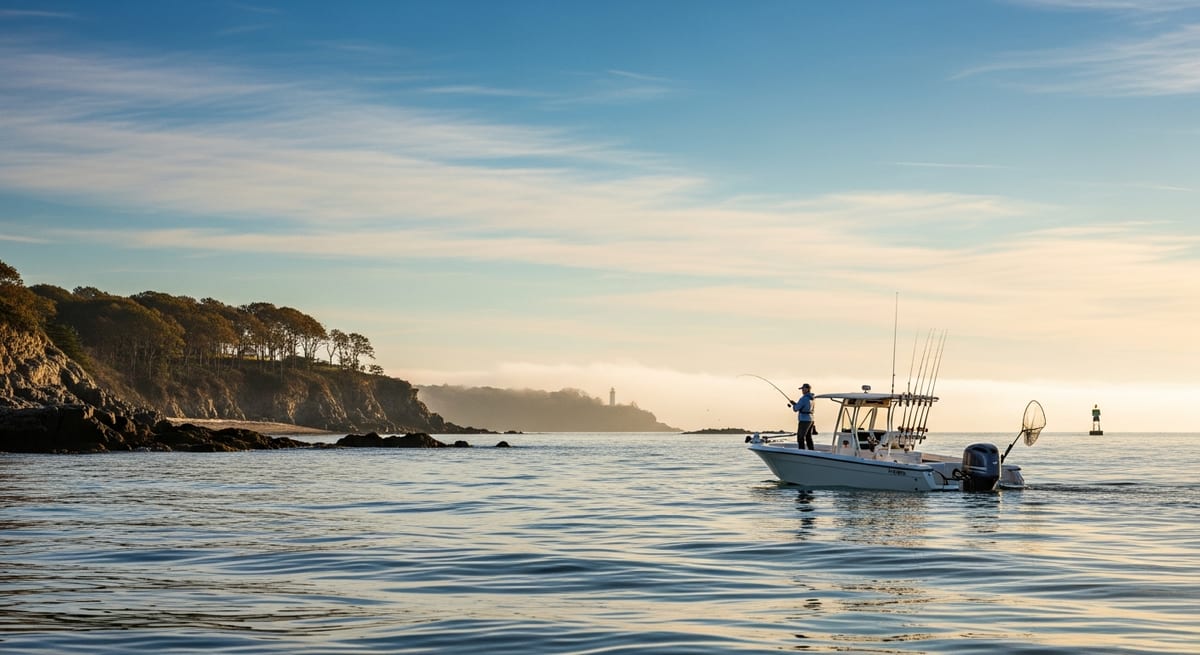
Most Connecticut striper anglers either throw plugs or chunk bait. Both work, but jigging is the technique they're missing. A well-worked bucktail jig or metal diamond jig in the right conditions catches stripers that won't look at a plug and doesn't require the preparation and logistics of live bunker. Learn to jig, and you add a critical tool for when the other methods fail.
Why Jigging Works for Striped Bass
Striped bass feed on baitfish throughout the water column. Plugs and poppers target fish feeding on or near the surface. Chunk bait targets fish near the bottom in one spot. Jigging covers the water column vertically and works particularly well when:
- Fish are feeding near bottom but not committed to surface activity
- Baitfish (sand eels, spearing, bunker) are holding at a specific depth mid-column
- Fish are stacked on specific structure (a ledge, a rock pile, a mussel bed)
- The tide has changed and fish have moved off the surface bite
- You're marking fish on sonar but they won't rise to a surface lure
The jigging action. A falling presentation that mimics a wounded or dying baitfish, triggers the predatory response in stripers reliably. Fish don't always commit to chasing a plug, but a jig falling past a striper in a current seam often gets eaten by reflex.
Bucktail Jigs: The Classic Striper Jig
The bucktail jig is the original striper jig and still among the most effective. A lead head with deer hair (bucktail) tied around the hook, it sinks quickly, casts well, and moves water in a way synthetic alternatives often don't.
Size: Match the jig weight to the depth, current, and baitfish size. In moderate current in 20-30 feet of water: 1-2 oz. In strong current or deeper water: 2-4 oz. Heavy enough to feel the bottom and maintain contact; light enough to work naturally.
Colors: White and yellow are the standards for most CT striper conditions. White/chartreuse or white/pink work well in turbid water. More natural colors (olive, tan) when fish are selective in clear water. Sand eel colors (olive/white) when sand eels are the primary bait.
Trailer options: Adding a soft plastic trailer to the bucktail changes the profile and action. A 4-6 inch curly tail grub, a paddle tail swimbait, or a pork rind strip behind the bucktail increases appeal and slows the fall slightly. During an active bite, a plain bucktail is often all you need; in slower conditions, a trailer helps.
The retrieve: The classic striper bucktail presentation is slow and deliberate. Cast or drop the jig to bottom, let it settle, then lift the rod tip smoothly 1-2 feet and let the jig fall back on a semi-slack line. The fall is when fish bite, watch for line movement or a tap during the drop. Vary the speed: sometimes a faster, more erratic retrieve triggers fish; sometimes the near-motionless jig ticked along the bottom is the answer.
Metal Diamond Jigs and Speed Jigging
Diamond jigs, elongated, faceted metal lures with a treble or single hook, are the tool for vertical jigging from a boat over active fish or along structure.
When to use diamonds: When you have fish marked on sonar at a specific depth. When fish are chasing bait in a rip tide. When the current is strong enough that soft plastic jigs won't sink fast enough to reach the target zone. In fall when false albacore and bluefish are mixed with stripers and speed matters.
The technique: Position the boat over the mark, lower the diamond jig to the bottom or to the depth where fish are holding. Lift sharply 2-3 feet with the rod tip, then let the jig fall back on a semi-slack line as you crank down. Repeat. The jigging cadence should feel natural, think of how a wounded fish moves. Some days a fast, aggressive jig is the trigger; other days a slow jig with long pauses between lifts gets the bite.
Sizes: 2-4 oz for most CT Sound applications. Heavier (4-6 oz) in strong current or deep water (60+ feet). Tube lure or teaser rigged above the diamond jig adds a second hook point and imitates a small bait being chased by a larger one, often the secondary lure gets hit more than the diamond.
Jigging metal in rips: Tidal rips over rocky bottom or around inlet points are prime diamond jig territory. Let the rip carry the boat; drop straight down; jig quickly to stay near bottom. The current moves the lure; your job is to keep it in the strike zone. This is physically demanding fishing, multiple fish in a rip tide means constant cranking, but it's also some of the most exciting striper fishing available.
Soft Plastic Jigging for Stripers
Paddle tail swimbaits rigged on jig heads have largely replaced bucktails for many CT striper anglers. They're easier to use, effective, and available everywhere.
Recommended setups: 5-7 inch paddle tail swimbait (Hogy soft baits, DOA Shrimp/lures, Bass Candy, or similar) on a 1-3 oz jig head. The swimbait should be straight on the hook with the hook point exposed or just barely skin-hooked. Misaligned swimbaits spin and create twist.
Colors: White, chartreuse/white, pink/white, sand eel (olive/tan). Match to the baitfish, if you're marking sand eels, go small and light-colored. If bunker are present, go larger and more silver.
Jigging a swimbait: A swimbait jig doesn't need the same aggressive jigging action as a metal lure. A slow, steady retrieve with occasional pauses often produces well. Or work it like a bucktail, lift and drop along the bottom. The swimbait's paddle tail provides action on the fall that metal and bucktail lack. This makes the pause in a lift-drop retrieve more effective.
Shore jigging: A 5-inch soft plastic swimbait on a 1-1.5 oz jig head is the most versatile shore-based striper presentation available. Cast to current seams, rock edges, and tidal rip areas from beaches, jetties, and tidal river banks. Retrieve at varying speeds until you find what the fish want that day. Slow near bottom, faster mid-column. A 2-4 hour outgoing tide window at a productive inlet with a swimbait jig covers all the variables.
Reading Conditions for Productive Jigging
Tidal movement is non-negotiable: Jigging for stripers in slack water is an exercise in frustration. Fish are most active when water is moving, preferably the last two hours of outgoing tide and the first two hours of incoming tide. The tidal current concentrates baitfish and activates predators. Know your tidal schedule and plan your jigging sessions around it.
Rips and current seams: Tidal rips are formed where current accelerates over shallow structure. These are the best jigging locations in Connecticut's waters. The rips off Fisher's Island Sound, Plum Gut, the Race, and the numerous rocky points along the CT coast produce consistent striper action during moving tides. On calmer waters inside the Sound, current seams at inlet mouths and river outflows are the accessible equivalent.
Depth changes: Stripers using structure often hold along the edges of depth transitions. The seam between 20 feet and 40 feet where a ledge drops off. Find the depth change on sonar, position the boat along it, and jig along the edge. Active fish will be at the depth break; less active fish may be holding in the deeper water below.
Water temperature: Stripers are most active in 55-70°F water. In Connecticut, this means spring (May-June) and fall (September-November) are typically the most productive jigging seasons. Summer fishing concentrates at night or early morning when surface temperatures are lower, and at depth where cooler water holds.
Gear for Striper Jigging
Rod: 7-8 foot medium-heavy to heavy spinning rod with moderate-fast to fast action. Enough backbone to work the jig, enough sensitivity to feel bites on the drop. A jigging rod needs to work efficiently through repeated lift-drop cycles for hours. A rod that fatigues your arm ruins the day.
Reel: 5000-8000 size spinning reel with 200+ yards of 30 lb braid capacity and a reliable drag system. Stripers in current have substantial first-run power. You need drag that runs smoothly, not in jerks.
Line: 30 lb braided mainline to a 20-30 lb fluorocarbon leader (6-10 feet) attached with an Albright or FG knot. The thin braid cuts through current and allows the jig to sink efficiently; the fluorocarbon leader provides abrasion resistance and lower visibility near the lure.
Leader connection: For metal diamond jigs, use a quality swivel between the leader and the jig to prevent line twist, diamond jigs can spin badly in certain retrieves. For bucktail jigs and swimbaits, a direct snap or loop knot connection to the jig head (no swivel) is better for natural action.
EVERY SATURDAY MORNING
Weekly fishing intelligence
Nationwide conditions, what's biting, and honest gear deals. One email, no noise.
No spam. Unsubscribe anytime.