
Fluke (Summer Flounder) Fishing in Connecticut: Everything You Need to Catch Your Limit
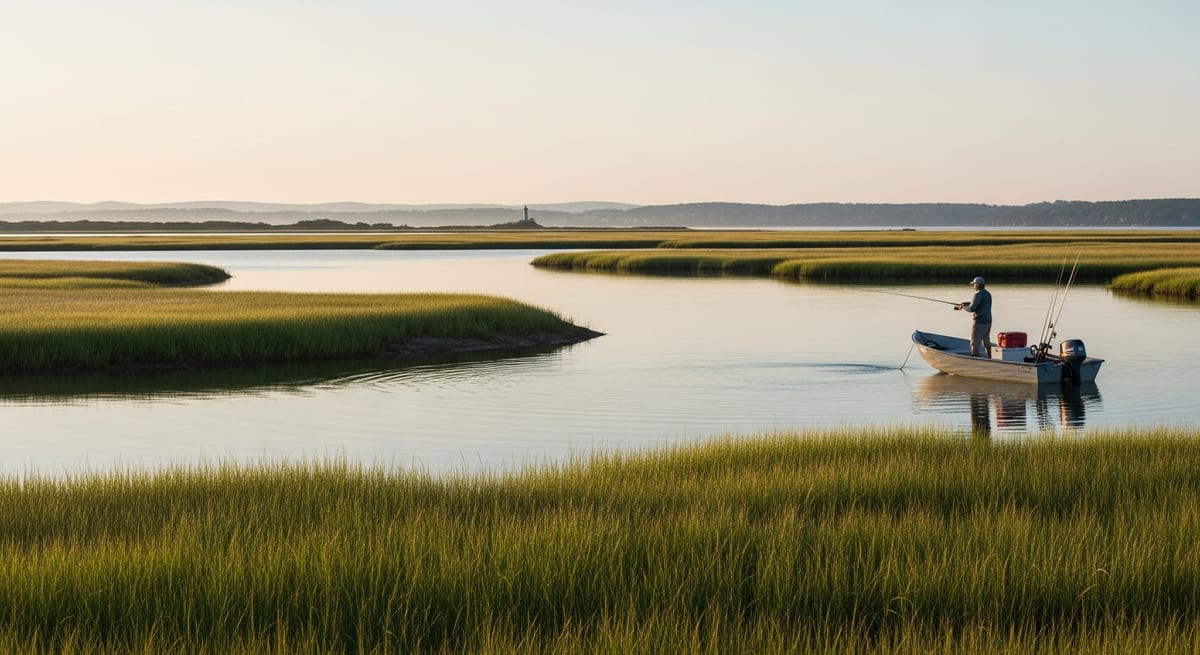
Fluke (summer flounder) are Connecticut's most popular inshore saltwater target in summer. They're abundant in Long Island Sound from May through early September, they bite reliably when you know where to find them, and they're among the best-eating fish you can catch in the Northeast. They're also surprisingly fun on appropriate tackle. A large fluke on a medium spinning outfit puts up a real fight. Here's the full breakdown.
Fluke Basics: Where They Live and Why
Summer flounder (Paralichthys dentatus) are flatfish. They live and feed on the bottom, oriented with both eyes on the top of their body (which is actually their left side). They're ambush predators that bury themselves partially in sandy or muddy bottom, then strike upward at passing baitfish, squid, and crustaceans.
Habitat in Long Island Sound:
- Sandy and muddy bottom in 15-50 feet of water
- Channel edges and drop-offs where deeper water meets sandy shallows
- Mussel beds and wrecks (irregular hard bottom concentrates bait)
- Near inlets and river mouths, particularly on outgoing tides when bait pours out
- Sandy shoals and banks in the main Sound basin
Seasonal movement: Fluke overwinter offshore in deep water (80-120+ feet) along the edge of the continental shelf. They migrate inshore into Long Island Sound in May as water warms. They're present through early September, then begin their fall migration back offshore. The peak season in Connecticut waters is June-August; fishing picks up in May and tapers in September.
Size: Connecticut fluke range from "shorts" (under the legal minimum) to "doormat" fish over 10 pounds. Average keeper fish are 17-22 inches (approximately 2-4 pounds). Fish over 5 pounds are genuinely large; over 8 pounds is exceptional. Large fluke are almost always female.
The Fluke Rig: Two Options
Option 1. The Fluke Fluke rig (standard): A spreader rig or simple two-hook rig with a 3-way swivel at the top. The sinker hangs from the bottom eye of the swivel; two leaders of 18-24 inch fluorocarbon with size 1/0-3/0 hooks run from the other eyes. Bait with squid strips and spearing (silversides), or with Gulp artificial baits.
Option 2. The bucktail jig (preferred by experienced anglers): A 1-3 oz bucktail jig (white, yellow, or chartreuse) tipped with a 4-5 inch soft plastic paddle tail or a strip of squid. This is a more active presentation that covers more water and frequently out-produces bait rigs by 2:1 or better on actively feeding fish. The jig is bounced along the bottom as the boat drifts over productive structure.
Why jigs outperform bait: Bait rigs are passive. They sit in one spot until a fish finds them. Fluke are territorial and positionally specific; the population of fish holding on a given patch of sand covers an area, not a single point. A drifting boat with a bouncing jig covers all that area, finds more fish, and triggers more reaction strikes from fish that wouldn't commit to coming across to a stationary bait.
Sinker/jig weight: Choose the lightest weight that maintains bottom contact at your drift speed. In light current at 20 feet: 1 oz may be sufficient. In strong current or deeper water: 2-3 oz or more. If you can't feel the bottom, you need more weight. If the jig is dragging without moving freely, you need less.
Drift Fishing: The Most Productive Method
Fluke fishing is drift fishing. You position the boat upwind/upcurrent of productive bottom, then drift across it at the speed of current and wind combined. The jig or bait trails along behind the boat as it moves.
Ideal drift speed: 0.5-1.5 knots for fluke. Slower than this and bait rigs are adequate; at 1.5+ knots, you're moving quickly and actively worked jigs are mandatory. Many boats use the engine to slow a drift that's running too fast.
Drift direction: You want to drift ACROSS productive bottom, across the channel edge or depth transition, not along it. This maximizes the time your bait is in the productive zone.
Working the jig: As the boat drifts, slowly lift the rod tip 1-2 feet, then let the jig fall back to the bottom. You should feel the jig tap the sand on each drop. This "tap" confirms you're in the zone. Fluke bites often come on the drop; when the falling jig suddenly stops or goes light (the weight of the fish takes some tension off), set the hook.
Re-drifting: Once you've drifted across productive ground, use the engine to move back upcurrent and drift it again. Mark fish on sonar; note where bites occur on each drift. Successful fluke anglers are constantly noting "got a bite at that GPS waypoint" and drifting back over that area.
Bait for Fluke
Squid: The universal fluke bait. Cut into 3-4 inch strips (not rings, strips wave attractively in current). Squid is durable on the hook and releases scent well. Available at any coastal bait shop in season.
Spearing / silversides: Small silver baitfish (2-3 inches) that are the primary natural forage for fluke in Long Island Sound. Spearing on a hook above a jig (the "fluke killer" rig) is extremely effective. The spearing provides scent, the jig provides flash and bottom-contact feel. Fresh or salted spearing from bait shops.
Gulp! Artificial Baits: Berkley's Gulp products (particularly the 4-inch Gulp Shrimp and 4-inch Gulp Jerk Shad) have become standard fluke bait among serious anglers. They release a scent compound that's been proven to produce more bites than unscented soft plastics, and they outperform live bait in some conditions. The white Gulp Shrimp on a 1.5 oz jig head is a top-producing CT fluke setup.
Live bait: Small live bunker (menhaden), snappers (baby bluefish), and live killifish all catch large fluke. Live bait is more effective for targeting specific large fish in the fall than for general summer fluke fishing.
Bucktail + trailer combination: A 1.5-3 oz white bucktail jig tipped with a strip of squid or a Gulp shrimp is the top production choice for anglers who consistently limit out. The bucktail provides visual appeal; the strip provides scent and texture.
Finding Fluke on Long Island Sound
Western Sound (Greenwich to Milford): The western Sound basin has productive fluke grounds on the sandy bottom areas. The rips off the Greenwich coast, the channel edges near Bridgeport harbor, and the open sandy bottom between Milford and New Haven all hold fluke. This part of the Sound is close to the New York metro area and sees significant boat traffic, but the fishing is consistently good.
Central Sound (New Haven to Old Saybrook): The broad sandy areas north of the Race and around the Hammonasset area hold summer populations. The Connecticut River mouth and the nearshore areas east of the Thimble Islands are productive mid-Sound areas.
Eastern Sound (Old Saybrook to Watch Hill): Fishers Island Sound and the waters around Fishers Island have long been known as some of the best fluke grounds in the region. The tidal flows through the Race and through the passages around Fishers Island create conditions ideal for fluke concentrations. Stonington and Mystic-area charter boats work this area extensively.
Reef and wreck structure: Wrecks and artificial reefs throughout Long Island Sound concentrate fluke because they attract baitfish. Several artificial reefs have been established in CT waters, find locations from CT DEEP. These spots produce fluke in numbers significantly above the open sandy bottom surrounding them.
Regulations and Slot Limits
Connecticut fluke regulations change annually. As of recent years, Connecticut has implemented slot limits and size limits for summer flounder in line with federal Atlantic States Marine Fisheries Commission management.
Key regulated elements:
- Minimum size: Has varied between 16-19 inches depending on season and regulatory changes
- Daily bag limit: Typically 5 fish per person on recreational boats
- Season: Generally May 1 through September 30, with some variation
CRITICAL: Always verify current fluke regulations at ct.gov/deep before fishing. Fluke regulations have been adjusted repeatedly in recent years as management works to balance conservation and recreational opportunity. What applied last season may have changed.
Fluke are measured as total length, tip of the longest tail lobe to the tip of the nose. Carry a measuring board on the boat and measure every fish before putting it in the cooler. The fines for undersized fluke are significant.
EVERY SATURDAY MORNING
Weekly fishing intelligence
Nationwide conditions, what's biting, and honest gear deals. One email, no noise.
No spam. Unsubscribe anytime.