
CT Tautog Have a Fall Season That Most Saltwater Anglers Fish Right Past. Regulars on the Stonington Breakwater and Fishers Island Sound Report Peak Blackfish Days in October, with Almost No Competition.
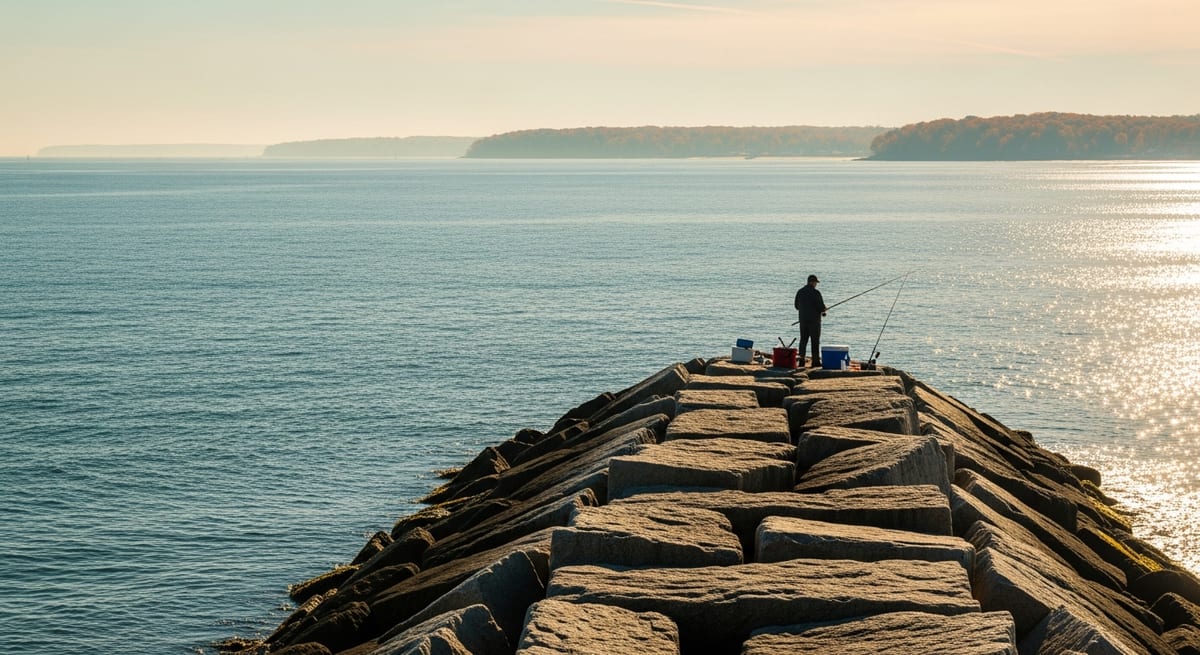
Why CT Blackfish Regulars Say Tautog Fight Harder Than Anything on the LIS Bottom
Tautog are among the strongest pound-for-pound fighters on the Long Island Sound bottom. Anglers who fish both the spring and fall CT tog seasons consistently rank them above stripers and bluefish for sheer stubborn pull relative to size.
What catches new toggers off guard is how undramatic the bite is before it turns violent. The typical report from anglers fishing the Stonington breakwater or Watch Hill structure for the first time: a subtle tap-tap-tap, a lift of the rod, and then a fish driving straight back into the nearest rock pile at full speed. CT tog regulars warn that undersized braid is a liability. Anglers who come in with 15-20 lb setups and aren't ready for the initial run lose fish to the rocks before they ever get fully tight.
The other thing regulars cite consistently: tautog are exceptional table fare. White, firm, mild flesh that holds up well in the pan. The consensus among CT anglers who keep them is that they match or beat fluke in quality.
The short version: tog are two-season fish in Connecticut (spring and fall), they hold exclusively on hard structure, and they eat crabs. Those three facts shape everything else about how to fish them effectively.
The Spring and Fall Seasons, why CT's Fall Window Gets Overlooked
Connecticut DEEP manages tautog conservatively, and season structure has tightened over the past several years in response to regional stock assessment findings. The general framework for recent CT tautog seasons:
- Spring season: Typically mid-April through early June
- Fall season: Generally October into November. The exact window varies by year and has closed earlier than November in some recent seasons
- Size limit: Has been in the 16-inch range in recent seasons, confirm against current DEEP regulations before you fish, as this has shifted in prior years
- Bag limit: Has ranged between 2 and 3 fish per day depending on the season and year, check DEEP's current season summary at ct.gov/deep before launching
CT DEEP publishes updated tautog season dates and limits before each season opens. Regulations shift in response to annual stock surveys, and dock talk from a prior year is not a reliable source. The DEEP Marine Fisheries page is the only one worth trusting for current rules.
Why the fall window is underrated: by mid-October, most of the CT saltwater crowd is either running out the tail end of the striper season or has already put the boat away. Anglers who fish the fall tog season regularly, particularly on the Stonington breakwater and around Fishers Island Sound, describe having prime structure to themselves on days that would be crowded in May. Water temperatures dropping through the mid-60s trigger a strong pre-winter feeding push, and tog regulars report that the fall bite is often more consistent and far less pressured than spring.
Structure Types CT Tog Anglers Target, and the Mussel-Growth Tell
Anglers familiar with tautog across Connecticut and Rhode Island are consistent on one point: these fish do not roam. Every reliable tog report from Long Island Sound places them on or immediately adjacent to hard structure. Sandy or muddy bottom with no nearby hard structure is not where experienced toggers spend their time.
Rocky reefs and boulders: Eastern CT has some of the best tog habitat in the state. The waters around Fishers Island Sound, Watch Hill, and the Stonington area offer the irregular rocky bottom that tautog prefer. Rig losses are a given on this terrain, cT tog anglers routinely pre-rig extras before launching rather than tie on the water.
Jetties and breakwaters: The Stonington breakwater is the most-cited shore tog location in eastern CT. The New Haven breakwater produces as well. Any jetty in the Sound with visible mussel growth on the rocks is worth investigating across both seasons.
Bridge pilings: Tautog use bridge bases year-round, particularly those with mussel and barnacle fouling. The Railroad Bridge at Old Saybrook and the Gold Star Bridge vicinity in New London are both documented tog holds. Access varies by location, scouting in advance saves a wasted trip.
Wrecks and artificial reefs: Anglers with the right boat report reliable tog production at wreck sites off the CT coast through both seasons.
The key tell: Mussel growth. Tautog are one of the primary mussel predators in Long Island Sound, and experienced anglers who know the Sound's structure say that mussel-covered hard substrate is the single most reliable indicator that tog are actively working nearby.
The Standard CT Tog Rig, what Eastern Sound Regulars Run
Rod and reel: Medium-heavy to heavy conventional or spinning. A 7-foot rod rated for 2-6 oz, paired with 30-50 lb braid. Tautog fishing is not a finesse application. The bottom is rocky, the fish drive for structure the instant they're hooked, and the rod needs backbone to pump them up fast before they reach cover.
Standard tog rig:
- 3-way swivel with 12-inch sinker dropper and 12-18 inch hook leader
- 20-30 lb fluorocarbon leader (abrasion resistance matters on this bottom)
- 2/0-4/0 octopus or wide-gap hook
- Bank sinker 2-4 oz depending on current
Bait, ranked by what CT tog regulars consistently reach for:
- Green crabs (primary): The standard tog bait across the Northeast. Half a crab or a whole small one, hooked through a leg socket and then through the carapace. Fresh live crabs consistently outperform frozen. Anglers who source them from a shop keeping them in a running tank report a noticeable difference in bite frequency.
- Fiddler crabs: Smaller profile, very effective. Harder to source in CT than green crabs, but regulars who track them down report strong results.
- Hermit crabs: Excellent producers when available. The sourcing challenge is quantity. They work well, but few CT bait shops stock them reliably.
- Clams: When crabs aren't available, a chunk of soft-shell or hard-shell clam bounced on the bottom keeps producing. CT tog regulars treat this as the standard fallback when the crab supply runs out. It holds bottom well and draws bites on structure even when the primary baits are gone.
Keeping Fish Off the Bottom, what Separates CT Tog Regulars From Day-Trippers
The consistent technique guidance from experienced CT tog anglers: anchor directly over the structure, not up-current and drifting to it. Tautog don't chase bait. The rig needs to reach the fish where they're holding.
Once the rig is on bottom:
- Take up just enough slack to stay in contact with the bottom.
- Wait for the tap-tap. CT toggers describe it as more of a tick than a thump, subtle enough that anglers new to the species frequently miss it entirely.
- Give it a beat after the taps start, then lift the rod firmly and reel.
- Reel fast. A hooked tautog's first move is back toward the rocks. The pattern anglers who fish the Stonington breakwater regularly describe among first-timers: hitting on the initial tap before the fish has turned, or hesitating too long and losing the fish to the structure before getting tight. Both are timing errors that resolve quickly with a few sessions on the fish.
Timing on current: Slack tide or the first hour of a tide change is the most-cited productive window among CT tog anglers. A hard rip over rocky bottom makes maintaining bottom contact difficult and drowns out the sensitivity needed to read the tap. Tog will bite on moving water, but anglers who have a choice in the matter consistently pick the slack or the early move.
The setup the majority of CT tog regulars describe running: 30-40 lb braid to a 25 lb fluorocarbon leader, on a medium-heavy 7-footer. Enough backbone to pull fish off structure, enough sensitivity to register the tick that starts the whole sequence.
EVERY SATURDAY MORNING
Weekly fishing intelligence
Nationwide conditions, what's biting, and honest gear deals. One email, no noise.
No spam. Unsubscribe anytime.