
Black Sea Bass in Connecticut: How to Catch Them from Shore and Boat
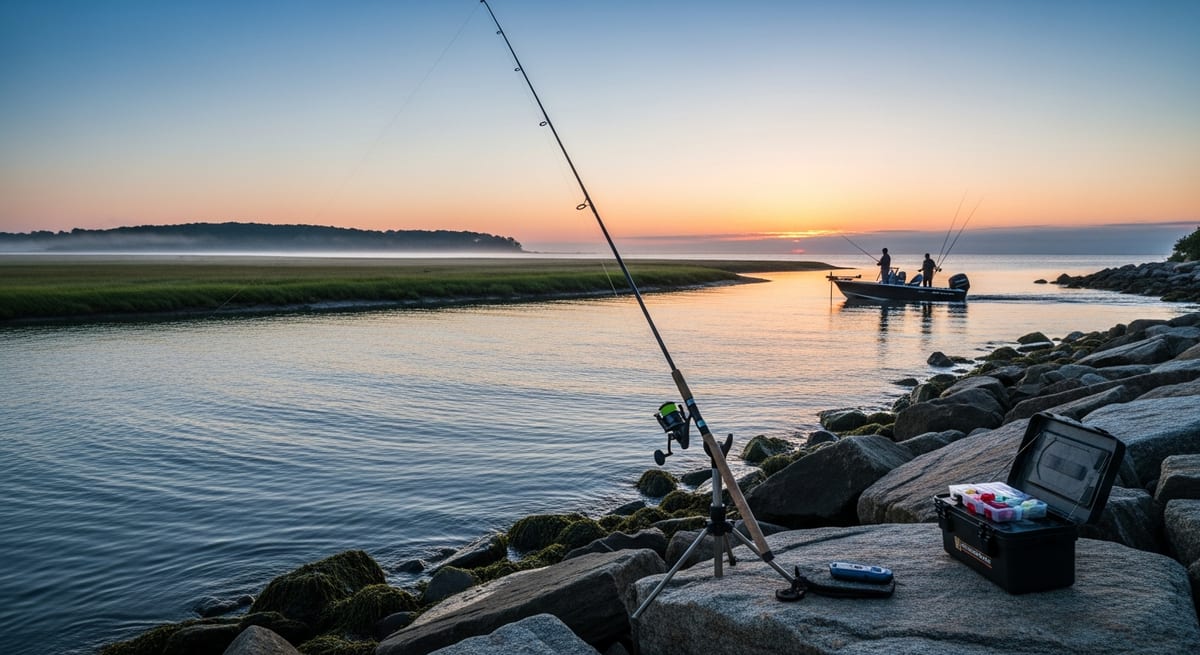
A single rock pile in 25 feet of water off Guilford can hold the same black sea bass population year after year. These fish are territorial enough that once you mark productive bottom on your GPS, that waypoint will produce every season you go back to it. They're not glamorous, but black sea bass hold on hard structure across Long Island Sound, fight well on light tackle, and are among the best table fish you can bring home from a Connecticut saltwater trip. Both boat and shore anglers can get in on them from late spring through fall, and they're a reliable fallback when stripers and blues aren't cooperating.
Black Sea Bass Biology and Behavior
Black sea bass (Centropristis striata) are structure fish. They stack tight on rocky bottom, wrecks, jetties, and mussel beds. Sandy or muddy flats won't hold them, full stop.
One thing worth knowing: these fish change sex as they mature. Most start as females, and the larger, older fish typically transition to male, which is why big fish often display the distinctive bump behind the head and bright blue-green iridescent markings. The timing varies, but it's a useful reminder that releasing oversized fish benefits the breeding population.
They're highly territorial and return to the same structure repeatedly. Mark a productive piece of bottom once and that spot will pay off season after season. Most CT Sound fish run 1-3 lbs, with larger fish typically found on deeper mid-Sound reefs and offshore wrecks.
Where to Find Them in Connecticut
Sea bass need hard structure. They don't hold on sand or mud bottom.
From boat:
Falkner Island (Guilford): The rocky bottom surrounding this island is a well-known sea bass ground in the central Sound. Fish typically show up in late May and hold through October or into November depending on water temperatures. The NOAA wildlife area creates some buffer zones, but the surrounding reefs are open and productive.
Mid-Sound reefs (New Haven to Bridgeport): Scattered rocky ledges in 20-50 feet between New Haven Harbor and the Stratford Shoal area hold consistent sea bass. Many of these spots aren't on any chart. A few hours on a local charter is worth it for the GPS marks alone.
Southwest Ledge (New Haven Harbor entrance): Solid structure with a mix of sea bass, blackfish (tautog), and stripers. Accessible by smaller boats on calm days and worth checking any time the tide is running.
The Race and Plum Gut (eastern CT Sound): Fast current and complex bottom often produce larger sea bass than the central Sound, particularly in fall. Best fished at tide changes when the current eases off.
From shore:
Ocean Beach Park (New London): The rock jetty and adjacent structure holds sea bass and tautog through fall. Public access, no launch needed. Fish the seaward side on a dropping tide.
Rocky Neck State Park jetty (East Lyme): A reliable shore spot from summer into early fall. Cast squid strips to where the rocks meet deeper water.
Hammonasset Beach State Park jetty (Madison): The longer of the two jetties here produces sea bass on dropping tides. Work the edges where the rocks drop off into the channel.
Groton Long Point jetty (Groton): Worth checking in summer. The boulder structure and current draw sea bass within range of shore anglers, and it's less pressured than the state park spots.
Tackle and Technique
Boat fishing: A medium spinning or conventional setup covers most situations: 7 ft medium rod, 20-30 lb braid, 20-25 lb fluorocarbon leader. Sea bass aren't line-shy, but they'll dive for structure the instant they feel the hook, so you need enough backbone to turn them before they bury you in the rocks.
Bottom rigs: A two-hook hi-lo rig on a 1-3 oz bank sinker is the standard approach, go heavier in fast current at the Race or Plum Gut. Use 1/0-2/0 octopus or circle hooks. Sea bass have smaller mouths than they look, and oversized hooks cost you bites.
Best baits:
- Squid strips: The most consistent producer across all conditions. Cut thin 2-inch strips and thread lengthwise on the hook so they flutter on the drop. Always carry a bag.
- Surf clam: Clam belly is excellent, tough enough to stay on the hook through multiple drops. Bloodworm strips also work well in early season when fish are shallower.
- Crab: Small pieces of green crab or blue crab are highly effective, especially for larger fish sitting deeper on structure. Green crabs are cheap and easy to collect off local jetties.
- Soft plastics: Gulp! Swimming Mullet (3 inch, chartreuse or white) on a 1/2 oz jig head produces well when worked slowly right above the bottom. Let it sink, lift 6-12 inches, and pause. Fish usually eat it on the pause.
Shore fishing: Drop to a lighter setup: 7-8 ft medium spinning rod, 15-20 lb braid, 20 lb fluoro leader. A simple hi-lo rig or fish-finder rig with squid or clam cast to the edge of the rocks is the go-to. Fish the tide change, especially the drop. Sea bass hold on the downtide shadow of structure, put your bait where the current deflects off the rocks.
Regulations, pay Attention to These
Black sea bass regulations in Connecticut have shifted several times in recent years as the population has expanded northward. A documented response to warming Sound temperatures. The fishery is actively managed by ASMFC, and bag limits can change year to year based on annual stock assessments. Verify current rules with CT DEEP Marine Fisheries before your trip.
General 2025-2026 framework (confirm before fishing):
- Minimum size: 15 inches total length
- Bag limit: typically 5-8 fish per person per day during the main open season, but check for mid-season adjustments or emergency closures
- Closed periods: some seasons include brief closures during sensitive windows, don't assume last year's rules apply
The northward population shift has generally meant better sea bass fishing in CT waters over the past decade. More fish doesn't mean looser rules, though, management scrutiny has increased alongside abundance. The fish are there. Make sure you're legal before you keep them.
EVERY SATURDAY MORNING
Weekly fishing intelligence
Nationwide conditions, what's biting, and honest gear deals. One email, no noise.
No spam. Unsubscribe anytime.