
Candlewood Humps in July Hold Bass That Won't Chase. What CT Anglers Who Fish Clear-Water Finesse Report About the Drop Shot, Hook Height, and When to Stop Covering Water.
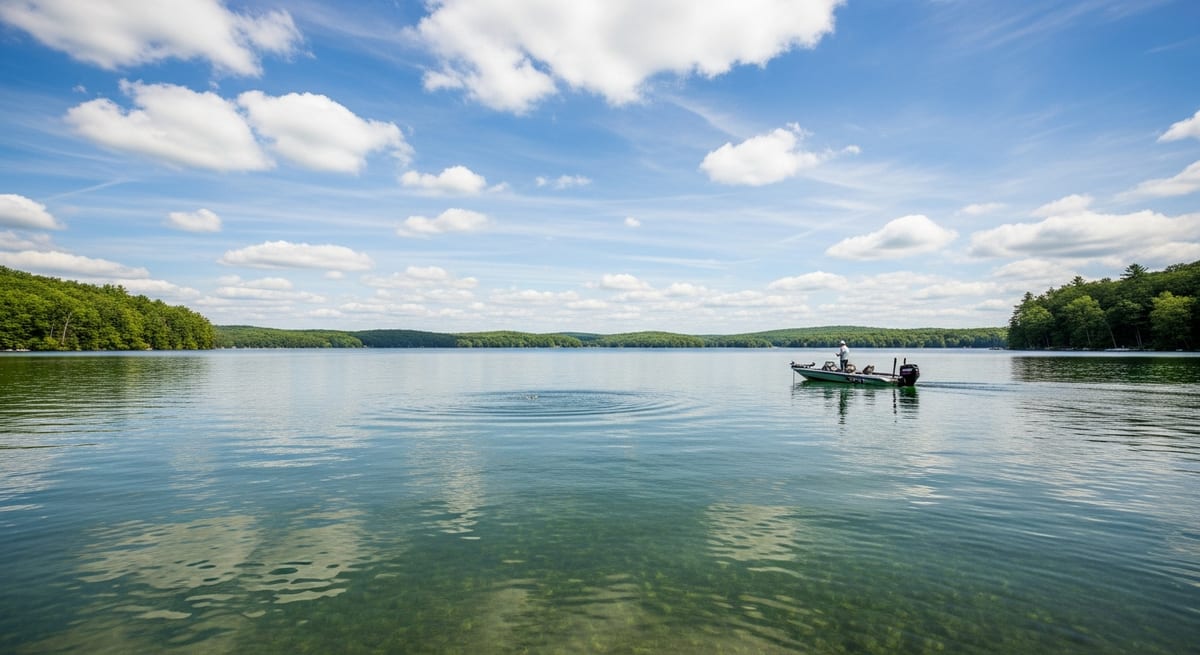
CT bass anglers who fish Candlewood Lake's deep humps through July and August describe a consistent pattern: when surface temps push above 80°F and largemouth lock into 20-28 feet over structure, reaction baits get refused and the drop shot gets hit. That community consensus comes up reliably on CT fishing forums and in Candlewood-specific fishing groups, where post-front finesse tactics are a recurring thread topic through the second half of summer. The drop shot suspends a soft plastic at a fixed height above a bottom weight, keeping the bait shaking in the strike zone without moving laterally. Bass in pressured, clear-water conditions will often investigate a stationary shaking bait long after they've refused anything that moves through their zone.
What the Rig Does, and Why Pressured Bass Don't Refuse It
The drop shot keeps a soft plastic suspended at a height you control, set by how far above the weight you tie your hook. The weight sits on the bottom; the bait floats or shakes in the water column at hook height. Subtle rod shaking creates lifelike action with zero horizontal movement.
CT kayak anglers who fish Candlewood's deep structure in summer consistently note that the rig's key advantage isn't its action alone. It's dwell time. The bait stays in the exact spot where a fish is holding rather than passing through it. Bass that won't commit to a moving bait will often drop on a stationary one after watching it for several seconds.
Components:
- Drop shot hook (size 1 or 1/0, octopus-style or Gamakatsu G-Finesse; CT finesse anglers most frequently reference the G-Finesse in forum discussions of this technique)
- Drop shot weight: cylindrical or round, 1/8-1/4 oz for most CT freshwater applications; 3/8-1/2 oz for deeper Candlewood structure or windy conditions
- Soft plastic: 4-5 inch finesse worm, nose-hooked with point exposed
- Spinning gear with 8-10 lb fluorocarbon main line, lighter line can help in particularly clear Bantam or Candlewood conditions, but many CT anglers fishing rocky humps run 10 lb to handle structure contact without worrying about abrasion
Tying the Drop Shot: The Palomar Variant CT Finesse Anglers Use
Step 1: Tie the hook to the main line using a Palomar knot, leaving an 18-24 inch tag end below the hook. This tag end becomes the leader to the weight.
Step 2: After completing the Palomar knot, run the tag end back through the hook eye from the front. This keeps the hook riding horizontally rather than angling downward, which affects how the bait presents in the water column.
Step 3: Attach the drop shot weight to the tag end using the line clip on the weight. Most drop shot weights have a quick-change clip that allows length adjustment without retying.
Step 4: Nose-hook the soft plastic through the very tip of the nose with the hook point exposed. Unlike Texas or Carolina rigs, drop shot baits aren't fished weedless. The exposed hook is part of what makes them effective in open-water and structure applications.
Adjusting hook height: 12-18 inches is the standard starting point. Candlewood anglers targeting suspended largemouth over deep humps sometimes run longer leaders: 24 inches or more, when fish are reading high above the structure on their fish finders. River smallmouth anglers on the Salmon River and upper Housatonic often go shorter, as low as 6-8 inches, to keep the bait tight to the rocky bottom where fish are staging.
CT Waters Where Drop Shot Anglers Consistently Find Bass
Candlewood Lake is the CT water most frequently associated with drop shot success in summer bass conversations. The deep humps off the western shore and secondary points on the eastern basin hold bass at 20-30 feet through July and August when surface temps push fish below the thermocline. CT bass forum regulars describe vertical presentations, lowering the rig directly to structure and shaking in place, as the most productive approach on these suspended fish. Both largemouth and smallmouth respond, with smallmouth tending to hold tighter to rocky points and largemouth more commonly found suspended over the humps.
Bantam Lake in Litchfield County has a clear-water character that rewards finesse tactics through the warm season. Anglers who fish Bantam in late summer describe post-front conditions where bass that won't touch reaction baits will take a shaking 4-inch finesse worm on a drop shot. Rocky structure and lighter pressure relative to Candlewood make it a reliable spot when finesse is the right call.
The lower Housatonic (Derby/Shelton reach) gives shore and kayak anglers access to deep channel edges and bridge pilings where bass stage through summer. Tidal influence creates holding areas where drop shots fished near channel margins produce largemouth and smallmouth in the same water. CT DEEP's standard freshwater bass regulations apply here: 12-inch minimum, 5-fish bag limit, and it's worth verifying the current year's proclamation before the season, as DEEP occasionally adjusts limits for specific drainages.
River smallmouth: CT anglers who fish the Salmon River and upper Housatonic for smallmouth rate the drop shot as their most-reached-for finesse technique when fish are holding in current seams over rocky substrate. The weight anchors on bottom; the bait floats at hook height in the current, providing action without the rig washing downstream.
Hook Height and the Adjustment CT Anglers Make First When Bites Stop
Hook height is the variable Candlewood and Bantam anglers most often discuss when the drop shot stops producing. The standard 12-18 inch leader works when bass are near the bottom, but fish suspended over Candlewood's humps are sometimes holding 3-6 feet above the structure. An angler running a short leader is presenting below the fish entirely.
What Candlewood regulars who fish vertically report:
- If sonar marks show fish well above the weight, lengthen the leader before assuming the bait is wrong
- On river smallmouth over rocky bottom, shorter leaders (6-10 inches) keep the bait in the zone where fish are staging near cover
- Dock bass. A reliable drop shot target in CT's smaller lakes and ponds, often respond to a 12-inch leader dropped straight down next to pilings in 8-15 feet of water
Retying with a new leader length takes two minutes on a spinning rod and is often the only adjustment needed when bites go quiet.
What the rig doesn't replace: The drop shot is a targeted technique, not a search bait. When covering water to locate fish, a crankbait, spinnerbait, or swimbait is faster. The consensus among CT bass anglers who fish tournaments on Candlewood and Bantam is consistent on this point: run a covering bait until you find active fish, then slow down and work the drop shot on them.
Baits and Colors CT Bass Communities Reach For
Roboworm Straight Tail Worm (4-4.5 inch): The worm most often mentioned in CT bass communities for drop shot applications. In Candlewood's clear water, natural shades come up frequently, colors in the Margarita Mutilator and Morning Dawn range are often cited on local forums, though Roboworm's color lineup changes seasonally and anglers should verify current availability at time of purchase. The tail floats naturally and responds to the slightest rod shake.
Zoom Finesse Worm (4.5 inch): Better stocked at CT tackle shops than some boutique alternatives, with solid action and a range of colors that translate well across water conditions. Watermelon Red Flake and Junebug come up consistently in CT bass forum discussions.
Shad imitations: Drop shot minnow-style baits work well when bass on Candlewood or the lower Connecticut River are keyed on shad in mid-column through summer and fall. CT river anglers also describe results with these profiles on Housatonic smallmouth during shad migration windows in spring.
Color selection: CT bass anglers fishing Candlewood's clear water most often cite natural colors, watermelon, green pumpkin, shad, smoke, as their defaults. In stained water common after rain events on the Housatonic and Salmon River, darker and higher-contrast options, junebug, black/blue, green pumpkin with chartreuse flake, come up more often in local reports.
A note on baits that appear in national drop shot guides: tail design and profile can vary across production runs and variants, so CT anglers recommend checking current product specs rather than relying on descriptions written for an earlier version of the bait.
EVERY SATURDAY MORNING
Weekly fishing intelligence
Nationwide conditions, what's biting, and honest gear deals. One email, no noise.
No spam. Unsubscribe anytime.