
CT Spring Fishing Runs Across Five Species Windows. Most Anglers Only Catch Two of Them.
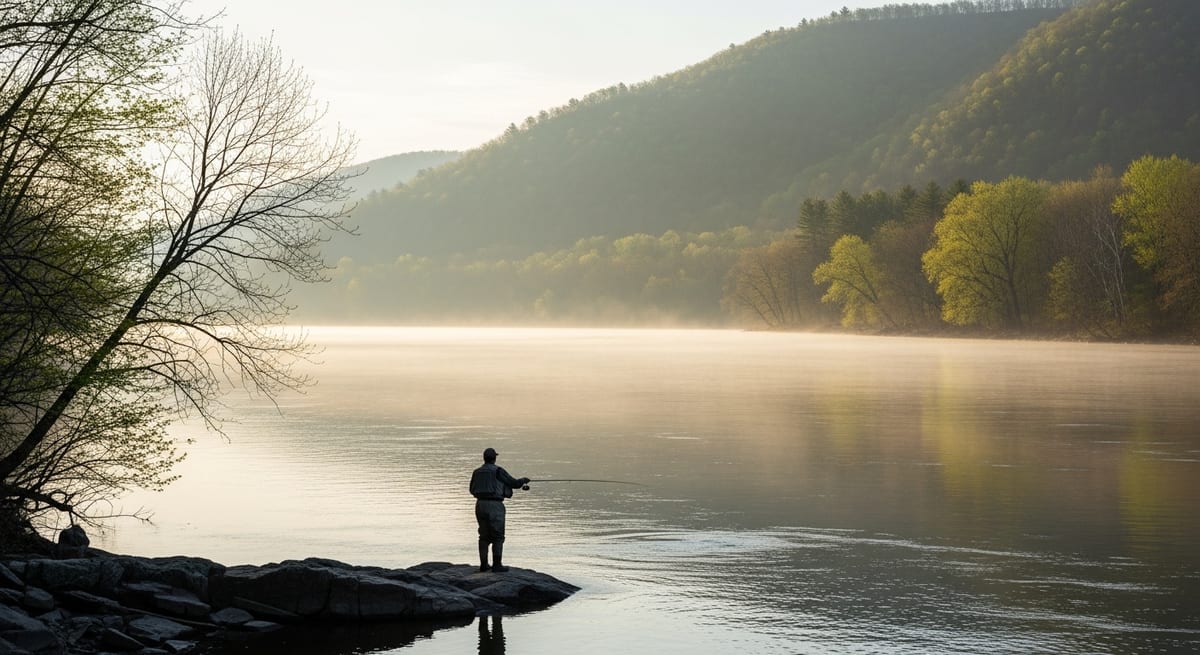
Yellow perch are spawning in Connecticut pond shallows before most anglers have pulled their gear out of storage, dEEP's ice-out records show some winters see active perch in the shallows as early as the last week of February. By the time the trout stocking trucks roll in April, anglers who paid attention in March have already had consistent action for weeks. The spring window in Connecticut spans five distinct fisheries: yellow perch, stocked trout, pre-spawn largemouth bass, Connecticut River shad, and early tidal-river stripers. Each follows a temperature-driven schedule that DEEP stocking reports, public run data, and years of angler-reported catches make reasonably predictable. They don't overlap cleanly, miss one window and you're typically waiting three or four weeks for the next to open. Most anglers show up when they hear the trout are in and walk away from four other fisheries they never knew were running. This breakdown covers the full sequence from ice-out through Memorial Day, including how to read public stocking data, where community reports consistently show concentrations, and what triggers each species to move.
March: Yellow Perch Are Already Active While Most Anglers Are Still Rigging Up
The ice-out trigger is the signal. As CT ponds shed ice, typically late February through mid-March depending on winter severity, yellow perch move into shallow spawning areas before most other species become reliably active. Anglers who fish these windows consistently report that perch action peaks on sunny afternoons when north-facing shallows warm a few degrees ahead of the rest of the pond.
Where fish concentrate: Shallow coves and protected shoreline structure in most CT ponds and lakes. Gardner Lake, Mashapaug Lake, Lake Zoar, and Bantam Lake show up repeatedly in early-season reports from CT fishing forums and local tackle shops. Depths of 2-6 feet near submerged brush or woody debris are where spawning aggregations form.
What works: Tube jigs and small grubs in 1/16-1/8 oz on ultralight tackle. Live minnows under a bobber. Small Rapala shad raps. Ultralight spinning gear in the 4-6 lb class keeps presentations natural in the cold, clear water.
The window runs roughly March through early April. Once water temperatures push into the mid-50s°F and bass begin moving, perch disperse from spawning aggregations and become much harder to target efficiently. Check current DEEP regulations for bag limits before heading out. They've been revised in recent statewide reviews.
April: Working the DEEP Stocking Calendar
According to DEEP's annual stocking reports, the state puts hundreds of thousands of trout, totals in recent years have been in the 500,000-fish range, into more than 100 designated waters across Connecticut. The program spans rainbow, brown, and brook trout in the 10-14 inch class, with a subset of larger trophy-size fish allocated to designated premium locations each season.
The single most useful move before you drive anywhere: Bookmark DEEP's online stocking report tracker and check it before you go. The reports update within days of each stocking and show exactly which waters received fish and when. Anglers who fish stocked trout consistently note that the first 7-10 days after stocking produces the most willing fish, before natural selection starts thinning the population.
Where experienced anglers focus in April: The Farmington River, including its designated catch-and-release and trophy sections. The Willimantic River, and the Natchaug River receive strong stocking attention and have solid public access. Smaller streams like the Salmon Creek and Moosup River tend to see lighter pressure and often fish well through the mid-April window when the main-stem rivers are crowded.
What works: Inline spinners (Rooster Tail, Panther Martin in gold or silver), small Rapalas, PowerBait (particularly effective on recently stocked fish conditioned to hatchery pellets), and nightcrawlers on a light slip-sinker rig. Recently stocked trout are far less selective than holdover wild fish, presentation matters less than timing relative to the stocking date.
A trout/salmon stamp is required in addition to a standard CT fishing license. Verify current season dates on DEEP's website, staggered stocking schedules vary by water and DEEP updates its stocking calendar each spring.
Pre-Spawn Largemouth: The Temperature Window That Produces the Season's Biggest Fish
The shift is abrupt. Largemouth bass that were sluggish and nearly uncatchable through February begin actively feeding as water temperatures climb through the 50-60°F band in April. The spawn itself typically runs late May through early June in Connecticut once temperatures stabilize between 62-68°F, but the pre-spawn feeding period in the weeks before is when many CT anglers report their heaviest fish of the year.
What the fish are doing: Bass move from winter staging areas in deeper water toward transitional structure, secondary points, the mouths of coves, and north-facing banks that absorb heat earliest. Anglers fishing CT reservoirs report that pre-spawn fish stack on the first significant depth change between 4 and 10 feet, and that Gardner Lake, Lake Zoar, and Candlewood Lake produce consistent action once the pattern turns on.
Gear by temperature range: Slow-rolling a spinnerbait along the edge of the first wood or rock cover in 4-8 feet consistently draws strikes through most of April. Jigs worked deliberately along bottom transitions. Shad-pattern or crawfish-pattern crankbaits in the 35-55°F range. As water temperatures push past 58-60°F, shallow presentations, including topwater on calm mornings, start producing.
The consensus among anglers who fish CT lakes hard in spring is that the best fishing often lands in the transitional week or two when some fish are still staging deep and others have already moved shallow. Covering a range of depths outperforms committing to a single zone too early. Mid-April through mid-May is the window; once beds appear, fish behavior shifts entirely.
The Shad Run Most CT Anglers Drive Past on I-91
The American shad run in the Connecticut River is one of the most underappreciated fisheries in the state. Shad are anadromous. They spend their adult lives at sea before returning to spawn, and the Connecticut River hosts one of the largest remaining shad runs on the East Coast. Typical fish run 3-6 lbs, with larger females commonly reaching 6-8 lbs; most years the run peaks from mid-April through late May.
Where the fish concentrate: The entire tidal Connecticut River from Old Saybrook north holds fish during the run, but two locations consistently produce the heaviest action. Anglers fishing the area below the Enfield Dam. The first significant upstream barrier, describe it as some of the most reliable shad fishing in New England, with fish stacking below the dam during peak migration. The Salmon River confluence near East Haddam also holds fish during the run's peak weeks.
What CT shad anglers use: Shad darts in chartreuse, red, or white. The specialized small metal lures that have defined this fishery for generations. Fish them on a slow dead drift just above bottom, or run a tandem rig with two darts spaced about 18 inches apart. Fly fishing with small flash streamers is equally productive when fish are showing at the surface.
A note on behavior: Shad are generally thought to feed minimally during the freshwater run. The leading theory among shad anglers is that fish respond to competitive or territorial cues rather than active hunger, which is why presentations near known concentration points outperform open-water drifts. Shad are covered under a standard CT fishing license with no additional stamp required.
Late May: First Stripers in the Tidal Rivers
Striped bass begin pushing into Connecticut's tidal rivers and harbors from Long Island Sound in May, tracking the alewife and herring migration that moves north as coastal water temperatures climb. Fish that arrive earliest in the tidal rivers tend to run on the larger side. Stripers following the spring baitfish migration up the coast often include fish that have been building condition since winter.
Where tidal-river reports start first each season: The Salmon River mouth at Salmon Cove in East Haddam consistently draws some of the earliest tidal-river reports in the state, according to CT fishing forums and local tackle shop reports from recent seasons. The Niantic River, Mystic River, and the Connecticut River below the Salmon Cove confluence round out the early-arrival zones. Rocky shoreline access at Harkness Memorial State Park, Ocean Beach Park, and Hammonasset Beach State Park produces fish from shore once coastal water temperatures climb past 55°F.
Proven setups: Live herring or alewives on a 3/0 circle hook with a light egg sinker, free-lined or under a float in moving water. Swimming plugs (Bomber A-Salt, Yo-Zuri Hydro Pencil), bucktail jigs in white or chartreuse, and large soft plastics (Hogy protail, Tsunami shad profiles) at dawn and dusk around moving water.
The standard CT striped bass slot limit applies, verify current size and possession limits in DEEP's marine fishing regulations, as striped bass rules have been subject to Atlantic States Marine Fisheries Commission adjustments in recent seasons. Anglers who make a point of getting on the tidal rivers in May, before summer boat traffic builds and fish adjust to heavier pressure, consistently report the season's most favorable action.
EVERY SATURDAY MORNING
Weekly fishing intelligence
Nationwide conditions, what's biting, and honest gear deals. One email, no noise.
No spam. Unsubscribe anytime.