
CT Bass Has a Closed Season That Catches Freshwater Anglers Off Guard Every April. The DEEP Freshwater Guide Has Other Surprises Worth Reading Before You Launch.
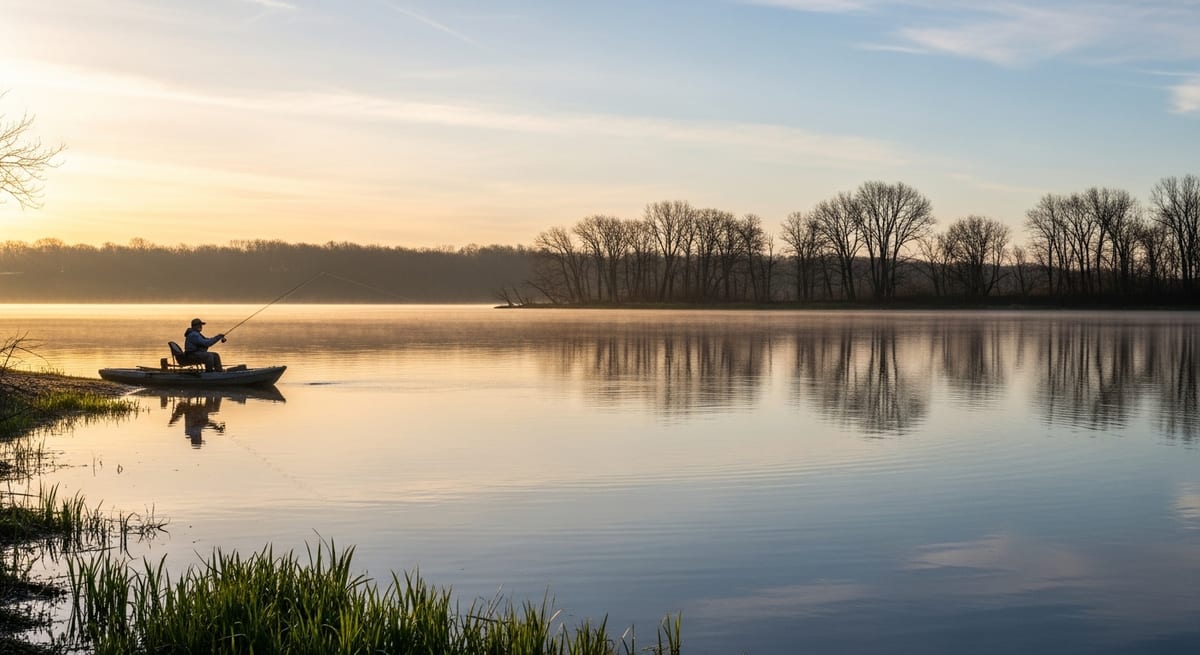
The bass closed season, april 1 through the second Saturday in June, is the regulation CT freshwater anglers most consistently overlook. Wardens working popular spring fisheries report that anglers arriving at lakes like Bantam Lake in Litchfield or Bashan Lake in East Haddam in May are routinely surprised to learn bass season is closed at all, having assumed largemouth and smallmouth were year-round like chain pickerel. The distinction matters: fishing for bass during the closed window is illegal even on a catch-and-release basis. CT DEEP updates the freshwater regulations annually, and the changes aren't always obvious without reading the current version. What follows is a section-by-section breakdown of what the current CT Fishing Guide covers. Always pull the authoritative version directly from portal.ct.gov/DEEP/Fishing before you fish, not last year's printed copy, not a summary from a forum post.
Getting a CT Freshwater License: Current Fee Structure and Where to Buy
Anyone 16 or older, resident or not, needs a valid CT freshwater fishing license to fish inland waters. The fee structure shifts based on residency and age, with discounts for anglers 65 and older and for qualifying veterans. CT DEEP adjusts fees periodically; confirm current pricing at ct.gov/deep before purchasing rather than relying on figures from a prior season. Resident and non-resident annual options, plus short-term non-resident licenses suited to out-of-state visitors, are all listed there.
Children under 16 fish free. No license required.
Licenses are available online at ct.gov/deep or through licensed vendors across the state, including most bait shops and select retail locations. Anglers heading toward the Farmington River corridor find Upcountry Sportfishing in Riverton a convenient stop. They sell licenses and carry current information on river conditions. Annual all-terrain sportsman licenses bundling fishing and hunting are available for anglers who do both.
One detail worth confirming at purchase: the license start date, particularly for early-season buyers. The date printed on the license is the legal start, confirming it before the first trip of the year avoids any ambiguity at the launch.
Trout Season Dates, Wild Trout Designations, and Why the Farmington Is Different
Trout season on most stocked CT waters opens the third Saturday in April and runs through the last day of February the following year. The closed gap, march 1 through the Friday before opening day in mid-April, applies to most stocked stretches. It matters because trout fishing on those waters picks up right as the closure begins.
Year-round trout areas are the exception worth knowing cold. Certain designated stretches, wild trout management areas, remain open twelve months. The upper Farmington River above Riverton, specific sections of the Salmon River, and several other quality streams carry this designation. Anglers who fish the upper Farmington through People's State Forest in late winter report that even during sparse hatch conditions, fish are holding and willing in the slower runs. The year-round designation makes that fishing legal where a nearby stocked stretch would be closed. The DEEP regulations book lists current wild trout areas by name; confirm the designation before making the drive, because specific stretches can carry new restrictions year to year.
Size and bag limits on stocked waters (per the current CT Fishing Guide):
- Rainbow, brown, and brook trout: 9-inch minimum, 5-fish daily limit
- Wild trout management areas: size and bag limits vary by individual stretch designation. Some carry tighter daily limits, others are catch-and-release only. The regulations book lists each stretch individually; do not apply statewide defaults to designated wild trout water
- Lake trout: 15-inch minimum
Fly fishing only sections are scattered across the better streams in the state, no bait, no hardware, artificial flies only. The upper Farmington through People's State Forest includes fly-fishing-only water, and anglers new to the river frequently discover this after rigging up spin gear. The DEEP book lists all designated sections; check before setting up on any unfamiliar stretch.
The regulation mistake CT trout anglers most commonly make in early April: fishing stocked streams before the general season opens based on a tip rather than checking the current DEEP guide. Opening day shifts with the calendar year to year. The exact date is in the current regulations book.
Bass Has a Closed Season, wardens at Spring Launches Know Who Missed It
Largemouth and smallmouth bass season closes April 1 and doesn't reopen until the second Saturday in June. That window covers the spawn, and fishing for bass during it, even catch-and-release, is illegal in Connecticut.
The consensus among CT freshwater regulars, repeated across tackle shop counters and fishing forums every spring, is that the bass closed season is the regulation newcomers are most likely to skip because it feels counterintuitive. Bass are present and visible, and the assumption that they're year-round like pickerel is widespread. Wardens working launches at Bantam Lake in Litchfield and popular East Haddam access points in May consistently report encountering anglers who are unaware the season is closed.
Open season (second Saturday in June through March 31), per the current CT Fishing Guide:
- Size limit: 12-inch minimum
- Daily limit: 6 fish
- Catch-and-release is legal year-round, but once you decide to keep fish, size and possession limits apply
Bantam Lake in Litchfield, connecticut's largest natural lake, holds quality largemouth and draws significant pressure at season open. Anglers who fish the weed edges along the east shore regularly describe productive mornings in late June when surface temperatures climb into the upper 60s. Bashan Lake in East Haddam draws less pressure and carries an underrated smallmouth fishery; the public launch is straightforward.
Some CT waters carry water-specific bass regulations, tighter size limits or reduced bag limits that override the statewide defaults. If you're targeting a specific lake, look it up in the DEEP regulations book. A number of lakes carry 15-inch or larger minimums.
Confirm all limits against the current-year CT Fishing Guide. Bass regulations have been adjusted in recent revision cycles.
Pike, Pickerel, and Muskie: No Closed Season, but the Size Limits Vary Significantly
Northern Pike have no closed season in CT, with a 24-inch minimum size limit and a 2-fish daily limit. The Connecticut River backwaters hold some of the most accessible pike water in the state. Salmon Cove near the Salmon River confluence south of Haddam is well-documented among CT pike anglers as productive in early spring before the water warms; community reports from CT fishing forums describe fish in the high-twenties range coming out of the cove in late March on large soft plastics worked slow along submerged structure edges.
Chain Pickerel are the most accessible member of this family in CT, no closed season, 12-inch minimum, 10-fish daily limit. Pickerel are present in nearly every slow river and weedy pond in the state. Moodus Reservoir in East Haddam holds a strong pickerel population and a public boat launch with straightforward access.
Muskellunge are rare enough in CT that most freshwater anglers will never encounter one here. A handful of northwest CT waters have appeared in past DEEP stocking records as muskie recipients, candlewood Lake among them, but current stocking status should be confirmed directly with CT DEEP before targeting them, as stocking programs change year to year. The regulations set a 36-inch minimum and a 1-fish daily limit. Tiger muskie, the hybrid, carries the same regulations.
If you hook something in northwest CT that looks like a very large, heavily patterned pike with an outsized jaw, measure carefully before anything else.
Panfish, Catfish, Shad, and Eel: The Full Rundown on What the Guide Covers
Yellow Perch: No size limit, 50-fish daily limit, open year-round. Late-winter perch fishing on CT lakes draws a devoted local following. The ice-out window is noted across CT fishing forums as one of the more reliable freshwater bites in the state calendar.
Crappie (black and white combined): No size limit, 25-fish daily limit, open year-round. Coventry Lake off Route 44 holds a solid crappie population with a public access point that makes it a reasonable early-season panfishing destination.
Channel Catfish: 12-inch minimum, 10-fish daily limit. The Connecticut River holds channel cats through its main stem; night fishing with cut bait below the Enfield Dam is a summer tradition with a long-running following among local river anglers.
Carp: No size limit, no daily limit. CT treats carp as a rough fish with no harvest restrictions.
American Eel: Legal year-round with a freshwater license, no size limit, 25-eel daily limit. Eels are present in most CT rivers with tidal connections. The Connecticut, Salmon, and Housatonic all carry documented eel populations.
Sunfish (Bluegill, Pumpkinseed): No size limit, 50-fish daily limit.
American Shad: The Connecticut River shad run is one of the most closely followed spring freshwater events in the state. The run below the Enfield Dam typically peaks when water temperatures climb through the high forties into the low fifties, when the dart fishing draws the most attention from river regulars who track the run annually. Current regulations including the open window, size minimum, and daily limit are listed in the current CT Fishing Guide; shad rules have been adjusted in recent revision cycles and should be confirmed against the current-year guide rather than prior seasons.
All of these regulations are subject to annual revision by CT DEEP. The current CT Fishing Guide is free at portal.ct.gov/DEEP/Fishing.
EVERY SATURDAY MORNING
Weekly fishing intelligence
Nationwide conditions, what's biting, and honest gear deals. One email, no noise.
No spam. Unsubscribe anytime.