
Connecticut River Shad Fishing: The Spring Run Guide
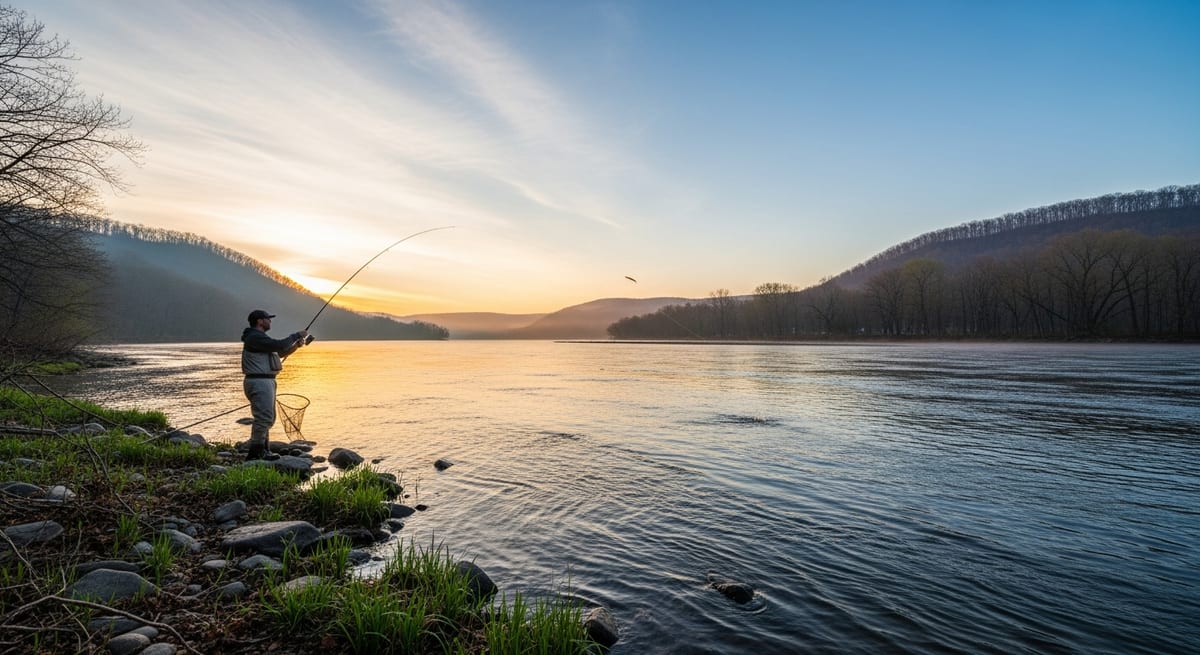
Below the Enfield Rapids in mid-May, shad stack so thick you can watch them rolling at the surface before you ever make a cast. The Connecticut River shad run is one of the East Coast's most underrated seasonal fisheries, hundreds of thousands of fish pushing upriver from the tidal flats near Haddam all the way to the Enfield Dam area, willing to hit small metal darts and shad flies on a dead swing. These fish fight hard for their size (most run 4-7 lbs on light tackle) and the bank access along the lower river is genuinely good. Connecticut freshwater anglers circle this window on the calendar every year. Miss it and you're waiting another twelve months.
The Shad Run: When and Where
Shad spend their adult years in the Atlantic and return to the same river where they hatched to spawn. The Connecticut River run has been building since restoration efforts began in the 1970s and now supports one of the stronger shad fisheries on the Atlantic coast.
Timing: The run typically kicks off in the lower tidal river when water temperatures climb into the low-to-mid 50s°F, often mid-April around Haddam and Higganum. Fish push upriver as temps rise, reaching Hartford by early May and concentrating below the Enfield Dam area by late May. Many anglers find peak action from mid-May through early June, though conditions shift by year.
The run closes fast. By late June, warming water shuts fish down and they stop holding. Don't wait on it.
Checking conditions: The USGS Haddam gauge station tracks real-time water temperature on the Connecticut River. A reliable tool for timing your trips around the run.
Prime locations on the Connecticut River:
Haddam/Higganum boat launch (Haddam): Right in the tidal zone where shad stage before moving upriver. Good for both boat and bank anglers. One of the most productive and accessible spots on the river, especially early in the run.
Middletown boat launch (Middletown): The river widens here and shad push through in numbers through late May. Solid bank access with enough room to work a full swing.
Portland causeway area (Portland): The old bridge pilings and causeway structure break up current and create holding water. One of the better shore-fishing setups on the lower river. The current edges here are textbook shad water.
Enfield Rapids (Enfield/Windsor Locks): The natural riffle below the Enfield Dam is the historical head of migration. Fish concentrate in the water just below the fast stuff. The CT DEEP Enfield boat launch provides access. Fish that have pushed all the way upriver tend to be in the best shape, and the Enfield stretch produces them consistently.
Windsor Locks/Suffield bank: The section between Enfield and Hartford holds shad during peak run with less pressure than the better-known spots. Worth fishing if the popular launches are crowded.
Anglers who hit the run every year typically maintain a season log of dates, water temps, and locations. The fishing log and catch records guide covers the catch-records habit that turns one good shad season into a multi-year pattern you can lean on.
Tackle and Technique
Shad fishing runs on simple, specialized gear. Most anglers on the Connecticut River use the same basic setup.
Rod and reel: A 7-8 ft medium-light spinning rod is the standard starting point, paired with a 2500-3000 series reel. Most anglers fish 8-10 lb braid with a 6-8 lb fluorocarbon leader around 8-12 inches. Shad have small mouths and the lighter leader typically improves presentation.
The shad dart: The go-to lure on the Connecticut River. A shad dart is a small lead-head jig, typically 1/4-1/2 oz, with a feathered or dressed tail in white, yellow, red, or chartreuse. Cast quartering downstream and let it swing on a tight line. The current does most of the work. When a shad connects, the strike is unmistakable: a hard head-shake followed by fast, strong runs.
Tandem rig: Two shad darts in tandem, one on the end of the line, a second on a dropper 12 inches above, is the standard setup that doubles your presentation. Double strikes happen more than you'd expect and they don't get old.
Shad flies: For fly anglers, an 8-9 weight rod with a floating or intermediate line works well. Small Clousers, epoxy flies, and dedicated shad patterns on a slow swing produce well in faster water. Fly fishing for shad is heavily underutilized on the Connecticut River. Most people don't realize it's a legitimate option.
Retrieve: Cast quartering downstream, keep tension, and let the dart arc through the current. No active retrieve needed for most of the swing. When the dart hangs directly downstream, slowly retrieve and repeat. In slower water, a strip-strip-pause tends to outfish a dead swing.
Reading the Water
Shad hold in specific water types, knowing where to look cuts out a lot of wasted casts.
Current seams: Shad migrate upriver along the edges between fast and slow water. Cast into the fast current and let the dart swing through the seam into the softer water on the far side. Strikes most often come right in that transition zone as the dart slows.
Depth: Most fish run 4-8 feet deep during migration. Heavier darts (1/2 oz) get down faster in stronger current; 1/4 oz is fine in slower or shallower water. If you're not getting hits, go heavier before you start swapping colors.
Tidal influence: Below Middletown, the Connecticut River is tidal. Shad push upriver more actively on incoming tide. Many anglers find the two hours before to two hours after high tide at the river mouth most productive. Check tidal charts for Old Saybrook and account for the upstream transit time when you're fishing Haddam or above.
Regulations and Fish Care
Regulations: American shad are managed under a formal stock assessment and CT DEEP adjusts rules based on annual run data. Under recent seasons, the Connecticut River shad season has run from April 1 through June 15, with a 12-inch minimum size and a daily bag limit of 6 American shad per angler. Hickory shad. The smaller cousin that mixes into the run, carry a separate, more generous limit, often 20 fish per day. Always verify current rules at the CT DEEP Inland Fisheries website before you go. Numbers and dates above reflect recent seasons and may not match the current year.
Eating quality: American shad are very good table fare, firm, slightly oily white meat with real flavor. The challenge is the bones. Shad are one of the boniest freshwater fish you'll encounter, with a complex Y-bone structure that makes standard filleting a mess. Scoring the flesh before cooking breaks down those bones and makes them edible. Shad roe (the egg skeins from female fish) is a spring delicacy, pan-fry in butter with a strip of bacon and don't overthink it.
Releasing fish: Shad tire out fast in warm water after a long ocean migration. If you're releasing, do it quickly. Keep the fish wet, support it in the current, and skip the extended photo session. Twenty seconds out of the water in 65°F+ conditions is too long.
EVERY SATURDAY MORNING
Weekly fishing intelligence
Nationwide conditions, what's biting, and honest gear deals. One email, no noise.
No spam. Unsubscribe anytime.