
The October Bunker Migration Is the Organizing Event of the CT Fall Striper Season. What Sound Regulars, Charter Captains, and DEEP Creel Data Report About Timing the Run and Landing Its Biggest Fish.
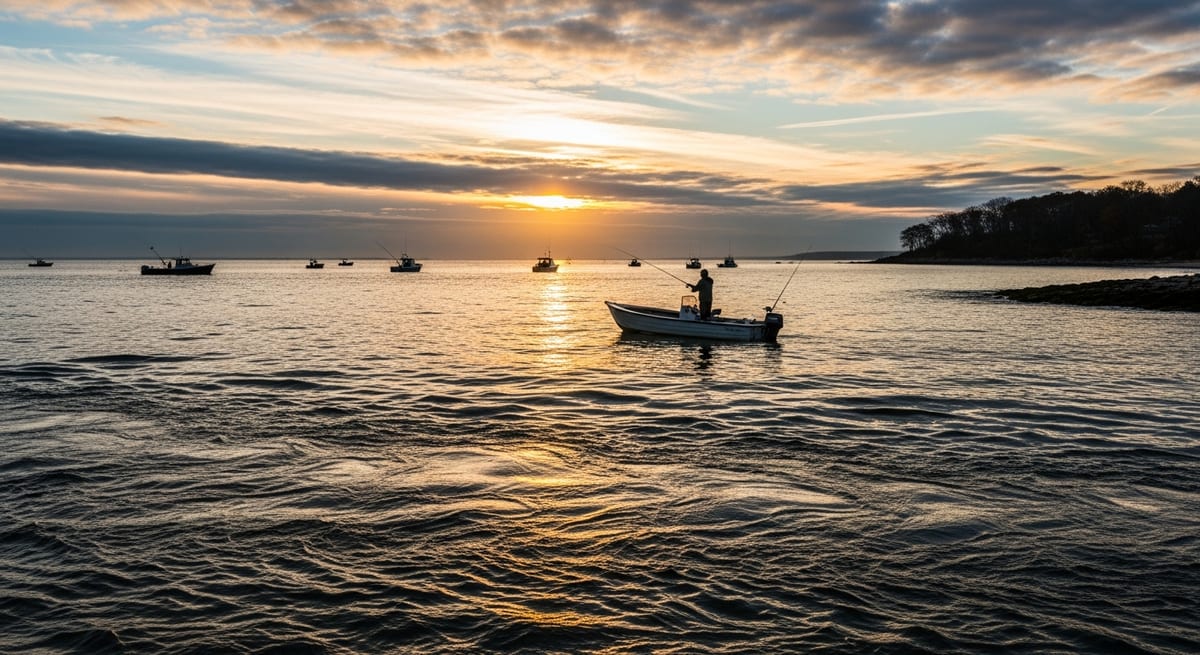
CT charter captains fishing Long Island Sound in October regularly report their largest striped bass of the year. Fish noticeably heavier than same-length fish caught in spring, because fall migrants arrive with months of bunker feeding behind them. Sound regulars who have tracked the run across multiple seasons describe a concentrated six-week window that, in the view of most of the CT saltwater community, defines the whole coastal fishing year. A note before tactics: CT DEEP Marine Fisheries regulations set the recreational striped bass minimum at 28 inches and a one-fish-per-day bag limit for most of the season. Check the current year's DEEP Marine Fisheries guide before heading out. The Atlantic States Marine Fisheries Commission has adjusted striper limits several times in recent seasons and the specific rules can shift year to year. The fall run draws significant DEEP enforcement attention on the Sound; anglers who are not current on the regs are fishing into real citation risk.
Why Sound Regulars Say October Fish Are a Different Class
The fall striper migration is driven by temperature and food. As Long Island Sound cools from midsummer highs, striped bass that spent the summer scattered through the Sound consolidate and begin moving toward their wintering grounds off the mid-Atlantic coast. Before they leave, they feed aggressively, gorging on bunker (menhaden), mullet, and any other available baitfish.
CT charter captains who fish the run consistently describe October stripers as a noticeably different animal than summer fish of the same length: more girth, more resistance, better conditioned. Sound regulars attribute the body condition difference to weeks of sustained bunker feeding before the fish push south. The same fish that was catchable in August is measurably heavier by late October.
The bunker connection: Anglers who fish the Sound in fall report that the bunker schools are the organizing element of the whole run. When you find concentrations of menhaden, you find the stripers. Large bass and bluefish follow and herd bunker along the CT shoreline through September and into October. The signals the CT striper community watches: birds actively working the water's surface, dark greenish-brown water color, oily surface slicks, and scattered boils at the edges of bait schools.
Temperature Windows and Timing: What NOAA Buoy Data and Charter Logs Show
September: Anglers fishing the eastern Sound report the first significant bunker concentrations and large-bass sightings in September, when NOAA buoy data at the Race Point and New London stations typically shows surface temperatures in the mid-60s to low 70s °F. The eastern Sound, niantic Bay, the Thames River mouth, and the Fishers Island Sound area, tends to cool 1-2 weeks ahead of the western Sound, and most early fall run reports originate there.
First week of October: As water temperatures approach the low 60s °F, reports from Sound regulars and charter logs consistently describe an acceleration in the bite. Bunker schools reach peak density during this window. Anglers who fish the run across multiple seasons say the most productive large-fish days cluster here, early morning topwater or bunker presentations, incoming tides at evening.
Mid-October: Charter captains and shore anglers from Milford, Bridgeport, and Greenwich report that as bunker schools continue their westward migration, the western Sound sees its peak fall action during this period. Sound regulars track the leading edge of the bunker movement along the coast; DEEP Marine Fisheries catch reports and public fishing forums document the westward progression most seasons.
November: Reports from the eastern Sound note that late fish persist even as the broader run thins. When NOAA buoy data from the Block Island Sound and New London stations shows surface temperatures consistently in the low-to-mid 50s °F, the CT striper community generally reports that the main run is winding down, though the precise timing varies by location and year. Charter captains consistently advise checking buoy data in real time rather than relying on calendar benchmarks alone.
The Tactics CT Fall Run Anglers Reach For When Bunker Schools Appear
Live-lining bunker: Anglers who fish the Sound in October consistently describe live-lined bunker as the top fall technique. Hook the bunker through the back near the dorsal fin on a 7/0-9/0 circle hook, free-line or fish on a fish-finder rig, and let the bunker's panic swimming do the work. Community reports from the eastern Sound associate this presentation with most of the 40-inch-plus fish reported from the fall run.
Bunker chunk: Cut bunker into 3-4 inch sections and fish on a circle hook on a fish-finder rig on the bottom. Drifting chunk through a rip is a technique CT charter captains cite frequently. The scent trail draws bass in murky water conditions where visual presentations lose effectiveness.
Large swimbaits and surface plugs: When bass are busting bunker on the surface, Sound regulars describe casting large swimming plugs, danny Plug, Gibbs Popper, large SP Minnow, to the outside edge of the commotion. The CT striper community is consistent on this point: big fish tend to circle the perimeter of a school, not drive through the center alongside smaller bass. Cast to the edge, not into the boil itself.
Bucktail jig in the rips: At the Race, at the Housatonic River mouth, and at rip areas along the western Sound, a 2-4 oz bucktail jig worked through the current change is the traditional fall technique CT striper veterans reach for. Work the jig with the current and let it swing through the rip. The Race draws dedicated fall effort from CT boat anglers specifically because the currents there concentrate bait and create the kind of holding structure that keeps large fish through the tidal change.
Shore casting: Shore anglers at Hammonasset Beach State Park, the New Haven breakwaters, and the Thames and Niantic river jetties report strong fall surface plug results during dawn and dusk windows when bass push bunker against shallow structure. Pencil poppers and needlefish are the standard community choice; the consensus is to fish heavy enough to cast into an onshore wind, which is common at CT beaches in October.
Reading Birds, Bait, and Current: How Sound Anglers Mark Productive Water
Birds as navigation: Anglers who fish the fall Sound use bird activity as primary navigation for locating bait and bass. Gannets making high-angle plunge dives from altitude mark bunker being driven deep by stripers below, when gannets are actively working, the CT striper community treats that as a top-priority target worth repositioning for. Terns hovering and picking near the surface mark smaller bait: sand eels, juvenile herring, or peanut bunker.
Surface signals: Bunker schools create a distinctive oily slick and a darker, greenish-brown water color that experienced Sound anglers distinguish from clean water at distance. Stripers working through bunker show as scattered surface explosions at the school's perimeter. Sound regulars recommend approaching from downwind or from the current side, and cutting motor well short of feeding fish, driving through an active school breaks up both bait and bass.
Rip lines: The junction between different temperature water masses creates surface rip lines, visible color changes running in long irregular lines across the Sound. Bait concentrates along rip lines, and the CT striper community consistently reports that the productive zone sits at the edges of a rip, not through the middle of it.
Tide and current: Anglers who have fished the fall run across multiple seasons report that the 2-3 hours around tidal changes concentrate fish at current-break structure. The specific optimal tide phase varies by location. The Race fishes differently than Niantic Bay, which fishes differently than the Housatonic mouth, but current movement is the activating factor the CT striper community consistently returns to when mapping productive fall days. Plan the session around the tide chart.
EVERY SATURDAY MORNING
Weekly fishing intelligence
Nationwide conditions, what's biting, and honest gear deals. One email, no noise.
No spam. Unsubscribe anytime.