
False Albacore (Little Tunny) Fishing in Connecticut: The Fall Run Guide
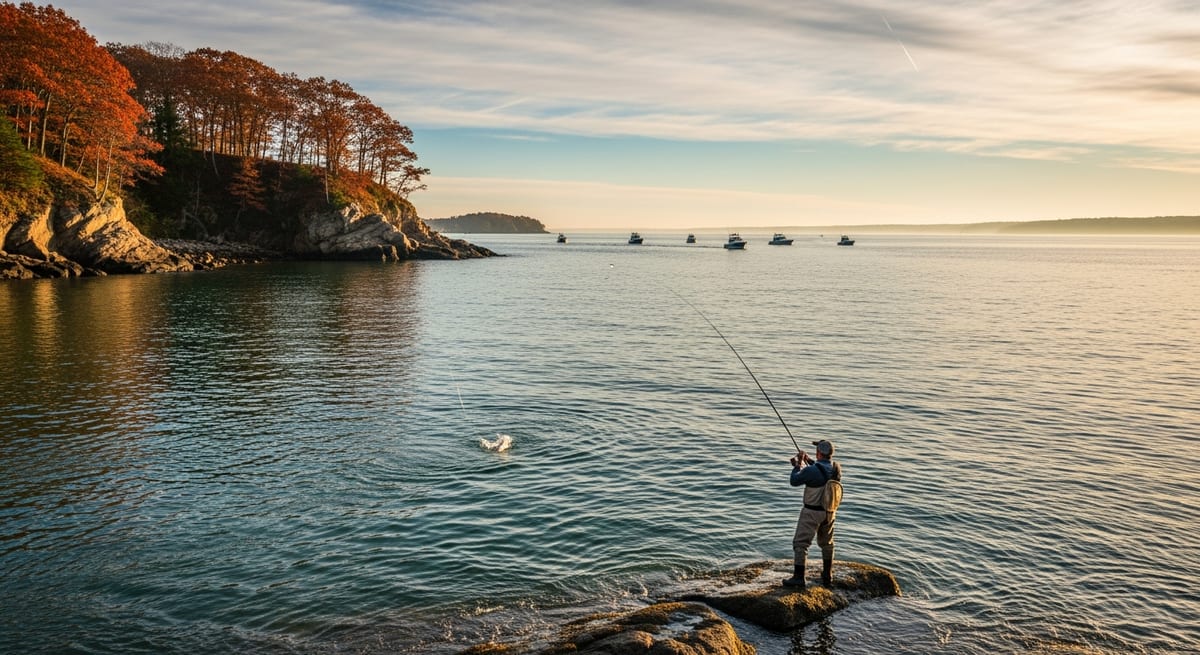
Niantic Bay sees its first false albacore blitzes when Long Island Sound temperatures drop into the upper 60s, sometimes as early as late August in a warm year, sometimes not until the second week of September. By mid-October, the fish are gone. That's your window: six weeks if you're lucky, four if a nor'easter pushes through early. These fish, locally called 'albies', arrive already locked onto bait, push schools of silversides and anchovies against the shoreline in explosive surface feeds, and refuse artificials that look even slightly wrong. They don't jump but they burn line in long, screaming runs that'll test every knot in your terminal tackle. The fall albie run is the most electric two months in Northeast saltwater fishing, and catching them consistently requires preparation.
What Are False Albacore?
False albacore, locally called 'albies' or 'little tunny', are a small tuna species, bullet-shaped and built entirely for speed. They're often mixed up with Atlantic bonito, which also runs the CT coast in fall, but bonito wear stripes on the upper back while albies have the distinctive worm-like markings on their backs and dark spots near their pectoral fins. They're also unrelated to canned albacore tuna, despite sharing the name.
On the CT coast, albies typically run 5-12 lbs, though fish over 15 lbs show up every season. On medium-light spinning gear they fight like something considerably larger, long, powerful runs that don't stop until the fish tires. They're not good eating; the dark, oily meat puts most people off, which makes catch-and-release essentially universal. That's fine, albie populations appear to handle recreational pressure well, and the fall run continues to produce fish in Connecticut year after year.
Where to Find Albies on the CT Coast
False albacore move into Connecticut's Long Island Sound in early September, chasing bait schools, atlantic silversides, bay anchovies, and sand eels. That stack in the Sound's nearshore waters through late summer. Generally, the eastern end of the state tends to see fish first, with action often moving westward as the season progresses, though bait concentrations and water temperature drive everything, and fish don't follow a strict timetable.
Top CT locations:
Niantic Bay and adjacent shoreline (Waterford, East Lyme): One of the most consistent albie spots in the state. Tidal current structure, concentrated baitfish, and access to nearby deeper water make this a reliable early-September location. Shore access at the Niantic Bay Boardwalk; kayak launch at Rocky Neck State Park.
Fishers Island Sound (Groton, Mystic area): Stronger current and structured bottom concentrate bait and predators here. Early in the run, albies push through regularly, kayakers and small boats do well working current seams and channel edges off Groton Long Point.
New Haven Harbor mouth and the Thimble Islands: Mid-season (late September) as fish work west, the structure around the Thimbles and the outer harbor edges see regular activity. The Thimbles offer excellent rock structure accessible by kayak from Rogers Island launch in Stony Creek.
Compo Beach (Westport) and Sherwood Island State Park: Late-season spots, typically early to mid-October, as fish continue moving west along the Sound. Surfcasters score here when fish push bait against the beach. Sherwood Island has free shore access from the state park.
Shore vs. boat: Shore fishing albies is harder. Fish need to push bait within casting range, which usually means a blitz right on the rocks or beach. Kayak access dramatically increases your options. Boat access gives you the most flexibility to follow fish as they move.
What They Eat and Why They're Hard to Catch
Albies key almost exclusively on whatever specific bait they're chasing at the moment. They'll swim through a school of perfectly presented lures and ignore all of them if the size, shape, or speed doesn't match what's in the water. Presentation matters more than almost anything else.
The primary bait targets in CT Sound:
- Atlantic silversides (spearing): The most common albie forage in the Sound, slim silver baitfish, typically 2-3 inches. Match with sparse, slim flies or soft plastics in silver/white in the same size range.
- Bay anchovies: Similar size to silversides with a slightly rounder profile. Often mixed with silversides in the same bait schools. The same presentation typically covers both.
- Sand eels: Thin, elongated profile that's harder to match with conventional lures. A slim epoxy jig or sparse Clouser tied long on a size 2 hook can get it done.
- Peanut bunker (juvenile menhaden): When albies are on peanut bunker, they're generally easier to catch, larger profile, more forgiving presentation. A 3-4 inch paddletail in white or chartreuse often produces.
The standard rule: match the hatch. Size matters more than color. Speed matters nearly as much, albies want a fast, erratic retrieve, but if your lure is moving faster than the bait they're chasing, they'll ignore it.
Tackle and Presentation
Spinning setup: A 7-9 ft medium-fast spinning rod with a 2500-3000 size reel handles most albie situations. Run 10-15 lb braided main line with a short fluorocarbon leader: 12-18 inches maximum. Longer leaders dampen action on small artificials and cost you hook-ups.
Fly fishing: A 9 ft 8-10 weight rod with an intermediate sink-tip or floating line works well in most conditions. Clouser Minnows and EP Baitfish patterns in white/olive, typically sizes 2-6, are among the most consistently productive flies for CT albies. Strip fast: 18-inch strips with occasional pauses. Getting the fly into the blitz before it moves is half the battle.
Best lures for CT albies:
- Small soft plastics, typically 2-3 inch paddle tails or shads in white/silver, on 1/8 to 1/4 oz jig heads
- Epoxy jigs in silversides colors, typically 1/2 to 1 oz for casting distance
- Hogy Epoxy Jig, one of the most reliably consistent producers in the Sound
- Spooks and walk-the-dog surface lures when fish are on top and feeding on larger bait
- Small tins (1/2 oz diamond jigs) often produce when other presentations won't
Retrieve: Fast. Strip fast, reel fast, pause occasionally. Albies key on erratic movement, slow retrieves almost never work. If fish are showing but ignoring you, speed up before switching lures.
Reading a Blitz
An albie blitz is unmistakable: the surface erupts, terns and gulls stack over the fish, bait scatters in every direction. The challenge isn't finding them. It's positioning before the blitz moves.
From shore: Cast to the edge of the blitz, not the center. Fish on the edges are less spooked by the chaos. Let the lure sink a foot or two and retrieve fast. If the blitz passes you, don't cast directly at the feeding fish. The commotion will push them down. Let things settle and watch for the next blow-up up-current.
From a kayak or boat: Don't motor into the blitz. The noise breaks it up immediately. Position 50-75 feet upwind or up-current of where the fish are heading, cut the engine, and cast into their path. Let them come to you.
When fish go down: Albies feed in bursts and sound quickly. When they go down, stop casting, watch the current and anticipate where they'll surface next. They typically reappear up-current from where they went down, usually within a few minutes. Anticipate instead of chasing.
Regulations and Handling
Regulations: False albacore are not subject to minimum size or bag limits in Connecticut. They're managed primarily as a catch-and-release sport fishery. Always verify current CT DEEP Marine Fisheries regulations before your trip, as rules can change between seasons.
Handling: Albies are powerful and fragile. A few things that matter:
- Minimize air exposure, aim for 20 seconds or less if you're taking a photo
- Keep the fish in the water throughout the unhooking process as much as possible
- Use a rubberized mesh net if landing from a kayak or boat, knotted nylon strips slime coat
- Don't squeeze the fish's midsection; internal organs don't tolerate pressure
- Revive by holding the fish upright facing into the current, or idle the boat slowly forward until the fish kicks off on its own
Releasing a fish in rough shape: A fish that rolls at the surface when released needs more time. Hold it facing the current for another 2-3 minutes before letting go. If it sinks belly-up after release, bring it back up and start the revival again, don't write it off early.
EVERY SATURDAY MORNING
Weekly fishing intelligence
Nationwide conditions, what's biting, and honest gear deals. One email, no noise.
No spam. Unsubscribe anytime.