
CT DEEP Stocking Records List Candlewood Lake Among the State's Only Self-Sustaining Walleye Waters. What Litchfield County Anglers, CT DEEP Freshwater Survey Data, and Bass Tournament Reports Reveal About Fishing Connecticut's Largest Reservoir
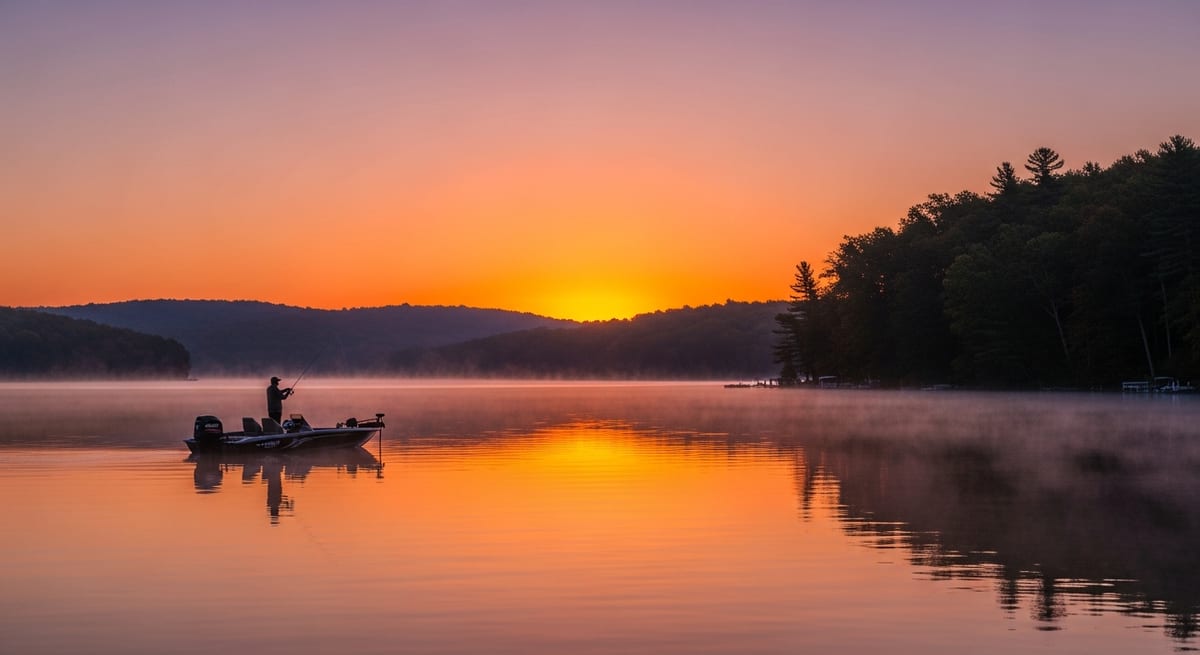
CT DEEP stocking records document walleye plants in Candlewood Lake going back decades, placing it among the very few Connecticut inland waters where a self-sustaining walleye population has taken hold. A distinction that separates it from every other large bass lake in the state. The reservoir was created during 1926-1928 construction by Connecticut Light and Power, which flooded the original Rocky River valley and left submerged timber, channel edges, and hard-bottom transitions that anglers fishing Candlewood through multiple seasons describe as some of the most productive freshwater structure in Western CT. Spanning Brookfield, Danbury, New Fairfield, New Milford, and Sherman across roughly 11 miles, Candlewood's depth variation, from the shallow coves off Squantz Pond State Park to bottom readings near 85 feet at the dam, creates distinct seasonal windows for different species. The walleye, the spring largemouth spawn on dock-lined coves, the summer smallmouth on rocky points, and the holdover trout scenario each represent a fishery that Litchfield County regulars approach as a separate trip rather than a variation on the same lake.
Five Towns, Three Public Launches, and the Submerged Structure That Defines This Reservoir
Candlewood spans New Fairfield, Brookfield, New Milford, Sherman, and Danbury in Litchfield County. CT DEEP lake records cite the surface area at approximately 5,420 acres, with maximum depth near 85 feet and an average depth around 26 feet. The original Rocky River valley was flooded during the 1926-1928 construction, leaving submerged timber, channel drop-offs, and hard-bottom transitions that anglers fishing the lake for the first time consistently underestimate as productive structure.
Public boat launches include Squantz Pond State Park in New Fairfield (free launch, limited parking, arrive early on weekends), a New Milford Recreation Department launch on Route 7, and a Danbury city launch. Several marinas provide transient access for a fee.
Shore fishing access is limited compared to the lake's size. Squantz Pond State Park provides the most fishable public shoreline for those without a boat, and some public access exists along the Sherman and New Fairfield stretches. Anglers who fish Candlewood regularly note that a significant portion of the most productive dock and cove structure borders private property. A boat changes the equation considerably.
Candlewood Largemouth Spawn the Dock Coves in Late May, what Bass Community Reports Reveal About Spring Through Fall Patterns
Largemouth bass are the most actively targeted species on Candlewood, and community reports from anglers who fish the lake through the season describe a healthy population with average fish typically running 2-4 pounds. Fish in the 5-7 pound range appear in spring and fall; the dock structure concentrated along the New Fairfield and Sherman shorelines is consistently mentioned in local angling discussions as the most productive pre-spawn staging area.
Spring (April-June): Pre-spawn fish move from winter holding depths, typically 20-40 feet over channel edges and submerged timber, toward spawning flats in the 4-10 foot range as water climbs through the mid-50s°F. Anglers fishing Candlewood in late April report that protected coves and dock-lined pockets on the north end warm fastest. Spawning activity in CT typically peaks late May through early June. Texas-rigged Senkos, spinnerbaits, and lipless crankbaits produce consistently during the pre-spawn window.
Summer (July-August): Bass shift to structure, submerged timber edges, deeper points, and the shadowed undersides of docks in the 15-25 foot range. Bass fishing reports from August on Candlewood consistently note that downsizing presentation outperforms power fishing in the heat: drop shot and Ned rigs on 7-foot medium spinning gear produce more bites than reaction baits during midday. Early morning topwater in the calm coves off New Milford and Sherman is the exception, and the most visually satisfying window on the lake.
Fall (September-October): Anglers who fish Candlewood in fall describe it as the most productive season for larger bass. Water cooling below 65°F triggers aggressive feeding; swimbaits, chatterbaits, and fast-moving reaction baits all produce as fish chase baitfish into the shallows. The coves on the Danbury side receive comparatively less pressure in fall and often produce well into October.
Rocky Points and the Dam Stretch: Where Candlewood's Underrated Smallmouth Concentrate
Candlewood has a smallmouth population that anglers who spend extended time on the lake describe as underrated relative to the largemouth fishery. Smallmouth concentrate on the lake's harder structure, cobble and boulder shorelines, exposed rocky points, and the dam area near New Milford, which CT angling reports consistently identify as the most reliable smallmouth stretch on the lake.
Drop shot and tube jigs are the consensus smallmouth presentation for Candlewood. A 4-inch tube in brown or green pumpkin worked along rocky points at 10-20 feet accounts for the majority of fish reported by anglers targeting smallmouth specifically. The community take on Candlewood smallmouth versus Housatonic River fish: Candlewood fish tend to run slightly smaller on average, but they're present in consistent numbers across the rocky structure and receive noticeably less targeted pressure.
Spring smallmouth activity peaks mid-May through early June as water temperatures climb into the mid-50s°F. What anglers who target both bass species on Candlewood report doing differently from casual visitors: they focus on mixed-bottom transition zones, where rocky points meet softer bottom, rather than committing to pure rock or pure soft substrate. The transitions hold more staging fish through the pre-spawn window and produce smallmouth after the largemouth have already moved shallow.
One of CT's Only Self-Sustaining Walleye Lakes: CT DEEP Stocking Records and the Low-Light Patterns That Define the Fishery
CT DEEP has stocked walleye in Candlewood for decades, and lake surveys indicate the population has become self-sustaining, placing Candlewood among a small number of Connecticut inland waters where walleye can be reliably targeted. Anglers who fish for walleye specifically report average fish in the 16-22 inch range, with larger specimens in the 26-28 inch class showing up periodically, particularly in the deeper structure near the dam stretch.
Walleye behavior on Candlewood follows the light-sensitivity pattern well-documented in the species. Anglers fishing dawn, dusk, and the first two hours after dark consistently outproduce those targeting midday hours. Walleye hold on transition zones, edges between rocky points and soft bottom, the outer margins of vegetation beds in 12-18 feet, and suspended over deeper channel structure.
Techniques: Jigging with 1/4-3/8 oz jig heads and 3-4 inch paddle tail swimbaits worked along the bottom at 15-25 feet accounts for most purposeful walleye catches reported by Candlewood regulars. Trolling stick baits and minnow plugs at 15-20 feet during low-light periods is how experienced walleye anglers at Candlewood most often produce consistent action. Live nightcrawlers on a bottom rig also produce, particularly in spring near the rocky dam area.
Important: CT DEEP 2025-2026 Freshwater Fishing Regulations include specific size and season rules for walleye. Verify current DEEP regulations before keeping any fish, regulations for this species have been updated in recent seasons.
Spring Stockies, the Summer Thermocline, and How Candlewood's Depth Holds Trout After Shallower CT Lakes Lose Them
CT DEEP stocks rainbow trout in Candlewood in spring, and the lake's depth gives it an advantage over shallower CT waters: cold, oxygenated water persists through summer, allowing some trout to hold over well past the spring stocking window. Anglers fishing near access points and boat launches immediately after stocking typically find the easiest action, with freshly stocked fish holding in those areas before dispersing.
Spring trout: Stocked rainbows initially concentrate in the upper water column, roughly 5-15 feet, while water temperatures remain in the 45-60°F range. After the first week, fish spread across the lake, and boat anglers begin reporting better results moving away from the launch areas and working coves and shoreline structure.
Summer holdovers: Anglers who fish Candlewood through summer report locating holdover trout by trolling small spoons and minnow plugs at the thermocline depth, which typically settles in the 20-30 foot range by July. Working the dam side of the lake, where depths drop quickly and cold water persists longer into the season, gives trout anglers the best odds after the main stocking push.
Fly fishing from a boat in spring, specifically a Wooly Bugger stripped through the shallow coves off Squantz Pond State Park at dawn, produces both trout and largemouth before either species moves deep. Anglers who fish both species on Candlewood note it as one of the few CT lake scenarios where the fly rod earns its place.
Yellow Perch Schools, Pickerel in the Coves, and Ice Conditions: The Species That Keep Candlewood Anglers on the Water Year-Round
Yellow perch are available throughout the season and are a consistent producer for anglers willing to locate the schools. Spring perch gather in the 10-20 foot range near structure during spawning, and anglers targeting them with small jigs, minnows under bobbers, or nightcrawlers on light drop-shot rigs report consistent action. Perch remain catchable through summer and into fall, and late-October perch runs are cited in Litchfield County angling discussions as some of the most productive pan-fishing the lake offers.
Chain pickerel hold in the weedy shallows and protected coves throughout the lake. The New Fairfield coves and the Sherman shoreline shallows see consistent pickerel action on weedless presentations, in-line spinners, and anything worked through emerging vegetation. Under CT regulations, no minimum size applies to pickerel, all fish are legal to keep, though catch-and-release is common practice among Candlewood regulars for larger fish.
Ice fishing: Candlewood does freeze in some winters, but full stable ice coverage is not guaranteed every year given recent Connecticut winters. During conditions that produce safe ice, perch, pickerel, and trout are the primary targets. Anglers familiar with Candlewood caution that the lake's significant depth creates variable ice thickness even when the shallows appear solid, checking conditions with local bait shops or the Squantz Pond State Park contact before venturing out is standard practice among regulars who fish the lake in winter.
EVERY SATURDAY MORNING
Weekly fishing intelligence
Nationwide conditions, what's biting, and honest gear deals. One email, no noise.
No spam. Unsubscribe anytime.