
CT Sunfish Season Never Closes and Carries No Bag Limit. What Panfish Communities Report About Finding the Bigger Bluegill, the Spawn Window, and CT Ponds Worth Making a Dedicated Trip For
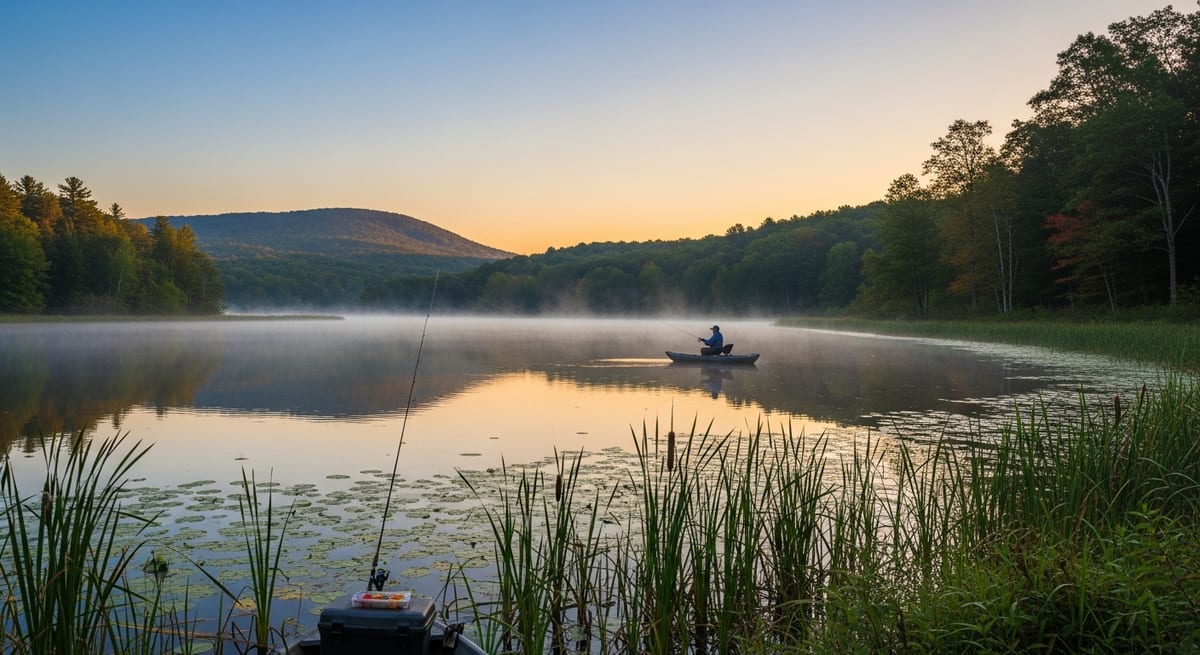
In late May, anglers fishing the shallow north arm of Bantam Lake and the gravel flats near the state boat ramp at Lake Waramaug regularly spot bluegill and pumpkinseed spawning beds from the bank, circular depressions in 12 to 18 inches of water, packed close enough that a bobber rig placed on the edge rarely sits still long. CT DEEP inland fisheries surveys list sunfish as the most broadly distributed gamefish in the state, documented across more than 200 public ponds, lakes, and slow rivers. They feed actively from ice-out through October, take live bait and small lures readily, and on 4-pound ultra-light gear, experienced panfish anglers report the same fish feeling much bigger than expected. Under CT DEEP regulations, sunfish carry no minimum size limit and no bag limit on most inland waters, which makes them the most permissive target on the state's freshwater calendar and the species most often underestimated by anglers chasing other things.
What You're Catching: CT's Sunfish Species
Connecticut has several species in the genus Lepomis, and CT DEEP distribution data places sunfish in more water bodies statewide than any other freshwater gamefish group:
Bluegill: The most widespread. Olive-blue coloring with a dark ear flap. CT anglers who specifically target larger panfish on Bantam Lake and Waramaug report fish in the 9-11 inch range as the upper end of what most CT waters produce. The majority run 6-8 inches, which is consistent with national size data for the species.
Pumpkinseed: Similar size to bluegill, with more colorful orange-and-blue markings. Tends to favor weedy, clearer water and is frequently mixed with bluegill in the same areas. Anglers who fish shallow lily pad margins on smaller CT ponds often report catching both species off the same bobber rig.
Redbreast sunfish: More associated with rivers and streams than still water. Longer ear flap, orange-red breast. Anglers on the lower Housatonic and Connecticut River tidal margins report redbreast as a common incidental catch when targeting bass in slow-water sloughs and backwaters.
Green sunfish: Smaller average size and more tolerant of low-oxygen and marginal conditions than other sunfish. Often the dominant species in smaller, shallower ponds that don't support bluegill well.
Rock bass: A different genus but fished the same way, red eyes, mottled brown coloring, rocky and clear-water habitat. The CT river systems and rocky coves on lakes like East Twin Lake hold them well.
Most CT anglers who fish sunfish don't sort by species in the field. The same rig, bait, and approach that catches bluegill off a dock will catch pumpkinseed and green sunfish off the same spot.
The Spawn Window: The Most Predictable Window on the CT Panfish Calendar
Sunfish spawning is the most concentrated bite window of the warm season, and CT anglers who know the timing consistently report it as their most productive stretches of the year.
When it happens: Water temperature drives the spawn, not the calendar. CT panfish communities generally peg the spawn at 67-75°F, which in most Connecticut years runs from late May through mid-June in warmwater ponds and shallow lakes, and up to two weeks later in deeper, slower-warming waters.
What the beds look like: Spawning colonies consist of multiple nests packed into gravel or sandy shallows, typically in 1-4 feet of water. Each nest is a fanned-out circular depression roughly 6-12 inches across. In clear-water conditions, anglers fishing the shallow north arm of Lake Waramaug and the gravel flat near the Bantam Lake state launch report spotting the colonies from shore before they're close enough to cast.
Aggression near nests: Bluegill and pumpkinseed strike at nearly anything that enters their nest territory during the spawn. CT panfish regulars report strikes on bare hooks and bobber tips, selectivity drops close to zero.
Post-spawn patterns: Once water temperatures push above 80°F in midsummer, sunfish scatter from the beds into deeper water adjacent to structure. The most consistent post-spawn pattern, per anglers who fish CT warmwater ponds through summer, is early morning on dock and weed-edge structure before the heat builds.
Light Tackle Setup CT Panfish Anglers Default To
Sunfish don't require specialized gear. The setup most CT panfish anglers run costs well under $50 and handles everything from casual public-pond fishing to targeting larger fish in clear Litchfield County lakes:
Rod: A 5-6.5 foot ultra-light or light spinning rod. The light tip improves bite detection and amplifies the fight from smaller fish. Anglers who fish panfish alongside bass typically keep a dedicated ultra-light for this reason. A medium-light rod handles sunfish but registers the fight differently.
Reel: A 1000-2000 size spinning reel. Budget options in this size range work fine.
Line: 4-6 lb monofilament is the standard among most CT panfish anglers. Mono floats better than braid, handles small bait hooks cleanly, and ties well on light hardware.
Hook: Size 6-10 light-wire Aberdeen or bait hook. Match the hook to the bait, size 6 for a full nightcrawler, size 8-10 for a worm piece or single cricket.
Float: A small fixed float set 12-24 inches above the hook presents bait at the right depth and shows hesitation bites visually. Shore anglers on CT public ponds default to this setup for most sunfish fishing.
Weight: One small split-shot between the float and hook. Float, hook, weight, and bait. The whole rig.
What CT Communities Report About Baits and Small Lures
Live bait:
- Worm pieces: A 1-inch section of nightcrawler on a small hook is the most commonly cited starting bait among CT panfish anglers across forums and local fishing reports, thread it so both ends move. Worms are available at bait shops near virtually every CT public fishing area.
- Crickets: Widely reported as an effective summer option, particularly during July and August heat. Thread a cricket on a size 8 hook through the body. Shore anglers at Bantam Lake and Waramaug report higher catch rates on crickets over worms during hot afternoons.
- Waxworms and grubs: The cold-water alternative. In early April and late October when nightcrawlers move sluggishly, waxworms stay active and produce better. Standard at CT ice-fishing shops through winter.
Small lures:
- 1/32-1/16 oz panfish jigs: Tiny plastic-bodied jigs in chartreuse, pink, or white. CT panfish anglers who fish structure-heavy ponds report these producing consistently without bait, particularly when fish are holding near dock pilings.
- Small spinners (Mepps #0-1, Rooster Tail 1/16 oz): Retrieved slowly through weed edges. The flash and vibration triggers reaction bites from fish holding along vegetation.
- Tiny crappie tubes: 1-inch tubes on 1/32 oz heads, fished on a slow drop near submerged cover.
- Dry flies (fly rod): Sunfish are among the most responsive fly rod targets in fresh water. Anglers who target panfish with 3-5 weight rods on CT ponds report aggressive surface strikes on size 10-12 elk hair caddis, foam ants, and small poppers on calm evenings, one of the more underused techniques on CT's public waters.
CT Ponds and Lakes Worth a Dedicated Trip: Structure and Shore Access
Sunfish relate to shallow, weedy areas with nearby depth. The productive structure types repeat across most CT ponds:
Dock pilings: The default starting point. Cast a bobber rig to 2-5 feet of water next to pilings. Sunfish suspend in the shade under and around docks through most of the warm season.
Weed beds and lily pad edges: Fish the outer edges and pockets within weed mats. The interior of a dense mat is less productive than the perimeter.
Rocky shorelines with depth access: Pumpkinseed concentrate where rock meets a depth change. A rocky bank dropping into 4-8 feet holds them through summer.
Slow river backwaters: The tidal margins and slow side-channels of the Connecticut River and lower Housatonic hold large sunfish populations, especially redbreast, with less fishing pressure than nearby ponds.
CT waters with consistent public access and strong sunfish populations:
Bantam Lake (Morris/Litchfield): Connecticut's largest natural lake. State boat ramp on Bantam Lake Road; shore access through the White Memorial Conservation Center on the east side. Bantam regulars report bluegill and pumpkinseed holding along the weed beds on the eastern shallows and around dock structures near the north shore through most of summer.
Lake Waramaug (Kent/Warren/Washington): Glacial lake with a state park boat ramp and shore access at Lake Waramaug State Park on the north shore. Anglers who fish the gravel flats in the north arm during late May report concentrated spawning bluegill and pumpkinseed in very shallow water, often visible from the bank before casting.
East Twin Lake (Salisbury): Public boat ramp on Twin Lakes Road. Clearer water than many Litchfield County lakes, with rocky west-side coves that local anglers associate with pumpkinseed and rock bass alongside bluegill.
Bigelow Pond, Bigelow Hollow State Park (Union): Shore access and a no-gas-motor launch area along the south bank. Lower pressure than the larger Litchfield County lakes. Anglers familiar with the park report consistent bluegill populations in the shallow weed beds near the inlet area.
The CT DEEP public fishing areas directory lists launch sites and shore access for the state's public waters, available at ct.gov/deep.
CT DEEP Regulations: What the Rules Actually Say for Panfish
Panfish are among the most permissive species on the CT DEEP inland fishing calendar. Most anglers who grew up fishing other species assume there are restrictions. There mostly aren't:
No minimum size limit: CT DEEP does not impose a minimum size limit on bluegill, pumpkinseed, or most other sunfish species on most inland waters. Anglers can legally keep fish of any size.
No daily bag limit: There is no daily bag limit for panfish on most CT inland waters under current DEEP regulations.
Open year-round: Panfish are open to fishing year-round in most Connecticut ponds and lakes, with no closed season imposed by DEEP.
Exceptions apply: Designated trophy ponds, catch-and-release-only sections, and a small number of special-regulation water bodies carry different rules. Always verify the regulations for the specific water you're fishing in the current CT Fishing Regulation Guide, available free at most CT bait shops and at ct.gov/deep.
License requirement: A Connecticut fishing license is required for anglers 16 and older. Available online at ct.gov/deep, at DEEP offices, and at licensed vendors statewide.
CT panfish communities that target sunfish for the table note that bluegill and pumpkinseed are excellent eating, mild white flesh that holds up well to pan-frying. The liberal regulations make moderate harvest sustainable on most well-populated waters, though catch-and-release is standard practice among anglers specifically targeting the larger fish.
EVERY SATURDAY MORNING
Weekly fishing intelligence
Nationwide conditions, what's biting, and honest gear deals. One email, no noise.
No spam. Unsubscribe anytime.