
Why Keeping a Fishing Log Makes You a Better Angler
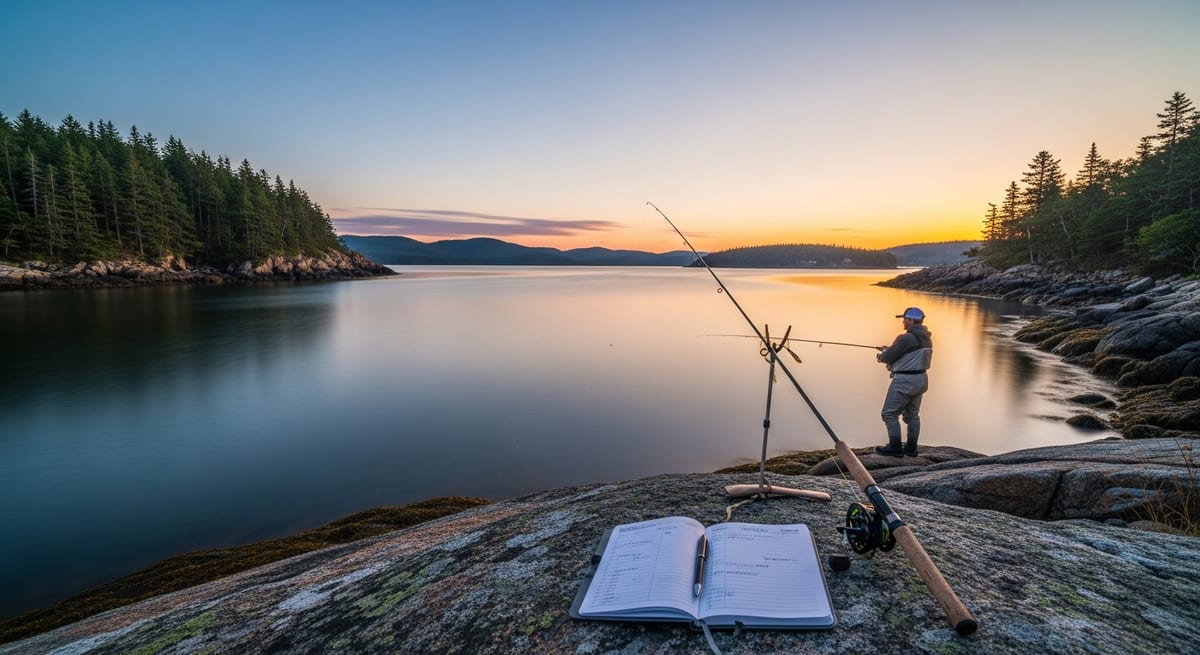
Memory is a terrible fishing tool. You remember the great days vividly and forget the details that made them great. The water temperature, the specific location, the lure color, the retrieve speed. A fishing log captures those details in real time, and over months and years it reveals patterns that no amount of reading or watching videos can teach you as effectively as your own data.
What a Fishing Log Reveals Over Time
The value of a fishing log is cumulative. Each entry adds a data point, and patterns emerge from the data that you can't see from individual trips.
Seasonal timing: When you look back at three years of entries and realize that bass in your home lake always start feeding on topwater lures when the water hits 64°F, not 60°F, that's actionable. When you notice that the best striper action on a particular stretch of river always happens on the incoming tide in May, not the outgoing, that eliminates half your potential fishing time as less productive.
Lure/bait patterns: Which lures produce most of your fish? Most anglers think they know. They remember the big fish on the exciting lure. The log tells the truth. You might discover that 60% of your bass come on the same three lures, freeing you to stop obsessively buying new ones.
Location optimization: Which specific spots are most productive for which species at which times? The log builds a map of productivity over time that beats any external resource for your specific home water.
What to Record (Keep It Simple)
The risk in log-keeping is making it too complicated, if it takes 15 minutes to fill in a log entry, you stop doing it. Keep the format simple enough that you'll complete it consistently.
Minimum useful fields:
- Date and time of day
- Location (body of water, specific spot if relevant)
- Weather: temperature, wind speed/direction, sky condition
- Water conditions: temperature (if you have a thermometer), clarity, current condition
- Fish caught: species, size (estimate or actual), and how many
- What worked: lure/bait, retrieve speed/technique
Optional but valuable:
- Moon phase (many anglers track this for saltwater fishing in particular)
- Tidal stage (incoming/outgoing/high/low) for saltwater fishing
- What you tried that didn't work, equally informative
- Notes about unusual observations (bait present, birds working, unusual water color)
Format: Physical notebook, notes app on your phone, a spreadsheet, or a dedicated fishing app (Fishbrain, BassForecast, and others have log features). The best format is the one you'll actually use consistently. A simple notes app entry right after a trip is better than an elaborate spreadsheet you fill in once a month from memory.
Using Your Log to Predict Good Days
Once you have 6-12 months of entries, you can begin making predictions. Before a trip, look up the same calendar period from previous years. What were the conditions? What was producing?
Before a May 15 striper trip, look at your entries from May 10-20 in previous years. Did the incoming tide consistently produce? Were specific spots only productive in certain wind conditions? This historical review often surfaces insights you couldn't consciously articulate from memory alone.
Cross-reference with weather forecasts. If your log shows that bass in your home lake bite poorly in the 48 hours after a cold front passes (common), and a cold front is forecast for Wednesday, you know Thursday is likely a slow day and Sunday (two days post-front when pressure stabilizes) is a better bet.
The log also helps you calibrate your expectations. If you know from the record that the stretch of river you're fishing produces an average of 3 stripers per trip in mid-October, a two-fish day isn't failure. It's normal. This context keeps frustration in check and helps you evaluate whether you're fishing at an above or below-average level.
EVERY SATURDAY MORNING
Weekly fishing intelligence
Nationwide conditions, what's biting, and honest gear deals. One email, no noise.
No spam. Unsubscribe anytime.