
Bartlett Reef Tautog, Watch Hill Fluke, and Housatonic Bass All Hit Jigs. What CT Anglers Who Fish All Three Adjust Is the Pause.
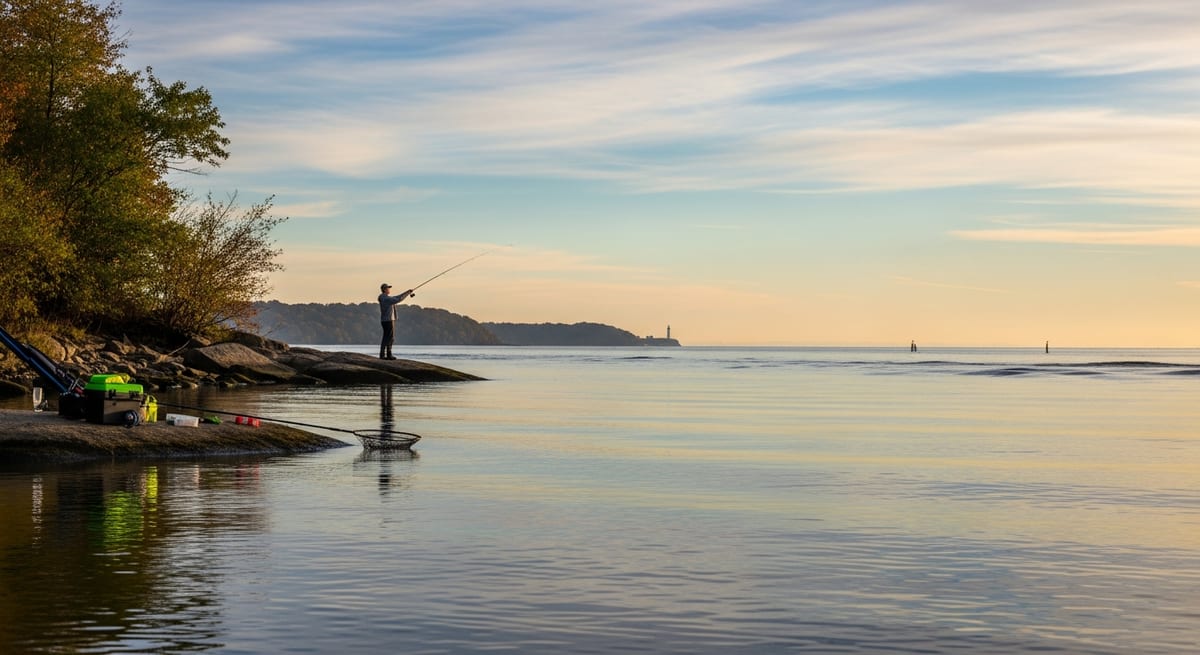
CT charter captains working Watch Hill and Bartlett Reef have noted something that surprises first-time clients: the same bucktail jig weight catches fluke on the sandy patches and tautog on the adjacent rock piles. What changes entirely is the pause, how long the jig sits on bottom before the rod tip moves again. That observation runs through every jigging scenario in the Northeast, from vertical metal lures over a Thames River striper mark to crappie jigs under a float on Coventry Lake. The weighted fall is the strike trigger. Every technique variation below exploits that same window. The moment a jig stops moving and a fish either commits or doesn't.
What's in a Jig Head: Design Differences That Matter on CT Waters
A jig is any lure with a weighted head and a hook, designed to sink on a slack line and rise when the rod tip lifts. The head shape changes how the jig behaves during that fall, something anglers fishing different CT structures report mattering more than most beginners expect.
Round head jig: The most common starting point. A molded lead head with a hook and collar for attaching soft plastic trailers or bucktail. Works across species from crappie to fluke to stripers. Many anglers attribute the round head's consistency to its relatively neutral fall path, though how much any wobble actually drives strikes versus the trailer's action is a point of ongoing debate among CT light-tackle anglers.
Football jig: An oval-shaped head that many bass anglers describe as rocking side-to-side along rocky substrate. The football head is the go-to for deep-structure largemouth work on lakes like Candlewood and Bantam Lake, bounced and dragged along the bottom rather than vertically jigged. Whether it triggers instinctive behavior in fish beyond a general bottom-crawling profile, as charter-forum regulars often debate, is less certain than its track record on hard, rocky substrate.
Flipping jig: A skirted jig with a weed guard designed for pitching into heavy cover, dock pilings, submerged brush, and grass edges on CT lakes. Not vertically jigged; the technique is a short horizontal pitch with a vertical fall into a small target zone.
Bucktail jig: A round or diamond head with deer hair tied behind the hook. The original saltwater jig and the backbone of Long Island Sound jigging for striped bass, fluke, tautog, and bluefish. CT captains working Niantic Bay, The Race, and the reef complex off Watch Hill consistently run some version of a bucktail as their primary jig.
Metal jig (blade jig/jigging spoon): A flat or curved metal lure that flutters and wobbles on the fall. Used for vertically jigging over schools of stripers or bluefish at bridge pilings and channel edges. The Gold Star Bridge on the Thames and the railroad bridge at Old Saybrook are both cited frequently by CT striper anglers who vertical-jig rather than drift bait.
CT Freshwater Bass: Housatonic, Candlewood, and What Structure Produces
Bottom hopping for largemouth bass: The contact-bottom hop, cast to structure, let the jig sink fully (watch for the line to go slack as the jig hits bottom), then lift the rod tip from 9 o'clock to 12 o'clock and immediately lower it back to feed slack line as the jig falls, is the standard approach on most CT bass lakes. Anglers fishing fall tournaments on Lake Candlewood and East Twin Lake consistently report that strikes happen on the fall, not the lift. Watch for sideways line movement or unusual slack that indicates a fish picked up the jig mid-drop.
Dragging: Instead of lifting and dropping, drag the jig slowly along the bottom with the rod tip held at 7-8 o'clock. Favored for deep rocky structure (10-20 feet) on the Housatonic's deeper sections and the rocky points on Bantam Lake. The soft plastic trailer does most of the work during a slow drag. The jig maintains bottom contact and keeps the trailer in the strike zone.
Swim jig: A lighter jig (3/8 oz or less) with a streamlined head retrieved steadily at a moderate pace. Anglers fishing grass edges and dock lines on Coventry Lake and Lake Pocotopaug report the swim jig produces for bass holding off the bottom, particularly when fish are tracking suspended baitfish rather than feeding on structure.
Vertical jigging from a boat: When bass are tight to vertical structure, bridge pilings on the Connecticut River, bluff walls on Candlewood, deep rocky points, position directly above and jig without lateral movement. A football jig or finesse jig dropped to the bottom and hopped in place works for deep-holding fish that won't move to chase a swinging presentation.
Long Island Sound: Bartlett Reef, The Race, and Watch Hill, with Current CT Regs
Tautog (blackfish): Tautog hold tight to hard structure throughout the Sound and are primarily caught on crabs. On Bartlett Reef, Black Rock Reef near Niantic, and the boulder fields off Watch Hill, heavy jigs tipped with crab or shrimp bodies do produce in the right conditions, particularly at 20-40 feet during slower tidal phases. A 2-3 oz bucktail worked slowly along rocky bottom, with occasional hops and extended pauses between them, accounts for tautog when crabs aren't available or regulations limit bait options.
CT DEEP regulations, tautog: Tautog carry among the most restrictive regulations of any CT marine species, including closed seasons, minimum size limits, and daily bag limits adjusted in recent years under ASMFC management. CT marine enforcement contacts involving tautog frequently involve anglers unaware of the closed-period calendar. The DEEP Marine Fisheries current-season regulations page should be treated as required reading before any reef trip targeting blackfish. Regulations change; reports from prior seasons are not reliable.
Fluke (summer flounder): Classic Sound fluke jigging runs a bucktail jig (1-3 oz depending on current and depth) tipped with a squid strip and Gulp! bait along the sandy bottom near the Niantic River mouth, the sand flats off Stonington, and the edges of the reefs near Watch Hill. The technique is an exaggerated hop, lift the rod high, let the jig fall back to bottom, wait, repeat. CT anglers fishing the stronger tidal rips near The Race typically run heavier jig weights than those working slack-water flats; staying as light as possible while maintaining bottom contact is the consensus approach for maximizing strike detection. CT's minimum size and daily limit for summer flounder are set annually, verify with DEEP Marine Fisheries before the season opens.
Striped bass: When stripers are marking on sonar at bridge pilings (Gold Star Bridge on the Thames, the I-95 bridge near Niantic), channel edges, or the rips at The Race, vertical jigging metal lures through the mark is a primary technique among CT charter captains. Drop the jig to bottom, rip it upward 2-3 feet quickly, let it fall. Strikes come on the fall or at the initiation of the upward movement.
CT's striped bass size and bag limits, adjusted multiple times in recent seasons under ASMFC addenda, are the regulation most frequently cited in CT marine enforcement angler contacts, according to forum reports and DEEP press releases. The slot framework in particular generates field confusion each season among anglers operating on prior-year information. Check DEEP Marine Fisheries for the current framework before any striper trip; prior-season assumptions are not safe.
Bluefish: Same vertical jigging presentation for deep fish. Metal jigs worked at any level in the water column. Bluefish hit hard, set the hook immediately and maintain pressure throughout the fight.
Crappie, Perch, and Panfish: CT's Dock and Ice Jig Season
Jigs are among the most consistent crappie producers in Connecticut. A 1/16 or 1/8 oz jig head with a 2-inch soft plastic body (tube, paddle tail, or curly tail grub) fished under a float is a setup many CT panfish anglers return to repeatedly. Local conditions on any given lake often favor different weight and trailer combinations, and what produces on Coventry Lake in October may be slow on Pocotopaug the same week. The setup is a starting point, not a prescription.
Under a float: Clip a small float 2-3 feet above the jig (adjust depth to where fish are holding, reports from other boats or a depth finder help calibrate). Cast near dock pilings, submerged brush, or weed edges on lakes like Coventry Lake or the Connecticut River backwaters below East Haddam. Small twitches impart movement without displacing the rig significantly. Strike at any float dip or sideways movement.
Vertical jigging under ice: Standard ice technique for perch, crappie, and small bass on Connecticut's ice-fishable lakes. Lower the jig to the target depth and work it with short 2-4 inch strokes. Perch anglers working the ice on Highland Lake and Moodus Reservoir add a live waxworm or maggot for additional attraction. Fish often respond in waves. The pattern may go quiet for 10-15 minutes before another school finds the hole.
Dock shooting for crappie: Skipping a small jig (1/16 oz) across the water's surface under dock overhangs to reach fish sheltering in shade is a technique crappie anglers on Coventry Lake and the larger River impoundments describe as high-percentage once the presentation is dialed in. Consistent accuracy takes repeated practice, but crappie holding in shaded dock structure often go largely untouched because the position is unreachable with a standard overhead cast.
EVERY SATURDAY MORNING
Weekly fishing intelligence
Nationwide conditions, what's biting, and honest gear deals. One email, no noise.
No spam. Unsubscribe anytime.