
Chain Pickerel Don't Give You a Warning. CT Anglers Who've Lost Lures to Bite-Offs Have Worked Through the Leader Question, wire, Fluorocarbon, and What Changes When You Move to the Sound.
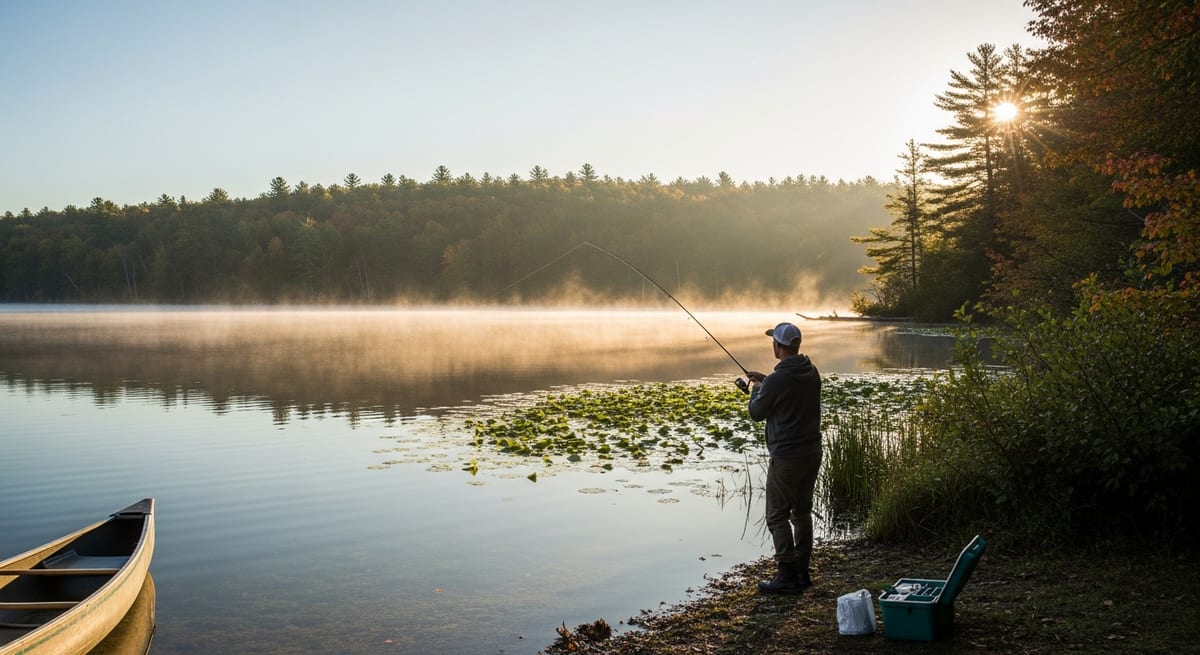
Anglers fishing Connecticut's Housatonic chain, lake Zoar, Lake Lillinonah, and the connecting river sections, report losing multiple lures per session to chain pickerel bite-offs when running unprotected monofilament. The severed end on the retrieve is its own education. That specific problem is what most CT anglers point to when the leader conversation comes up, but bite protection is only one of three distinct reasons leaders matter. The others, abrasion from rocky Sound bottom and submerged structure, and clear-water refusals on pressured reservoirs, call for entirely different setups. The material, length, and connection method all change depending on which of those problems you're actually solving.
What Chain Pickerel, Pressured Reservoirs, and Rocky Sound Bottom Have in Common
Three distinct problems push CT anglers toward leaders, and the solutions don't overlap.
Bite protection: Chain pickerel are the most consistent bite-off culprit in Connecticut freshwater. Anglers who fish Lake Zoar, Bantam Lake, and the Housatonic backwaters report that a pickerel on a lure will sever 20 lb monofilament cleanly, often before the strike even registers as a fish. Pike present the same problem; bluefish handle it in saltwater. Wire or heavy fluorocarbon leaders stop bite-offs entirely.
Abrasion resistance: Rocky Sound bottom from New Haven Harbor out to Niantic Bay, mussel-covered jetty pilings, and submerged timber in CT's inland reservoirs all wear through main line quickly. A shorter section of heavy fluorocarbon between the main line and the terminal rig takes that abrasion, protecting the rest of the system and reducing the frequency of break-offs at the hook.
Stealth in clear water: Braid is visible. CT bass anglers fishing Candlewood Lake and Zoar during summer clarity windows, where subsurface visibility can run six to eight feet, find that fluorocarbon leaders reduce refusals compared to tying direct to braid. Fluorocarbon sinks and refracts light at a similar index to water, making it nearly invisible to fish looking up at a lure from below.
Leader Materials: What Each One Is Actually Solving
Monofilament: The least expensive and most forgiving option, easy to knot, stretches under load, and still the standard for surf fishing live bait rigs and bottom rigs off CT beaches. Less abrasion-resistant than fluorocarbon and not invisible underwater. CT surf anglers fishing Hammonasset and Harkness for stripers on bait commonly run 30-40 lb monofilament leaders, particularly in lower-visibility conditions where stealth is less of a factor.
Fluorocarbon: The standard leader material for most freshwater applications across Connecticut and the Northeast. Near-invisible underwater, significantly more abrasion-resistant than monofilament, and stiffer, which reduces line twist when running spinning lures. That stiffness is also the trade-off: fluorocarbon absorbs shock less effectively than monofilament, which is why some live bait setups and trout leaders still use softer mono. CT kayak bass anglers fishing clear-water reservoirs treat 10-15 lb fluorocarbon leaders as a baseline, not an upgrade.
Single-strand wire: The reliable solution for pickerel and pike. Inexpensive, completely bite-proof, and effective once the haywire twist is learned. Single-strand wire kinks. A kinked section is a failure point and should be replaced immediately, not straightened and reused. Attach via a small barrel swivel or loop-to-loop connection.
Coated wire and titanium wire: More flexible than single-strand, significantly more kink-resistant. Coated wire (often sold in coffee or camo colors) is the standard for bluefish off Long Island Sound. The consensus among CT surf anglers who fish bluefish rips regularly is that coated or titanium wire removes the bite-off variable entirely. The cost difference across a season is negligible compared to the cost of a lost lure.
What CT Anglers Run by Application
Clear-water reservoir bass on braid: 10-18 inches of 10-15 lb fluorocarbon. Attach to braid with an FG or double uni knot; tie the lure to the fluorocarbon end. CT bass anglers who fish Candlewood and Zoar during mid-summer clarity treat this as standard, not a specialty setup.
Bass in heavy cover (flipping, pitching): 18-24 inches of 20-25 lb fluorocarbon for abrasion resistance around dock pilings, submerged timber, and rocky ledge. Some anglers run 30 lb when flipping dense laydown structure in productive backwater areas along the Housatonic and the slow sections of the Connecticut River.
Trout on spinning gear: 18-24 inches of 4-8 lb fluorocarbon when running braid main line for sensitivity. Many Farmington River TMA and Salmon River regulars run straight 6-8 lb monofilament as the entire system. The braid-to-fluoro leader becomes necessary only when sensitivity or long-cast distance is the priority.
Chain pickerel and pike: 12-18 inches of 20 lb single-strand wire or 30+ lb coated wire. DEEP public access sites at Lake Zoar, Bantam Lake, Lake Waramaug, and Lake Lillinonah all hold consistent pickerel populations. Based on angler reports shared across CT fishing forums, the bite-off rate on unprotected monofilament in pickerel water is high enough that experienced CT freshwater anglers treat wire as mandatory, not optional.
Stripers in clear water (surf and boat): 3-5 feet of 30-40 lb fluorocarbon between braid and terminal rig. Sound anglers fishing structure rips off Hammonasset, Harkness, and the New Haven Harbor jetties commonly run leaders at the longer end of that range on calm, clear days when fish visibility is highest.
Bluefish: 12 inches of 40-60 lb coated wire or titanium wire. Bluefish have powerful jaws and sharp conical teeth that cut through monofilament quickly and efficiently. For serious bluefish fishing off the Sound, wire is the only material that removes the bite-off variable entirely. Heavy monofilament (60-80 lb) can manage smaller fish for a session, but CT Sound anglers who fish bluefish rips consistently note that wire is the only approach worth committing to.
Fluke (summer flounder): 12-18 inches of 25-30 lb monofilament or fluorocarbon above the hook. Pre-tied spreader rigs and high-low rigs sold at CT coastal tackle shops typically have this leader material built in. The line connecting hook to swivel is the leader.
The Connections: Two Knots for Braid-to-Leader, One Technique for Wire
Braid to fluorocarbon, fG Knot: The FG knot is the slimmest braid-to-leader connection available and, when tied correctly, tests among the highest-retention options in published field comparisons, though actual results vary considerably with tie quality, line diameter, and the angler's experience executing it. It passes through guides cleanly. CT surf anglers and guides who teach the knot consistently note that it requires a real learning curve before it should be trusted on a fish; building the muscle memory on practice line first is the standard recommendation.
Braid to fluorocarbon, double Uni: The double uni knot is faster to tie and more forgiving across line diameters and materials. Most anglers moving from monofilament systems to braid-with-leader setups start here. With lighter braid (10-15 lb) under repeated load, the double uni can slip; in those cases, the FG knot is the more reliable choice. Wet both knots before drawing tight to reduce heat friction at the knot.
Fluorocarbon to hook or lure, palomar or Improved Clinch: The Palomar knot distributes stress across a double-line loop, which suits stiffer fluorocarbon particularly well. The improved clinch ties faster and handles most applications without issue. Wet the knot before cinching.
Wire, haywire Twist: Single-strand wire attaches via a haywire twist: a loop twisted back on itself in a figure-eight pattern, finished with several barrel wraps and a clean breakaway. The breakaway matters. A wire tag left on a poorly finished haywire twist damages the loop on the next cast. On The Water magazine's Northeast rigging guides cover the haywire twist step-by-step and are the reference most CT saltwater anglers cite when first learning wire rigging. Multi-strand wire uses crimp sleeves with a dedicated crimping tool, standard pliers leave uneven crimps that fail under load.
EVERY SATURDAY MORNING
Weekly fishing intelligence
Nationwide conditions, what's biting, and honest gear deals. One email, no noise.
No spam. Unsubscribe anytime.