
Fishing and Conservation: How Anglers Protect What They Love
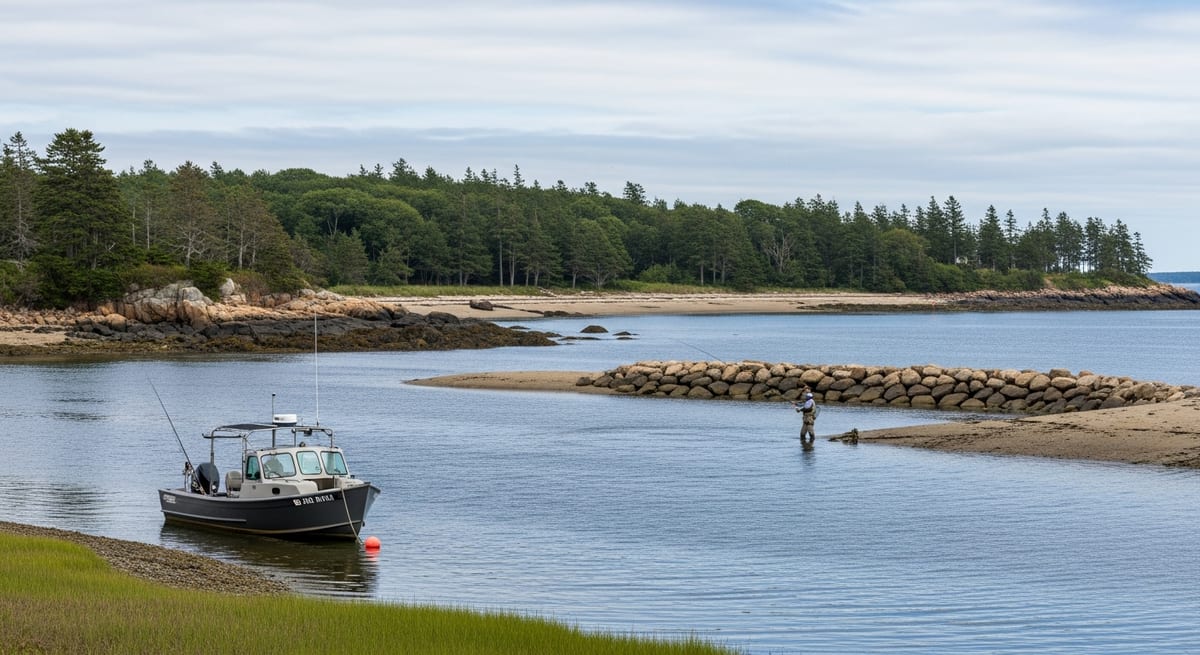
The most effective wildlife conservationists in America aren't in government agencies or environmental nonprofits. They're the hunters and anglers who buy licenses, purchase gear with Pittman-Robertson Act taxes, and vote for funding fish and wildlife management. Recreational fishing in the United States contributes billions of dollars annually to conservation funding through license fees and tackle taxes. Understanding this system makes you a more informed, more effective steward of the resource you love.
How Fishing License Fees Fund Conservation
Every fishing license purchase directly funds fish and wildlife management. This isn't abstract. It's specific and measurable. Connecticut DEEP: CT fishing license fees fund the Department of Energy and Environmental Protection's Bureau of Natural Resources, which manages CT fisheries. This includes fish stocking (1+ million trout annually), habitat improvement, fishery surveys, regulation development, and law enforcement. Federal Excise Tax (Pittman-Robertson / Dingell-Johnson Act): Federal law requires manufacturers of fishing tackle, boats, and motors to pay an 10% excise tax on the sale price of these items. This money (over $700 million annually nationally) is distributed to state agencies for conservation programs. When you buy a Shimano reel, a Strike King lure, or a Penn rod, part of that purchase price funds fisheries conservation. The result: The US has recovered numerous fish species from historic lows through this funding mechanism, striped bass, Atlantic salmon work, many trout streams restored. Sport fishing is conservation's largest private-sector funder. License buying is not just a legal requirement. It's the mechanism that pays for the fish you catch.
Fishery Science: How Populations Are Managed
Fish population management is complex science. Understanding the basics helps you understand why regulations exist and why they change. Population assessment: Biologists assess fish populations through periodic surveys, electrofishing surveys, roving creel surveys (interviewing anglers), netting programs, and telemetry studies (tagging fish with electronic tracking devices). These surveys estimate population size, age structure, growth rates, and fishing mortality. The data drives regulation decisions. Maximum Sustainable Yield: The goal of most recreational fishery management is not maximum harvest but sustainable harvest, taking enough fish to provide recreational value while ensuring the population can reproduce to replace what's removed. When harvest exceeds sustainable yield, populations decline. Striped bass experienced this in the 1980s (near-collapse) and have required strict management since. Ecosystem management: Modern fishery management increasingly considers the whole ecosystem, not just target species. Striped bass regulations consider bunker (menhaden) populations because striper health depends on prey availability. CT trout management considers macroinvertebrate populations because trout depend on insect hatches.
Catch and Release Science
Catch and release (C&R) fishing has become standard practice for many species and locations, but the science behind effective C&R is specific. Survival rates: When done correctly, C&R allows most fish to survive. Studies of largemouth bass C&R in typical summer conditions show 95-99% survival when anglers minimize air exposure and handle fish carefully. At water temperatures above 80°F, survival rates drop significantly. Fish are physiologically stressed and fighting a fish to exhaustion in 85°F water has meaningful mortality risk. Cold water: Cold water C&R is typically safer than warm water C&R because cold water holds more oxygen and fish are less physiologically stressed. The biggest risks: Deep hookedness (gut-hooked fish have much lower survival than lip-hooked fish, circle hooks significantly reduce gut-hooking). Air exposure (longer than 30 seconds significantly reduces survival in warm water). Exhaustion (a completely exhausted fish may not be able to respire effectively). Barotrauma (for deep-water fish brought to the surface quickly, pressure changes can damage swim bladder). The recommendation: Handle fish as minimally as possible, keep them in the water when practical, use circle hooks for bait fishing, revive exhausted fish before release.
Habitat Conservation: The Bigger Issue
Individual catch-and-release behavior, while important, affects relatively few fish compared to habitat-scale changes. The biggest threats to CT fisheries are habitat issues that individual angler behavior doesn't directly address. Impervious surfaces and runoff: Suburban development increases the proportion of impervious surfaces (parking lots, roofs, roads) that channel polluted stormwater directly into CT waterways. This degrades water quality, increases flood peaks (scouring streambed habitat), and reduces groundwater infiltration (which maintains baseflow in streams). It's the primary threat to CT's trout streams. Dam impacts: CT has hundreds of dams of varying sizes. Dams block migratory species (stripers, shad, herring, salmon) from historical spawning areas, alter temperature and flow regimes, and create reservoirs with different ecological characteristics than the rivers they replaced. CT DEEP has an active dam removal program. Many small obsolete dams have been removed, restoring fisheries upstream. Invasive species: Asian carp haven't reached CT but threaten the region. More locally, invasive plants (hydrilla, Eurasian milfoil) that clog CT lakes and alter habitat are spread partly by boat traffic. Clean, Drain, Dry protocols prevent this spread.
How to Be an Effective Conservation Angler
Specific actions that make a difference, from most to least impact. Buy licenses and stamps every year: This is the single most impactful thing you do. License revenue directly funds management programs. Don't skip the year you barely fished. Follow regulations precisely: Regulations aren't bureaucratic obstacles. They're the implementation of scientific management decisions. A bag limit that seems generous or restrictive represents biologists' best assessment of sustainable harvest rates. Participate in surveys: CT DEEP and researchers periodically survey anglers, take 5 minutes to respond when asked about your catch. This data improves management accuracy. Report observations: Unusual fish kills, suspicious water discoloration, or invasive species sightings at ct.gov/deep contribute to monitoring programs. Join a fishing club or conservation organization: Trout Unlimited chapters actively work on CT stream habitat. State bass fishing clubs participate in water quality monitoring. These organizations have amplified advocacy beyond individual voices. Support dam removal and habitat projects: These are often funded through grant programs and volunteer labor. Participating in a stream cleanup or advocating for a dam removal project has lasting habitat impact.
EVERY SATURDAY MORNING
Weekly fishing intelligence
Nationwide conditions, what's biting, and honest gear deals. One email, no noise.
No spam. Unsubscribe anytime.