
CT Anglers Who Match Line Type to Water Clarity Find Fewer Missed Strikes and Lost Fish. What Candlewood, LIS Shore, and Farmington Tailwater Communities Report About Mono, Fluoro, Braid, and the Leader Systems That Hold Up in Northeast Conditions
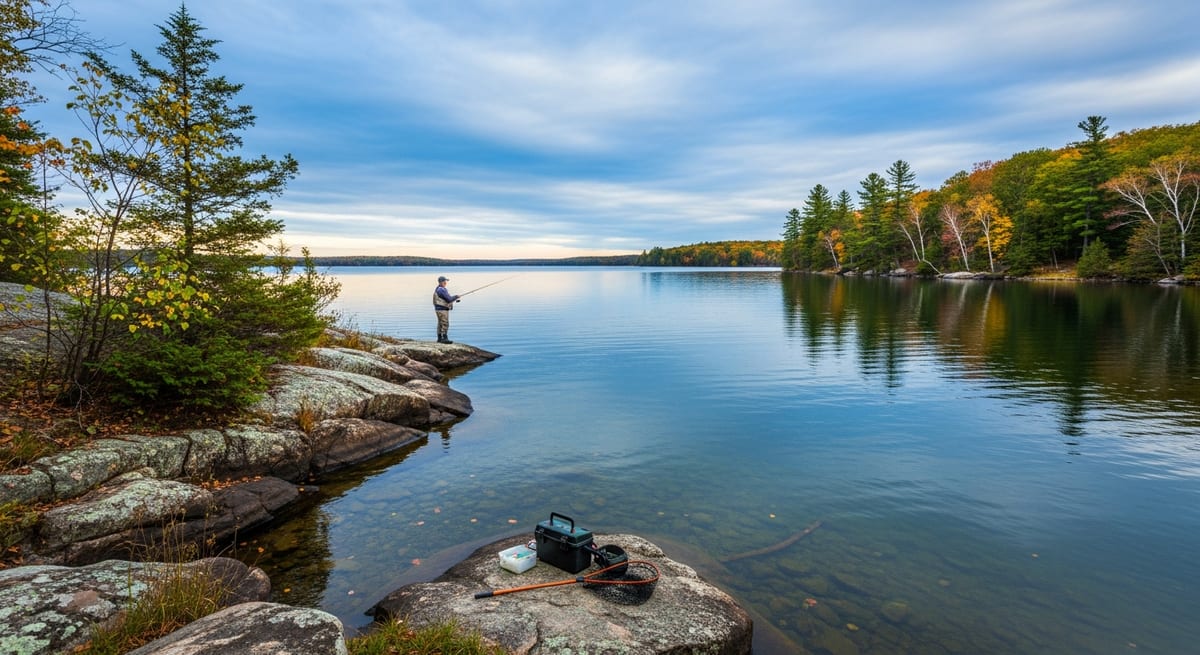
In Candlewood Lake's main basin during late summer, visibility over hard-bottom structure often reaches 10 feet or more in clear-weather windows. Bass anglers who fish those coves regularly report that finesse presentations on fluorocarbon leader produce noticeably more takes than the same rigs on monofilament, line visibility at that depth is a real variable in CT's clearest impoundments. What works at Candlewood doesn't translate directly to LIS surf anglers throwing 3-oz metals into a November northeast chop, or to Farmington tailwater regulars fishing pressured browns in January low flows. In CT, line selection is a local decision shaped by water type, clarity, and target species more than any single national rule can capture.
How CT Impoundment Clarity Drives the Monofilament vs. Fluorocarbon Decision
CT's major impoundments vary significantly in clarity by season and location. Candlewood and Bantam in clear conditions run 8-12 feet of visibility by midsummer over clean structure; Moodus and the stained tributaries of Lillinonah can drop to 2-3 feet after rain. That variance drives real differences in line choice among CT bass communities, not as a matter of preference, but as a practical response to what fish can see. Where fluorocarbon earns its cost: Fluorocarbon's refractive properties make it significantly less visible underwater than monofilament. Anglers fishing Candlewood's main basin and Bantam's clearest coves report fewer refusals on drop shots, ned rigs, and shaky heads on fluorocarbon leader compared to mono, particularly for bass that have seen sustained pressure through the season. Where monofilament still makes sense: For topwater applications on Bantam's east coves at first light, poppers and walking baits, monofilament remains a common choice. For crankbait fishing in stained water, mono's stretch cushions short strikes in a way fluorocarbon and braid do not. Monofilament also degrades in UV over time; CT anglers who fish year-round and leave it on the reel through a full season often find reduced break strength by fall, replacing it annually is standard practice in communities that fish from ice-out through late November.
Why CT Surf Communities Largely Moved Away From Mono as a Main Line
Among regulars at Bluff Point, Hammonasset, and the Niantic Bay shore access points, braided main line has largely replaced monofilament for LIS surf work over the past decade. The feedback from CT surf communities is consistent: at the distances involved in open-coast casting: 60, 80, sometimes over 100 yards, monofilament stretch compounds in a way that makes distant hooksets unreliable. Braid's near-zero stretch transmits the strike clearly and allows a firm hookset at range. The tradeoff CT surf anglers manage: Braid has real visibility in LIS's often-clear nearshore water, and it is vulnerable to abrasion from shells, mussel beds, and barnacle-covered rock structure. The standard approach in this community is a 6-10 foot monofilament or fluorocarbon shock leader. For LIS striper fishing under the current DEEP slot limit for tidal waters, verify the specific size and slot on the CT DEEP website before any tidal session, as the slot has changed in recent seasons. Many anglers favor heavier mono leaders that also provide abrasion resistance on rocky structure at Bluff Point and the Watch Hill rip areas. The leader takes that structural punishment rather than the main line.
What Farmington and Tailwater Communities Report About Line for Pressured Trout
CT's tailwater trout fisheries. The Farmington below Hogback Dam, the Salmon River below Comstock Bridge, the Willimantic through Windham, run cold and, in low-flow winter and early spring conditions, extremely clear. The consensus among anglers who fish these rivers regularly through the winter holdover and post-stocking windows is that fluorocarbon has become the default for any presentation where line visibility matters. What the Farmington trout community describes: On the catch-and-release Heritage Stretch, where fish see sustained nymph and soft-hackle pressure, anglers who've fished the water across multiple seasons report that switching from light monofilament to fluorocarbon tippet produces a meaningful difference, particularly for holdover fish that have been caught and released repeatedly. In higher spring flows on the same river, some anglers step up in line strength to manage the current while fighting larger fish before release. A note on diameter vs. labeled pound test: CT trout communities generally size fluorocarbon by diameter rather than the pound-test label alone, since different manufacturers show real variance at the same labeled strength. What the Farmington community describes as light-duty clear-water fluoro typically falls in the 4-6 lb test range; colder winter conditions and low flows push some anglers toward the lighter end. Verify current DEEP stocking schedules and special regulation zone boundaries before fishing. The Farmington Heritage Stretch and Salmon River Trophy Trout Zone carry specific rules that affect both legal methods and retention.
The Braid-and-Fluorocarbon Leader System CT Impoundment Bass Anglers Use
The combination CT bass communities have broadly converged on for both spinning and baitcasting applications is braided main line with a fluorocarbon leader, connected with an Alberto or double uni knot. Braid provides sensitivity and strength at the reel; fluorocarbon provides low visibility at the lure end. Why this matters for CT impoundment fishing: Candlewood and Bantam bass that see consistent pressure through the season become increasingly cautious on finesse presentations. Anglers fishing these impoundments from kayaks, where close-range presentations in clear coves are common, report that the braid-to-fluoro combination outperforms all-mono or all-fluoro setups on drop shots and wacky rigs in clear conditions, particularly later in the season. What the community reports about leader length and application: For finesse applications in clear water, Candlewood and Bantam kayak anglers commonly run 18-24 inches of fluorocarbon leader. For flipping into heavy vegetation on Moodus Reservoir's back arms or Lillinonah's weedy coves, many anglers skip the leader entirely and run straight heavier braid, line visibility is less of a factor when targeting bass tight to cover, and the straight braid handles pressure more consistently. The Alberto knot's slim profile passes cleanly through spinning guides on longer casts without catching at the tip.
Line Weight by CT Water Type: Tidal, Impoundment, and Tailwater
Pound test recommendations in national guides typically flatten into single ranges across water types. CT anglers report that meaningful differences exist based on local conditions. These are community-described ranges, not fixed prescriptions, manufacturer lb-test ratings vary, and local conditions (structure, cover density, water clarity) should influence the final choice. LIS and tidal surf: Surf communities fishing striper structure typically run heavier braid main line, often in the 20-30 lb range, with monofilament or fluorocarbon shock leaders. Leader weight runs heavier in rocky structure areas with abrasion risk (Bluff Point, Eastern Point) and lighter in sandy beach runs. Verify the current CT DEEP striper slot and size limits before any tidal session. CT impoundments. Bass finesse: In clear-water conditions such as Candlewood's main basin or Bantam in summer, finesse applications typically run lighter braid main line with a lighter fluorocarbon leader. For heavier cover and structure applications on the same impoundments, many anglers step up in both main line and leader weight. For true heavy-cover situations, moodus's dense grass beds, Lillinonah's submerged brush. Anglers report running straight heavier braid without a leader rather than risk the knot failing in cover. CT tailwaters. Trout: Communities fishing the Farmington and Salmon River in low-flow clear conditions run lighter fluorocarbon, typically in the 4-8 lb range depending on flow level and target size. Verify DEEP stocking windows and regulation zone rules before any tailwater session. The Heritage Stretch and Trophy Trout Zone rules affect both legal methods and retention.
EVERY SATURDAY MORNING
Weekly fishing intelligence
Nationwide conditions, what's biting, and honest gear deals. One email, no noise.
No spam. Unsubscribe anytime.