
Live Bait on the Farmington After a Cold Front, Lures the Rest of the Week. CT Guides Know the Split.
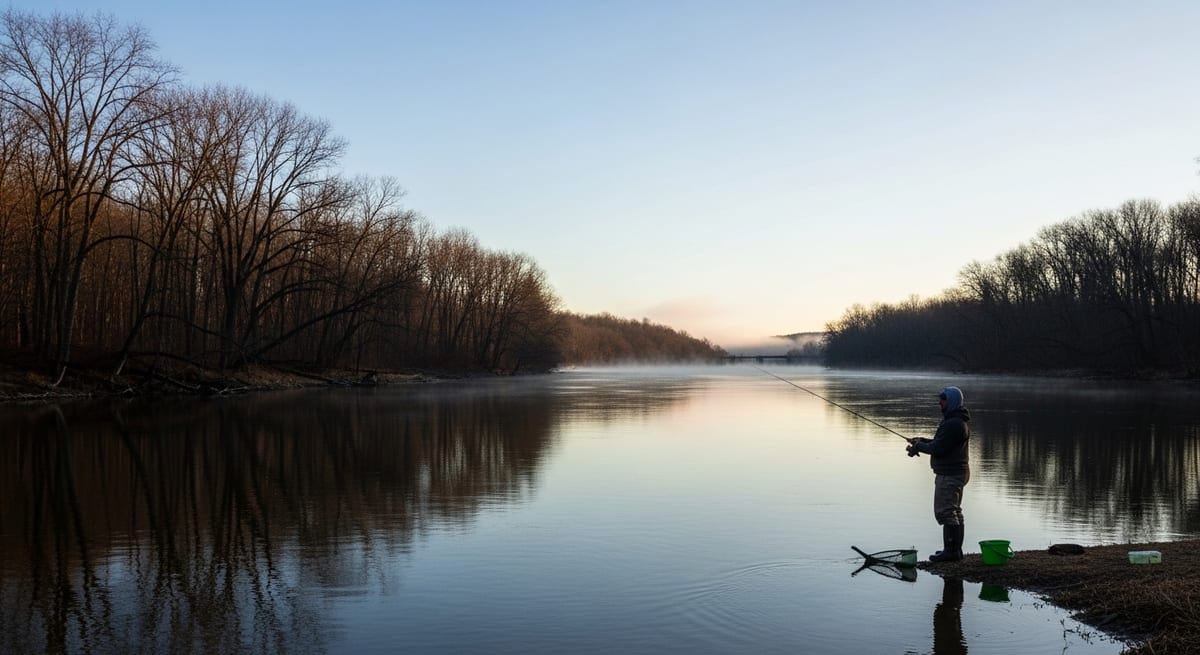
Anglers fishing the Farmington River through November consistently report the same cold-front sequence: the lure bite shuts down within a day of a pressure spike, and live bait takes over until conditions stabilize. That specific trigger, pressure-spike behavior versus active feeding behavior, sits at the center of the lures-versus-live-bait question, and it's one the standard debate rarely addresses directly. Ask experienced CT anglers and most of them don't frame it as a preference. They carry both and read the water. On Connecticut rivers, reservoirs, and the Sound specifically, the answer shifts across seasons, water bodies, and species in ways that are worth knowing before you rig up.
What the Fish Are Actually Responding To
Live bait catches fish because it's real. It smells right, moves right, and produces the exact biological signals that trigger a feeding response, particularly on tough days like post-cold-front windows, post-spawn periods, and in clear-water lakes like Candlewood where fishing pressure runs high year-round. Guides who work Candlewood Lake and Bantam Lake consistently note that when fish lock up tight to structure and refuse to chase, a live shiner out-produces artificials simply because there's no imitation shortfall. The fish doesn't have to be fooled; it just has to find the bait.
Lures work through a different mechanism. They trigger reaction strikes and allow you to cover water quickly. A crankbait fan-cast across a Candlewood flat covers more ground in an hour than a stationary live-bait setup covers in a day. Reaction strikes happen whether or not the fish is actively feeding. A bass that won't touch a slow presentation will sometimes hammer a fast-moving lure on reflex. Anglers fishing the upper reservoirs on the Farmington drainage regularly use this to locate fish in the early morning before settling into a spot.
The split: lures when fish are likely active and you need to find them; live bait when they're inactive, holding deep, or the water is pressured enough that they've ignored every artificial already.
Cold Fronts, Off-Color Water, and Why CT Guides Reach for Live Bait
Cold-front conditions: When barometric pressure spikes and bass move tight to deeper structure. An event CT guides fishing Candlewood Lake and Lake Lillinonah note reliably several times each spring and fall, live bait presented slowly in the fish's face produces where lures don't. A live shiner suspended under a float over a submerged brush pile after a late-October cold front will catch bass that refuse every artificial in the box.
Clear, pressured water: In heavily fished lakes like Candlewood and the lower Housatonic backwaters, fish have seen every standard lure presentation many times over. A live nightcrawler or live minnow produces when artificials get ignored. Bass fishing reports from Candlewood through the summer consistently reflect this pattern, particularly on high-traffic weekend water.
Deep structure: When fishing a known ledge or hole you can't precisely mark on sonar, a Carolina rig with a live crawler or a live minnow under a jig head provides a slow, enticing presentation that doesn't need to land exactly on the fish. This setup accounts for a lot of fish on CT's deeper glacial lakes, where bass and trout hold on underwater points and ledges rather than weed edges.
Trout in moving water: On the Farmington, Salmon River, and Housatonic, live bait, particularly earthworms and live minnows, ranks among the top producers in high, off-color water. CT DEEP's stocking lists show significant trout placements in these rivers each spring (current stocking data at portal.ct.gov); anglers who follow the stocking calendar and arrive with live bait in the first week typically out-fish spinners until flows drop and the water clears. Fly fishing and spinners come back into their own once conditions settle.
Ice fishing: Live minnows, waxworms, and spikes dominate CT ice fishing, whether on Candlewood's ice fishery, Bantam Lake, or Alexander Lake. Jigging spoons and teardrops work well, but tipping them with live bait improves catch rates noticeably for perch, crappie, and trout. CT ice anglers consistently report this across seasons and water bodies.
Covering Water Before You Know Where They Are
When fish location is unknown, lures allow you to search efficiently. A lipless crankbait ripped across the flats at Candlewood, a swimbait fan-cast along a weed edge at East Twin Lake, or a spinnerbait burned through shallow wood cover on a Housatonic backwater. These presentations move fast and draw strikes from active fish. A live-bait angler anchored in one spot cannot cover the same ground, and on a slow-bite morning, location matters more than presentation.
Targeting larger fish: Large-profile lures, oversized swimbaits, magnum crankbaits, big spinnerbaits, tend to filter out smaller fish and attract bigger ones more selectively. Live bait presents a natural offering that fish of any size will take confidently, which is useful or not depending on what you're after that session.
Catch-and-release efficiency: Lures, particularly single barbless hooks or treble hooks positioned on the outside of the bait, tend to hook fish in the mouth predictably. Live bait rigs, especially when fish are allowed to run with the bait, can result in deeply hooked fish that are harder to release successfully. CT DEEP's catch-and-release guidelines recommend circle hooks with live bait for exactly this reason. If clean release is the goal, barbless lures simplify the job considerably.
Warm-water active fish: In summer when bass and bluefish are chasing bait schools on shallow Sound flats or reservoir coves, reaction lures produce explosive strikes. Trying to match an active forage migration with stationary live bait is often inefficient compared to covering the bait schools with surface presentations or fast retrieves.
Topwater in low light: Dawn, dusk, and overcast mornings over bass-holding structure, poppers, walking baits, and frogs draw surface strikes that live bait simply can't replicate. This is the one scenario where lures aren't just competitive with live bait; they're the only presentation that works as designed.
Sound Stripers, Farmington Trout, and the Bait Question by Species
Largemouth bass (CT lakes and reservoirs): Lures dominate active-fish scenarios, tournament anglers on Candlewood and Lillinonah lean heavily on artificials when fish are moving. Live shiners and large nightcrawlers dominate cold-front and heavily pressured scenarios on those same waters. Both produce consistently; conditions and fish activity dictate which you reach for.
Smallmouth bass: More responsive to live bait than largemouth, particularly in the clear rocky runs of the Housatonic and the boulder fields of the upper Farmington drainage. Live crayfish is widely regarded as the top smallmouth offering in those environments. Anglers who fish the Housatonic regularly describe it as nothing-else-comes-close in low, clear water. Tube jigs and drop shots are the best artificial alternatives when crayfish aren't available.
Striped bass (Long Island Sound): Striper guides fishing the Sound in fall consistently point to live bunker (menhaden) as the top producer for larger fish, particularly from September through early November when the bunker push is on and large stripers are staging before heading south. Live and rigged eels are exceptional at night on the rocky points and rips. Lures, bucktails, metal-lip swimmers, large soft plastics, produce effectively during active feeding windows at dawn and dusk, and during blitzes when covering water quickly matters more than a natural presentation.
Rainbow and brown trout (Farmington River, Salmon River, Housatonic): Live worms outperform most lures in high, off-color water typical of March and April CT conditions. Spinners and spoons typically outperform live bait once flows drop and the water clears. Fly fishing outperforms both during active surface hatch activity. The Farmington's hendrickson hatch in late April and early May is the prime window where guides consistently steer clients toward dry flies over everything else.
Fluke (Long Island Sound): Live killifish (killies) or squid strips with a spinner are the standard setup for summer flounder in CT Sound fishing. Scented soft plastics, gulp! and Z-Man products come up frequently in Sound charter reports and angler discussions, perform close to live bait and hold up better through multiple drifts.
Tautog (blackfish): Green crabs and Asian shore crabs are far superior to artificial lures for tautog. Anglers fishing the rocky reefs and wrecks off the CT coast report this consistently, and there's about as little debate on it as you'll find in CT fishing circles. Among species common to CT waters, tautog are uniquely resistant to artificial presentations; live or fresh-dead crab bait is effectively the standard option through most seasons. CT DEEP regulations on tautog size limits and open seasons apply, check current regs at portal.ct.gov before any trip to the Sound reefs.
Reading the Session, when to Switch and When to Stay
Most productive CT anglers don't default to one or the other. They carry both and switch based on what the fish are indicating.
A working approach:
- Start with lures to search and locate active fish, particularly during the morning window
- Keep live bait rigged and accessible for when lure action slows or fish are clearly concentrated in one spot
- Scented soft plastics (Gulp! shrimp, PowerBait worms) bridge the gap, artificial presentation with a bait-level scent profile, especially useful when live bait supply is limited
When a session opens cold, no reaction strikes in the first hour of moving and casting. The consensus among CT guides is to cover water aggressively with lures before committing to a live-bait soak in one location. Parking live bait on a flat that's holding no fish is one of the more common reasons productive water goes unfished. Movement addresses a fish-location problem; patience only pays once location is confirmed.
The switch point most experienced CT anglers describe is tactile: when lure strikes stop but structure and conditions look right, that's the cue to slow down and introduce live bait. The fish are often there. They're just not reacting. Recognizing that moment, rather than assuming the spot is empty, is what separates a consistent CT angler from someone burning through spots every thirty minutes.
As of spring 2026, angler reports from Candlewood, the Farmington, and Long Island Sound suggest the switch-point principle holds across all three environments, even though the specific bait and timing differ by season and species.
EVERY SATURDAY MORNING
Weekly fishing intelligence
Nationwide conditions, what's biting, and honest gear deals. One email, no noise.
No spam. Unsubscribe anytime.